:max_bytes(150000):strip_icc()/chefs-refrigerate-mangoes-ft-blog0919-2d63752edaff47e39b2ee1e0a0ddf47e.jpg)
Mango
The king of tropical fruits — lush, aromatic, and central to cuisines across the tropics.
Also known as: Mangifera indica, mangoes, Alphonso mango, Ataulfo mango
Overview
Mango is the most widely consumed tropical fruit in the world, with hundreds of cultivars grown across India, Southeast Asia, Central America, Africa, and the Caribbean. The flavor ranges from honey-sweet and floral (Alphonso, Ataulfo) to tart and fibrous (Tommy Atkins, Kent).
Both ripe and unripe mangoes are used in cooking: ripe for desserts, smoothies, and salsas; green (unripe) for pickles, chutneys, salads, and the tangy flavoring agent amchur powder.
Culinary Uses
- Sliced fresh for salads, desserts, smoothies, and as a standalone snack.
- Pureed into lassi, ice cream, panna cotta, and sticky rice toppings.
- Diced into salsas and relishes for grilled fish, chicken, and tacos.
- Green mango shredded into Thai and Vietnamese salads or pickled for Indian achaar.
Flavor Profile
- Ripe mango is intensely sweet with floral, tropical, and sometimes citrus notes depending on the variety.
- Green mango is sharp, sour, and astringent — useful as a souring agent in South Asian cooking.
- Mango pairs naturally with lime, chili, coconut, and mint.
Storage
- Ripen mangoes at room temperature until they yield to gentle pressure and smell fragrant at the stem end.
- Ripe mangoes keep in the refrigerator for up to 5 days.
- Freeze mango cubes on a sheet pan, then transfer to bags for up to 6 months — excellent for smoothies.
Preparation
- The hedgehog cut: slice the cheeks off each side of the flat pit, score the flesh in a grid pattern, and invert to pop the cubes outward.
- A sharp Y-peeler works well for green mangoes destined for salads or pickling.
- The pit is large and flat — cut along it rather than through it.
Nutrition
Mangoes are rich in vitamins A and C, with one cup providing over 100% of the daily value for vitamin C.
They are a good source of folate and dietary fiber.
A powerful antioxidant; one mango provides a full day's requirement.
Supports vision, skin health, and immune function.
Important for cell division and fetal development.
Supports digestive health and satiety.
Dietary Considerations
- Naturally vegan, gluten-free, and dairy-free.
- Relatively high in natural sugars — portion size matters for blood sugar management.
- Mango skin contains urushiol (the same compound in poison ivy); some people experience contact dermatitis.
Nutrition information is educational and approximate; it varies by variety, portion, and preparation, and is not a substitute for professional dietary advice.
Common Pairings
Recipes with Mango

Sabich
A beloved Israeli pita sandwich layering fried eggplant, hard-boiled egg, hummus, Israeli salad, and tahini with a bright hit of amba — a satisfying vegetarian street-food favorite.
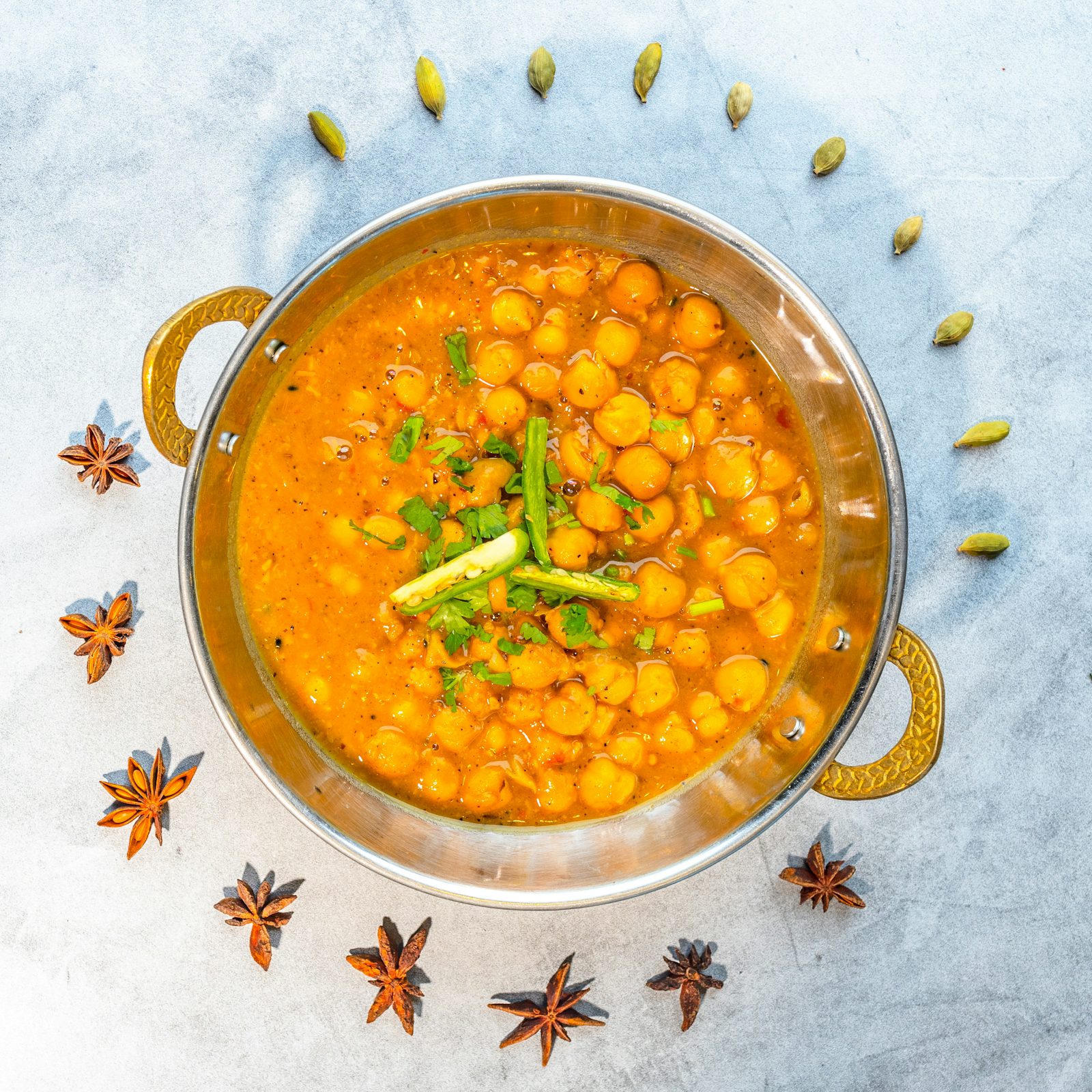
North Indian Chana Masala
Chickpeas simmered in a robust, tangy tomato-onion masala with warm spices and a finishing squeeze of lemon — a hearty, naturally vegan North Indian staple that only gets better the next day.
Explore Related Cuisines
Related Ingredients

Cooking Guides You May Like
Cooking with the Seasons: Better Flavor, Naturally
Produce eaten in its season is cheaper, more flavorful, and more nutritious. Here is how to cook that way without overthinking it.
Caribbean Cuisine: A Guide to Island Flavors, Spice & Sunshine
Sunny and spice-forward, Caribbean cooking layers jerk seasoning, scotch bonnet heat, and coconut richness across the islands. Here is the full picture.