A cuisine born of many worlds
Caribbean cuisine is one of the great fusion cuisines, forged from the meeting of Indigenous Taino and Arawak foodways with African, European, Indian, and Chinese influences carried to the islands over centuries of trade, colonization, and migration. Enslaved Africans brought techniques, ingredients, and the resourcefulness that shaped much of the region’s cooking; later, indentured laborers from India and China added curry, roti, and stir-fry traditions that are now thoroughly Caribbean.
The result varies island to island — Jamaican, Trinidadian, Haitian, Cuban, and Barbadian kitchens each have their own accent — but shared threads run throughout: bold seasoning, a love of heat, tropical produce, and one-pot cooking that makes the most of every ingredient. It is celebratory, communal food with a deep sense of place.
Essential ingredients
The Caribbean pantry is vivid and aromatic. Scotch bonnet peppers provide fruity, searing heat; allspice (called pimento in Jamaica) is the defining warm spice; and thyme, scallion, garlic, and ginger form the aromatic base of countless dishes. Coconut milk lends richness to rice, curries, and stews, while lime and sour orange brighten and tenderize.
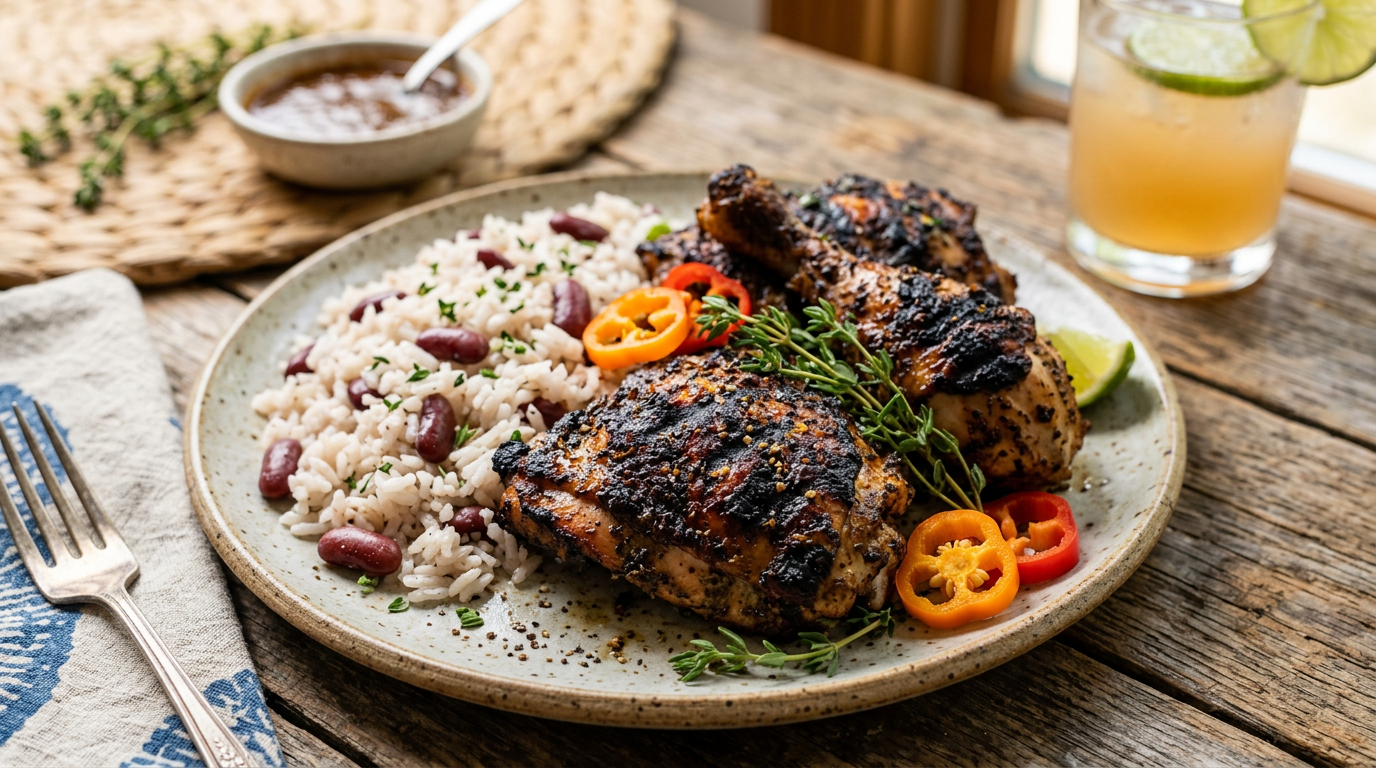
Starchy staples anchor the plate: rice, plantains (fried sweet or green and savory), cassava, yams, breadfruit, and green bananas. Beans — especially kidney beans and pigeon peas — pair with rice in the region’s signature dish. Salted cod, fresh seafood, goat, chicken, and pork are common proteins, and curry powder (a legacy of Indian migration) seasons everything from goat to chickpeas.
Jerk, slow braises, and one-pot cooking
Jerk is the Caribbean’s most famous technique: meat is marinated in a fiery paste of scotch bonnet, allspice, thyme, scallion, and warm spices, then slowly grilled or smoked, traditionally over pimento wood. The method delivers deep smoke, heat, and aromatic complexity in equal measure. Marinating and “seasoning up” meat well ahead of cooking — often overnight — is a defining habit of the region.
Beyond the grill, slow braising and one-pot cooking dominate. Curried goat and stew chicken simmer low and long until tender; rice and peas cooks beans and rice together in seasoned coconut milk; and pepperpot and callaloo stews show the African and Indigenous roots of island cooking. Frying — for festival, bake, fritters, and plantain — rounds out the everyday repertoire.
Signature dishes to know
Jamaica offers jerk chicken and pork, curry goat, ackee and saltfish (the national dish), and rice and peas. Trinidad is famous for doubles (curried chickpeas in fried flatbread), roti, and callaloo. Across the islands you will find escovitch fish, oxtail stew, pelau (a one-pot rice dish), and fried plantains as a near-universal side.
Street food and snacks are a huge part of the culture: patties (flaky pastries filled with spiced meat), festival (slightly sweet fried dumplings), fritters, and fresh tropical fruit. Refreshing drinks — sorrel, ginger beer, and rum punch — complete the table.
Cooking Caribbean food at home
The key to authentic Caribbean flavor is to season boldly and season early. Build a base of scallion, thyme, garlic, ginger, and scotch bonnet (used carefully — it is very hot), and let proteins marinate for hours or overnight. Keep allspice, curry powder, coconut milk, and rice and beans on hand, and you can cook widely.
Embrace one-pot methods and slow cooking for tender, deeply flavored stews, and balance the heat with the sweetness of coconut, plantain, or a touch of sugar. Start with rice and peas, a stew chicken, and fried plantains, and you will have a complete, satisfying island meal.