Plantains
A starchy cooking banana that spans savory and sweet across the tropics.
Also known as: plantain, cooking banana, plátano, dodo (fried)
Overview
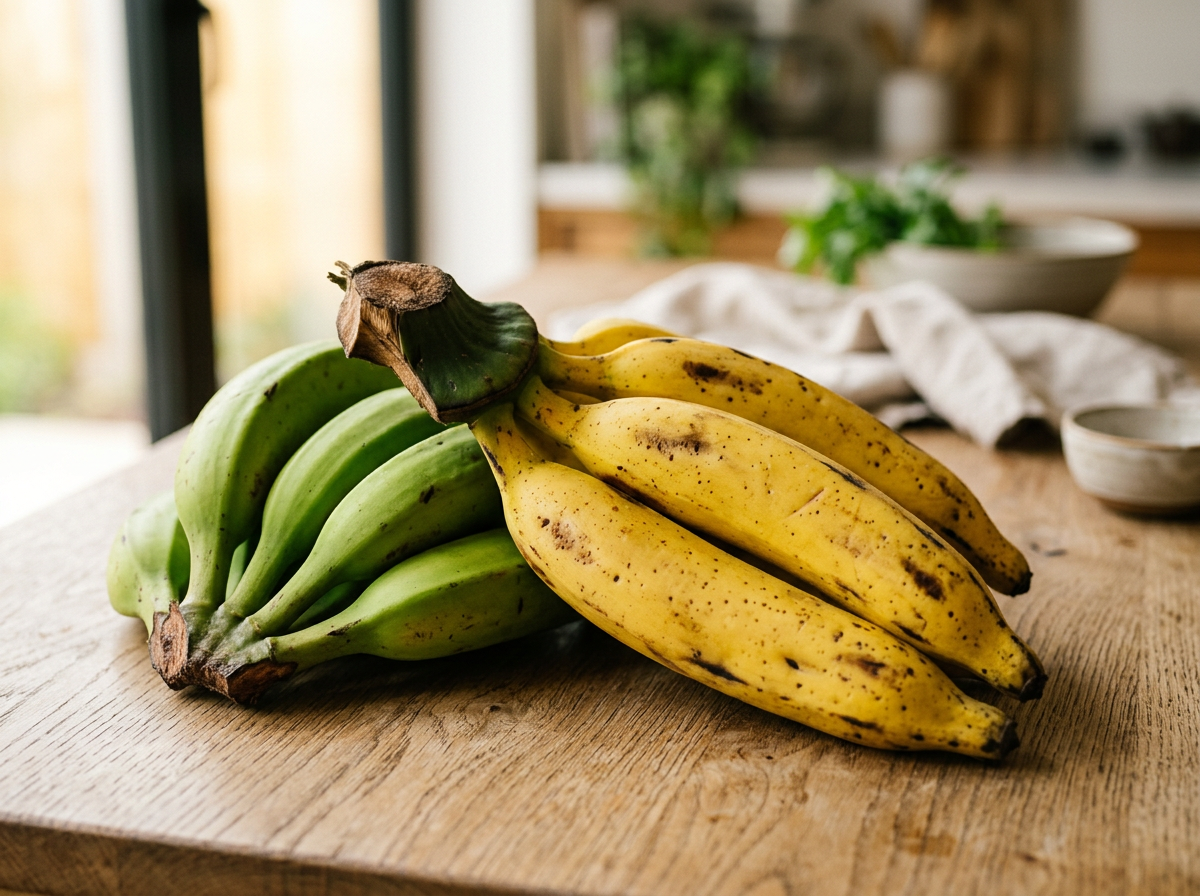
Plantains are a starchy relative of the dessert banana that must be cooked to be enjoyed. A staple across West and Central Africa, the Caribbean, and Latin America, they are far less sweet and much firmer than eating bananas, functioning more like a potato in savory cooking.
Their character changes dramatically with ripeness. Green plantains are firm and starchy for chips and twice-fried tostones; yellow plantains are lightly sweet and versatile; and fully black, spotted plantains are soft and sugary — ideal for the caramelized fried maduros loved throughout the tropics.
Culinary Uses
- Fried when ripe (dodo, maduros) for a sweet, caramelized side.
- Twice-fried when green (tostones) or thinly sliced into crisp chips.
- Boiled, mashed, or pounded into dishes such as fufu and mangú.
- Roasted or grilled whole, or added to stews and soups for starchy body.
Flavor Profile
- Green plantains are starchy, neutral, and potato-like with very little sweetness.
- As they ripen they grow sweeter and softer, developing a rich, almost custard-like quality when fully black.
- Frying brings out caramelized edges while keeping a tender interior.
Storage
- Store at room temperature and let ripen as needed — from green through yellow to black — depending on the dish.
- Refrigeration slows ripening and darkens the skin but the flesh stays usable.
- Peeled pieces can be frozen for later frying or boiling.
Preparation
- To peel a green plantain, trim both ends, score the skin lengthwise, and pry it off in sections — it clings more than a banana peel.
- Slice thick for tostones and maduros, or thin for chips.
- Ripe plantains peel much more easily and cook faster than green ones.
Nutrition
Plantains are an energy-dense, starchy food richer in carbohydrate than most vegetables.
They provide fiber and potassium, and green plantains contain resistant starch that acts as a prebiotic.
A substantial source of starchy energy, especially when green.
Supports fluid balance and healthy blood pressure.
Present as provitamin carotenoids, more so in ripe fruit.
Supports metabolism and nervous-system function.
Dietary Considerations
- Naturally vegan, vegetarian, gluten-free, and dairy-free.
- A good starchy staple for gluten-free diets in place of grains.
- Fried preparations add significant fat and calories; boiling, roasting, or air-frying are lighter options.
Nutrition information is educational and approximate; it varies by variety, portion, and preparation, and is not a substitute for professional dietary advice.
Common Pairings
Recipes with Plantains

Kelewele
Ghanaian spiced fried plantains — ripe plantain cubes tossed with ginger, chili, and warm spices, then fried until caramelized outside and soft within. A sweet-savory-spicy snack or side.

Colombian Sancocho (Chicken & Root Vegetable Soup)
A soul-warming Colombian soup of chicken simmered with corn, cassava, plantain, and potatoes in a fragrant cilantro broth — a Sunday classic that eats like a full meal.
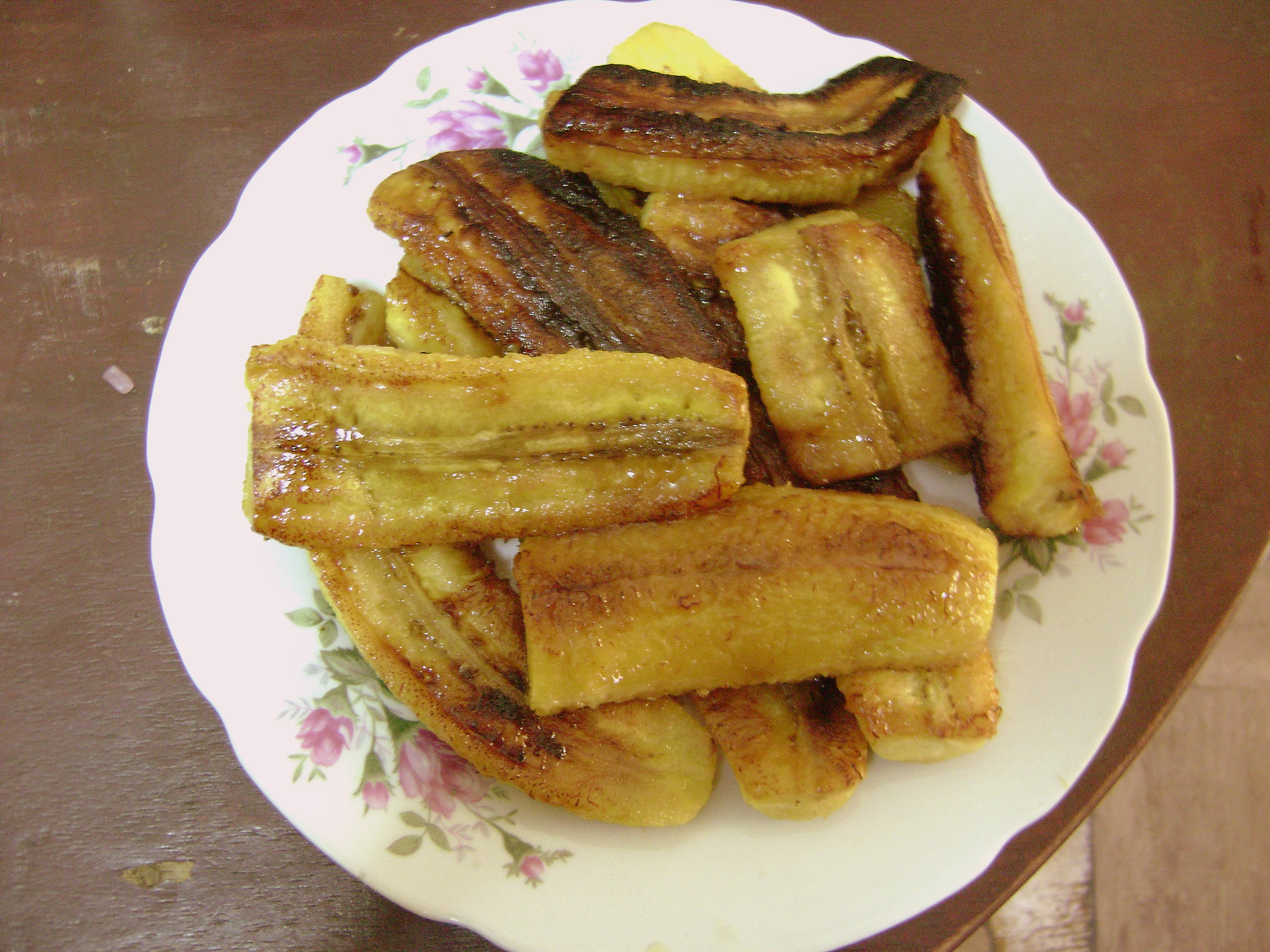
West African Kelewele (Spiced Fried Plantains)
Ghanaian kelewele — ripe plantains tossed in ginger, chili, and warm spices, then fried until caramelized and crisp at the edges. A boldly flavored vegan snack or side.
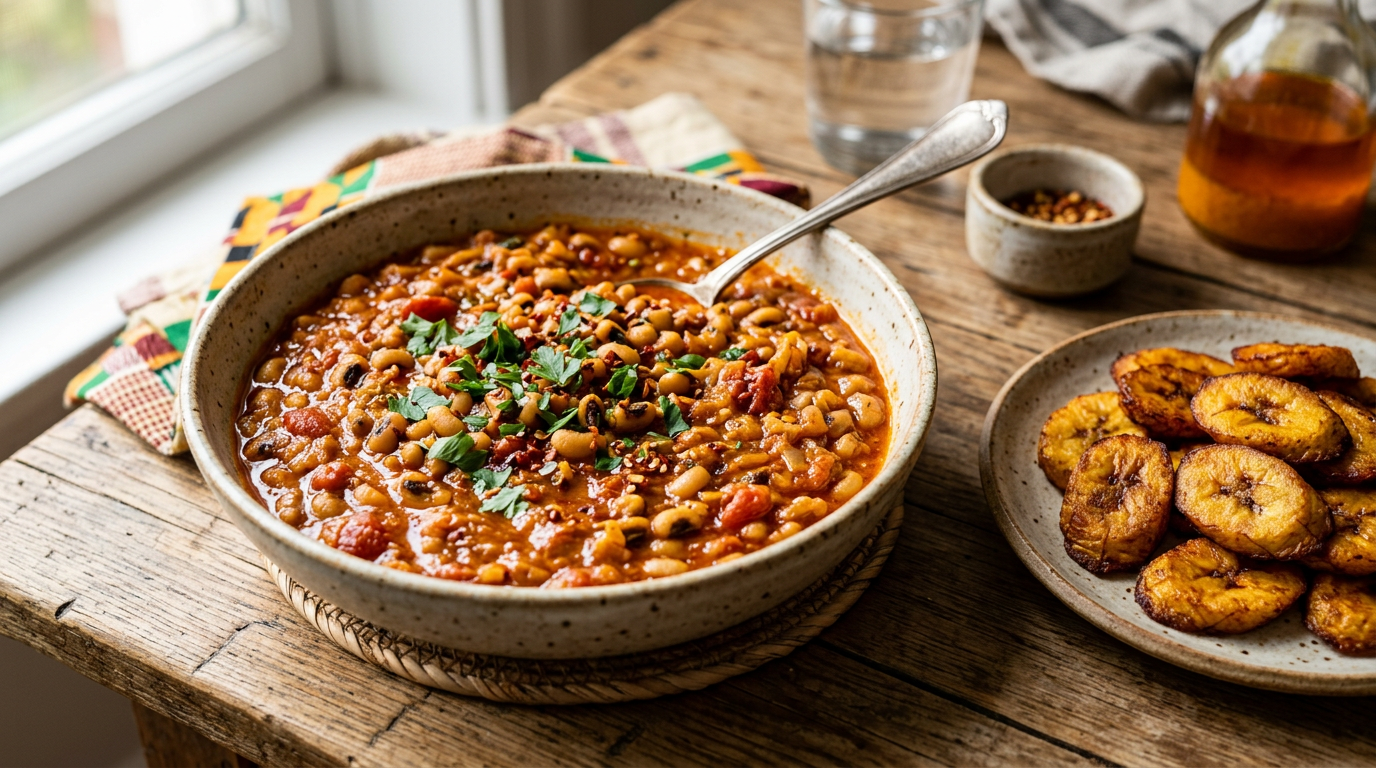
West African Red Red (Black-Eyed Pea Stew)
A Ghanaian favorite of black-eyed peas simmered in a rich red palm-oil and tomato sauce, traditionally served with fried plantains — hearty, naturally vegan, and full of warmth.
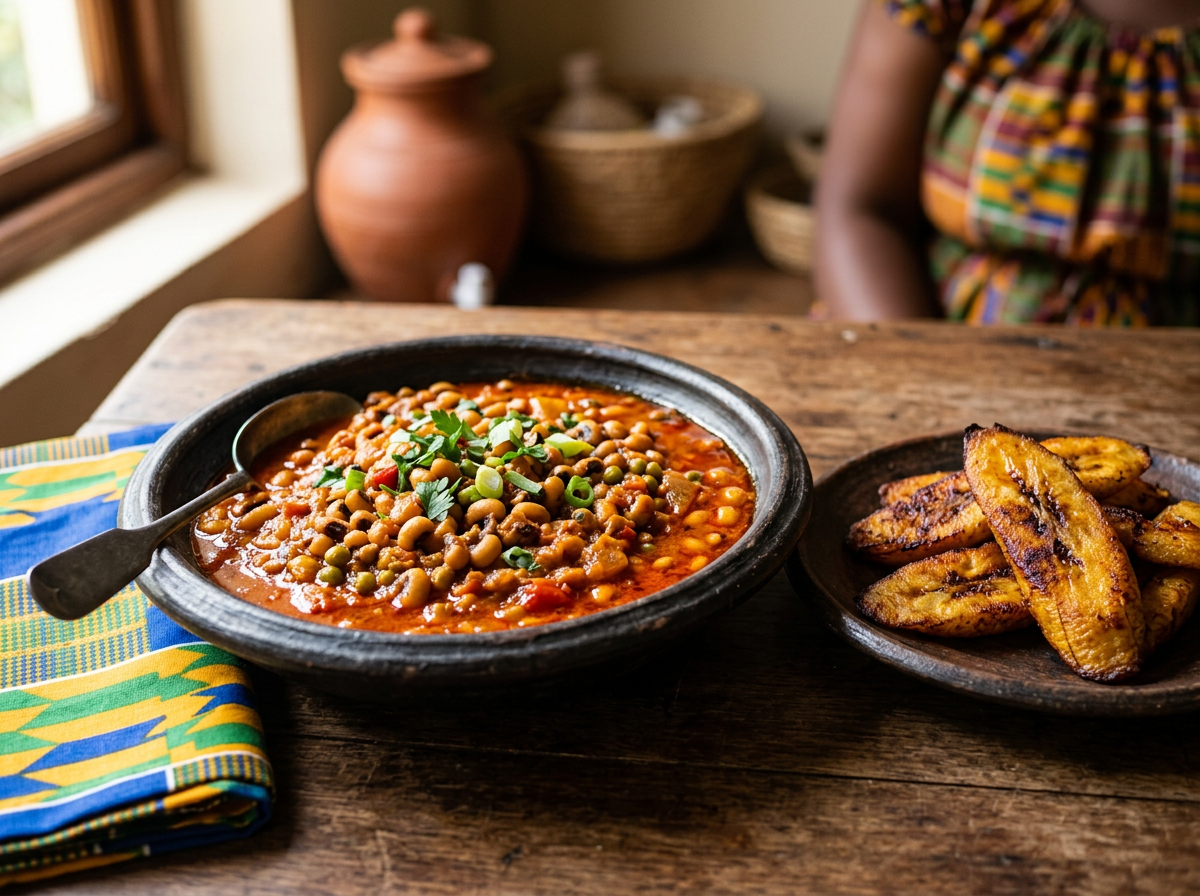
Ghanaian Red Red (Black-Eyed Pea Stew)
A beloved Ghanaian street-food classic of black-eyed peas simmered in a vivid red palm-oil and tomato sauce, served with sweet fried ripe plantains. Naturally vegan, deeply satisfying, and full of warm West African flavor.
Explore Related Cuisines
Related Ingredients
Cooking Guides You May Like
A Guide to West African Cooking
From jollof rice to groundnut stew, West African cooking is generous, spice-forward, and made for sharing. Here is an introduction.
The Essentials of Caribbean & Latin American Cooking
Bright citrus, smoky spice, and fresh seafood define the cooking of the Caribbean and Latin America. Here is an introduction.