A meeting of worlds
The food of the Caribbean and Latin America is the product of centuries of exchange between Indigenous, African, European, and Asian influences. That layered history shows up on the plate: African techniques and ingredients meet Indigenous crops like corn, potatoes, and chiles, alongside Spanish and other European traditions. The result is some of the most vibrant, spice-forward cooking in the world.
Heat and brightness are recurring themes. Scotch bonnet peppers bring fruity fire to Caribbean dishes, while Peru’s aji amarillo and aji limo lend color and gentle heat. Citrus — especially lime — is used generously to balance richness and, in the case of ceviche, to "cook" seafood entirely without heat.
Caribbean cornerstones
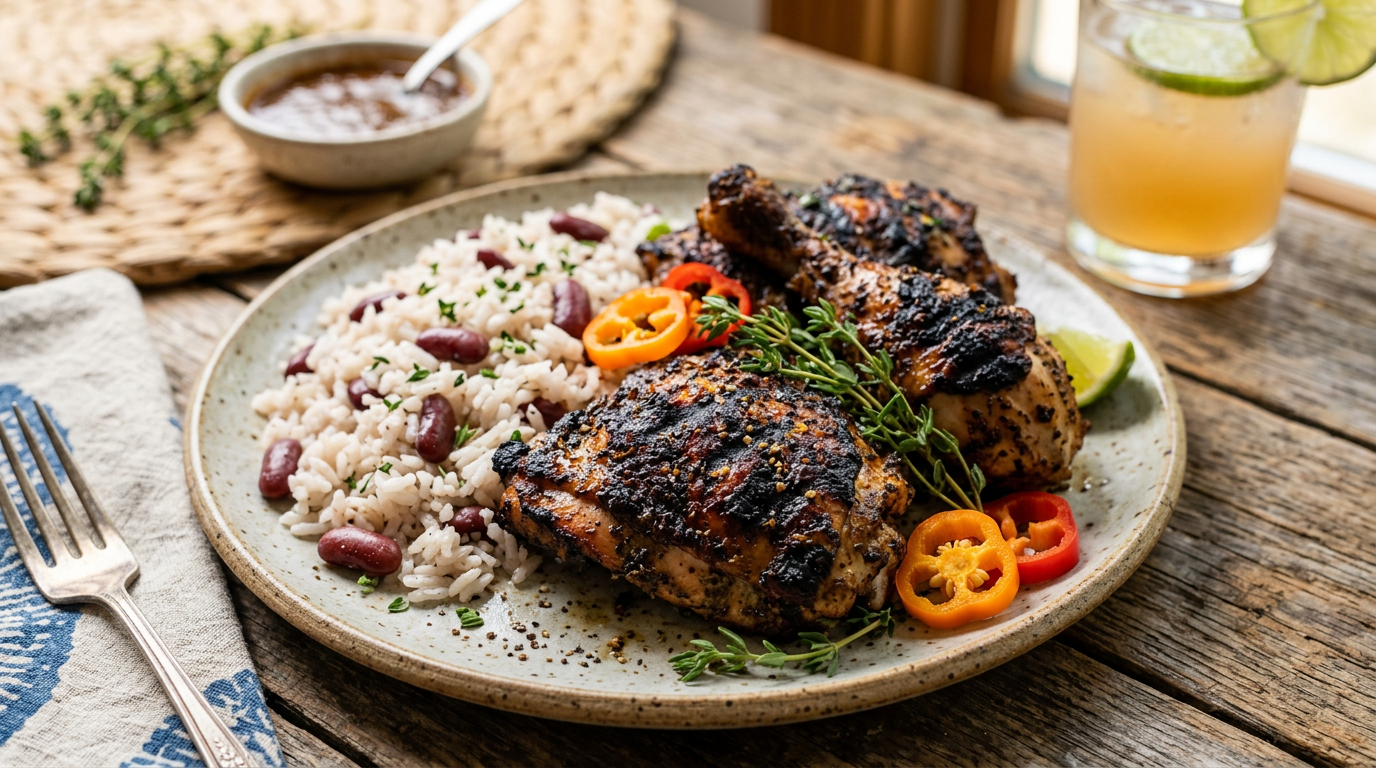
Jamaican jerk is perhaps the region’s most famous export — meat marinated in a fiery paste of scotch bonnet, allspice, thyme, and spring onion, then grilled until smoky and charred. It is almost always served with rice and peas, rice simmered with kidney beans and coconut milk. Curry goat, callaloo, and Trinidadian doubles round out a rich island repertoire that rewards bold seasoning.
Latin American highlights
Peru has become one of the world’s most celebrated food destinations, and dishes like ceviche — fresh fish cured in lime with onion and chile — and lomo saltado, a Peruvian-Chinese stir-fry, show why. Elsewhere, Colombian and Venezuelan arepas offer griddled cornmeal comfort, and the Argentine asado tradition centers on grilled meats crowned with garlicky chimichurri. Across the region, fresh ingredients and bold, balanced seasoning are the common thread.