Grip, stance, and the claw
Good knife work starts before the blade touches the food. Hold the knife with a pinch grip — thumb and forefinger gripping the base of the blade itself, the remaining fingers wrapped around the handle. This gives you far more control than gripping the handle alone. Stand square to the board, feet shoulder-width, and keep the board from sliding by setting it on a damp towel.
Your other hand does the quiet, crucial work. Curl your fingertips under into a claw so your knuckles, not your nails, face the blade. The flat of the knife rides against those knuckles as a guide, and because your fingertips are tucked away, you can move quickly without fear. Go slowly at first; speed is a by-product of good form, never the goal itself.
Why a sharp knife is a safe knife
A dull knife is the most dangerous tool in the kitchen because it slips instead of cutting, forcing you to press harder and sending the blade skidding across food and toward fingers. A sharp knife bites where you place it and needs almost no force. Hone your blade with a few passes on a steel before each session to realign the edge, and sharpen it periodically on a whetstone or with a pull-through sharpener.
Treat your knives well and they will last decades: hand-wash and dry them rather than using the dishwasher, never leave them loose in a drawer, and cut on wood or plastic rather than glass, stone, or metal, which dull an edge almost instantly.
The cuts that cover most recipes
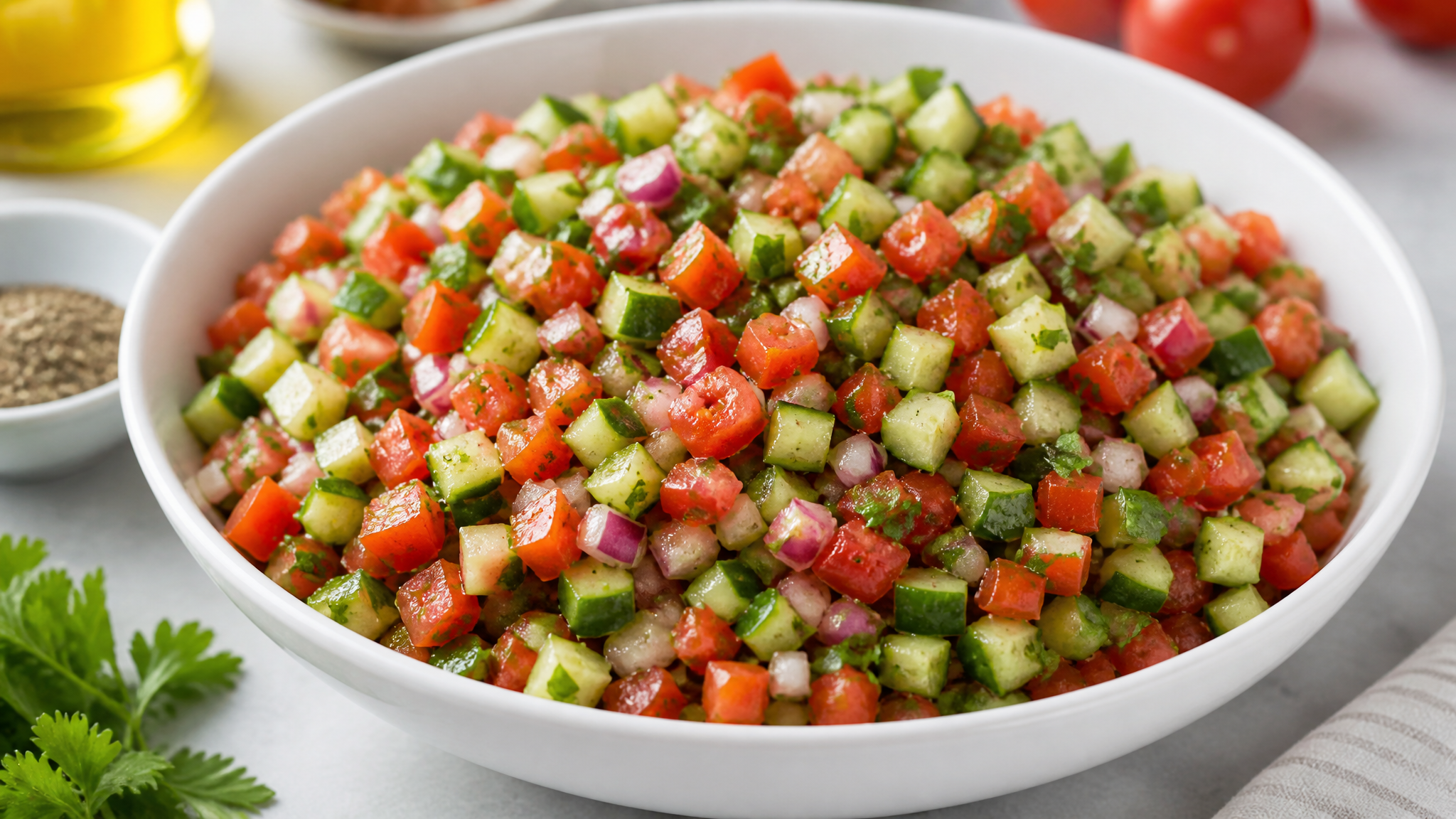
You need surprisingly few cuts to handle nearly any recipe. A rough chop is fine for stews and stocks where appearance does not matter. A dice — small, medium, or large — gives you even cubes that cook at the same rate. A julienne produces thin matchsticks for stir-fries and slaws, while a chiffonade rolls leafy herbs and greens into tight cylinders you slice into fine ribbons. A mince reduces garlic, ginger, and herbs to tiny, flavor-releasing pieces.
The single most important principle is uniformity. Pieces of the same size cook at the same rate, which is the difference between evenly cooked vegetables and a mix of scorched and raw. Practice on cheap, forgiving vegetables like onions, carrots, and celery until the motions feel automatic.
Practice and maintenance
Skill comes from repetition, not talent. Set aside a few onions or a bag of carrots and simply practice the same cut until your hands know it. Keep your board clear by scraping trimmings into a bowl as you go — a tidy surface is a safe, efficient one. With a little consistent practice, prep stops feeling like a chore and becomes one of the most satisfying parts of cooking.