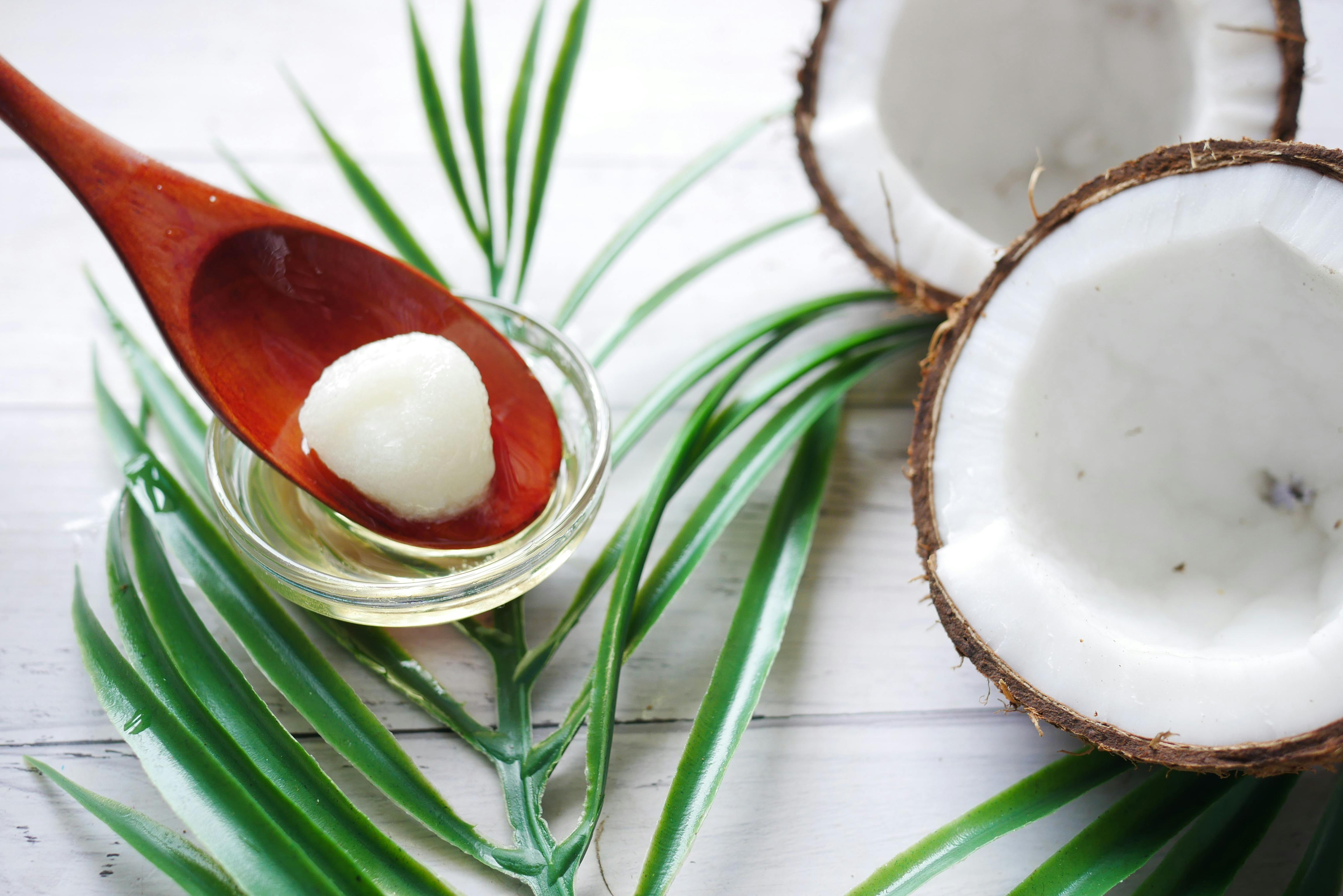
Coconut Oil
A high-heat cooking fat with a tropical character — solid at room temperature, liquid when warm.
Also known as: virgin coconut oil, refined coconut oil, copra oil
Overview
Coconut oil is extracted from the meat of mature coconuts and is unique among plant oils for being solid at room temperature (below about 76°F / 24°C) due to its high saturated fat content. It is widely used in Southeast Asian, South Asian, and Caribbean cooking, and has become popular in Western kitchens as a dairy-free butter alternative.
Two main types exist: virgin (cold-pressed, retains coconut flavor and aroma) and refined (processed, neutral flavor, higher smoke point). The choice depends on whether you want the coconut flavor in your dish.
Culinary Uses
- Sauteing and stir-frying in Southeast Asian and Indian cooking.
- As a dairy-free substitute for butter in vegan baking.
- For frying — especially refined coconut oil, which has a smoke point around 400°F.
- In raw desserts, energy balls, and chocolate-coating recipes (it solidifies at cool temperatures).
Flavor Profile
- Virgin coconut oil has a mild, sweet coconut aroma and flavor.
- Refined coconut oil is flavor-neutral — suitable when you do not want coconut taste.
- Both have a smooth, clean mouthfeel that melts instantly on the tongue.
Storage
- Store in a cool, dark place — coconut oil is shelf-stable for 2+ years when kept from light and heat.
- It naturally transitions between solid and liquid states with temperature changes; this is normal and does not affect quality.
- No need to refrigerate unless your kitchen is consistently very warm.
Preparation
- Measure solid coconut oil by packing it into a measuring spoon or cup, similar to brown sugar.
- To liquefy, microwave in 10-second intervals or set the jar in warm water.
- When substituting for butter in baking, use the same quantity — coconut oil is 100% fat while butter is ~80%.
Nutrition
Coconut oil is almost 100% fat, predominantly saturated. It contains medium-chain triglycerides (MCTs).
The health profile of coconut oil remains debated among nutrition scientists.
Primarily lauric acid; metabolized differently from long-chain saturated fats.
Small amounts present in virgin coconut oil.
Plant-based oil with no dietary cholesterol.
About 120 kcal per tablespoon — comparable to other cooking oils.
Dietary Considerations
- Naturally vegan, gluten-free, and dairy-free.
- High in saturated fat — moderation is advised for cardiovascular health.
- Coconut is classified as a tree nut for FDA labeling — most tree nut-allergic individuals tolerate it, but consult an allergist.
Nutrition information is educational and approximate; it varies by variety, portion, and preparation, and is not a substitute for professional dietary advice.
Common Pairings
Recipes with Coconut Oil
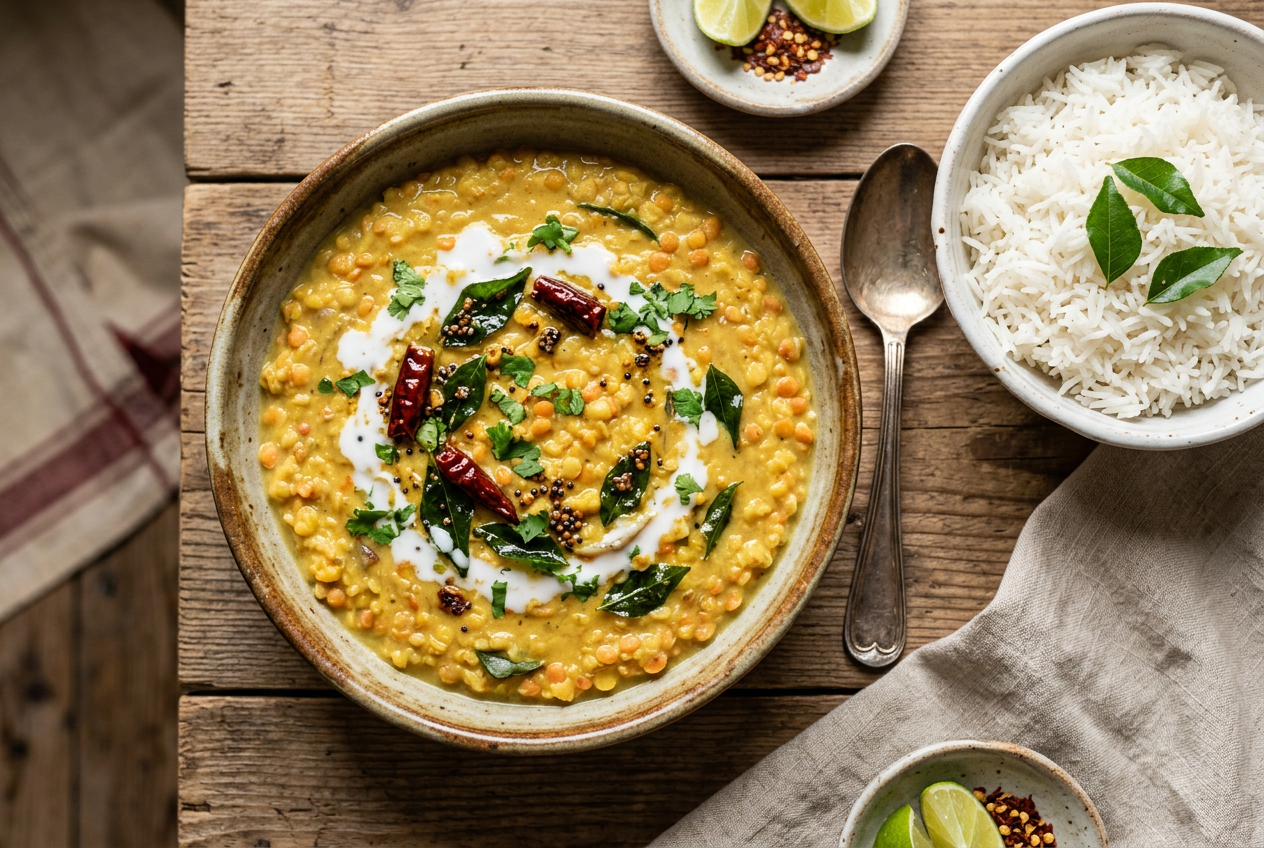
Sri Lankan Coconut Dhal
Red lentils simmered in a fragrant coconut milk broth with curry leaves, turmeric, and a sizzling tempered spice finish — a creamy, affordable staple that pairs perfectly with rice.

South Indian Coconut Vegetable Avial
A Keralan medley of mixed vegetables bound in a lightly spiced coconut and yogurt sauce, finished with coconut oil and curry leaves.
Explore Related Cuisines
Related Ingredients


Cooking Guides You May Like
A Guide to Southeast Asian Flavors
Southeast Asian cooking thrives on balance — salty, sour, sweet, and hot in every bite. Here is how those flavors come together.
Stocking Your First Pantry: A Foundation for Easy Cooking
A well-chosen pantry means dinner is never more than a few fresh ingredients away. Here is what to stock first.