
Scotch Bonnet
A fiery, fruity chili at the soul of Caribbean and West African heat.
Also known as: Capsicum chinense, Scotch bonnet pepper, bonney pepper
Overview
The Scotch bonnet is a small, wrinkled chili closely related to the habanero, named for its resemblance to a tam-o'-shanter hat. Beyond its considerable heat, it carries a distinctive fruity, almost tropical sweetness that defines the character of Caribbean and West African cooking.
It is essential to Jamaican jerk, Haitian pikliz, and countless pepper sauces and stews. Used whole to perfume a pot or chopped for full fire, the Scotch bonnet brings both aroma and heat that ordinary chilies cannot replicate.
Culinary Uses
- Blended into jerk marinades, pepper sauces, and hot condiments.
- Added whole to simmering stews and rice to infuse aroma without full heat.
- Chopped into pikliz, salsas, and marinades for direct fire.
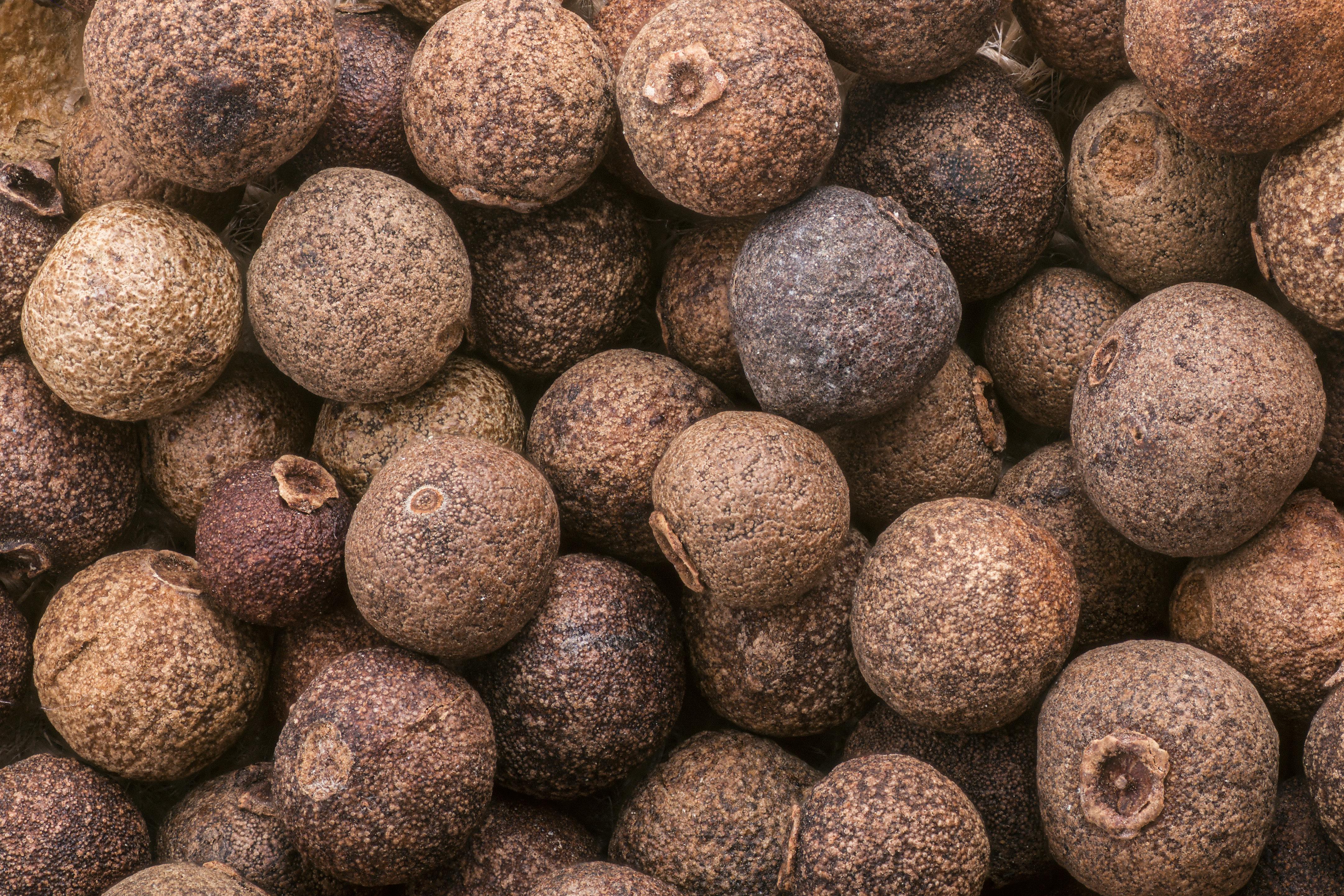
- Combined with allspice, thyme, and scallion in Caribbean dishes.
Flavor Profile
- Very hot, with a fruity, tropical sweetness beneath the burn.
- More aromatic and rounded than most equally hot chilies.
- Leaving the pepper whole tempers the heat while keeping the fragrance.
Storage
- Refrigerate fresh peppers in the crisper for one to two weeks.
- Freeze whole for several months with little loss of heat or flavor.
- Dried and ground scotch bonnet keeps in an airtight jar.
Preparation
- Wear gloves when chopping, and avoid touching your eyes or face.
- Remove seeds and membranes to reduce heat while keeping flavor.
- Add whole and unbroken to a pot for aroma, removing before it bursts.
Nutrition
Scotch bonnets are eaten in small amounts and add little in the way of calories.
Like other chilies, they supply vitamin C and the compound capsaicin.
Fresh chilies are a concentrated source by weight.
Supplied as carotenoids.
The compound responsible for the pepper's heat.
Dietary Considerations
- Naturally vegan, vegetarian, gluten-free, and dairy-free.
- Very spicy; use cautiously for sensitive palates.
Nutrition information is educational and approximate; it varies by variety, portion, and preparation, and is not a substitute for professional dietary advice.
Common Pairings
Recipes with Scotch Bonnet
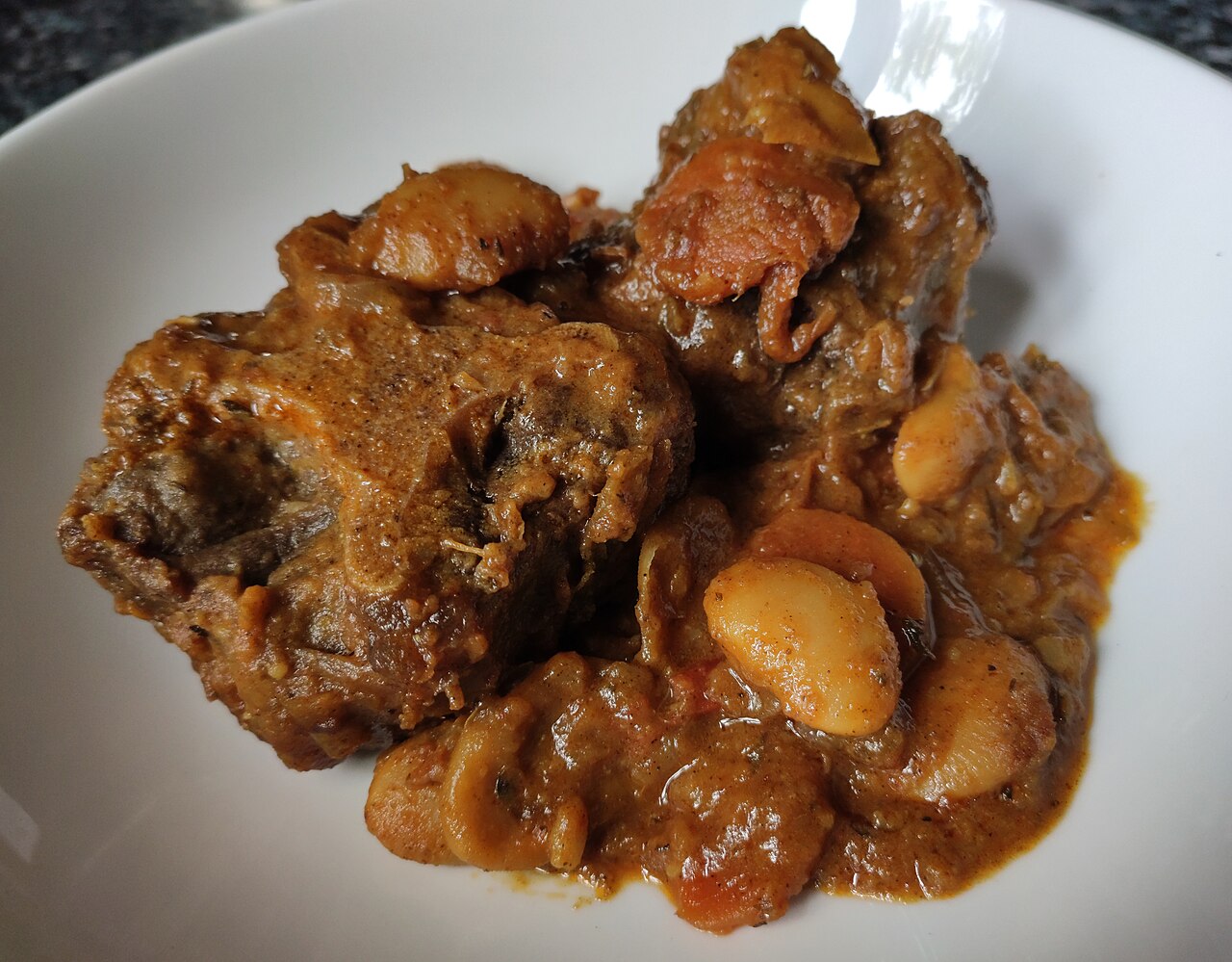
Jamaican Oxtail Stew
Meaty oxtail braised low and slow with butter beans, thyme, allspice, and scotch bonnet until the sauce is rich and the meat falls from the bone — the ultimate Jamaican comfort dish.

Jamaican Escovitch Fish
Crisp fried snapper topped with a bright, tangy pickle of vinegar-soused onion, carrot, bell pepper, and scotch bonnet — a festive Jamaican coastal favourite.
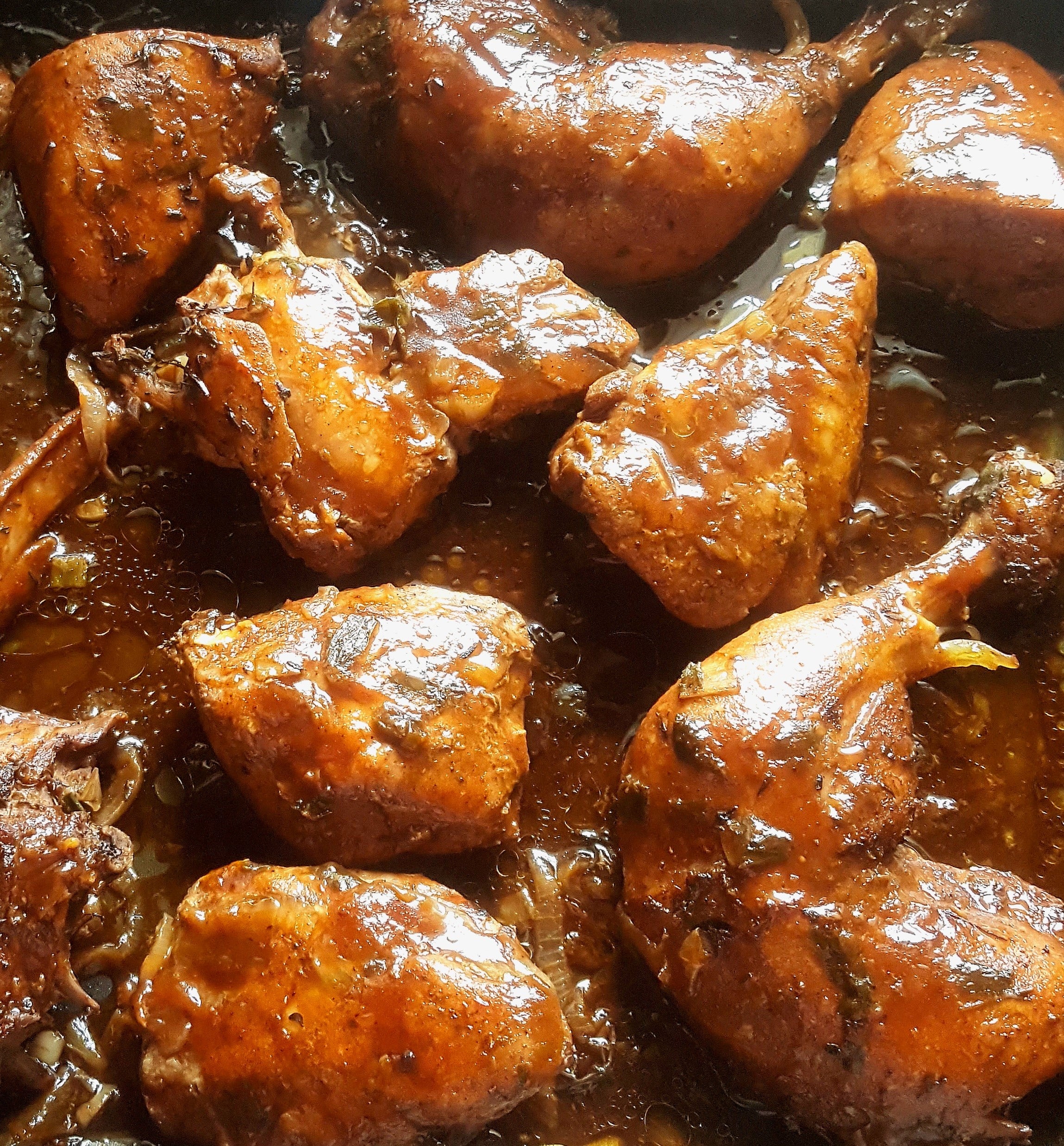
Jamaican Brown Stew Chicken
Chicken browned in caramelised sugar then simmered with onion, thyme, scotch bonnet, and allspice into a deep, glossy gravy — a beloved Jamaican Sunday-dinner classic.
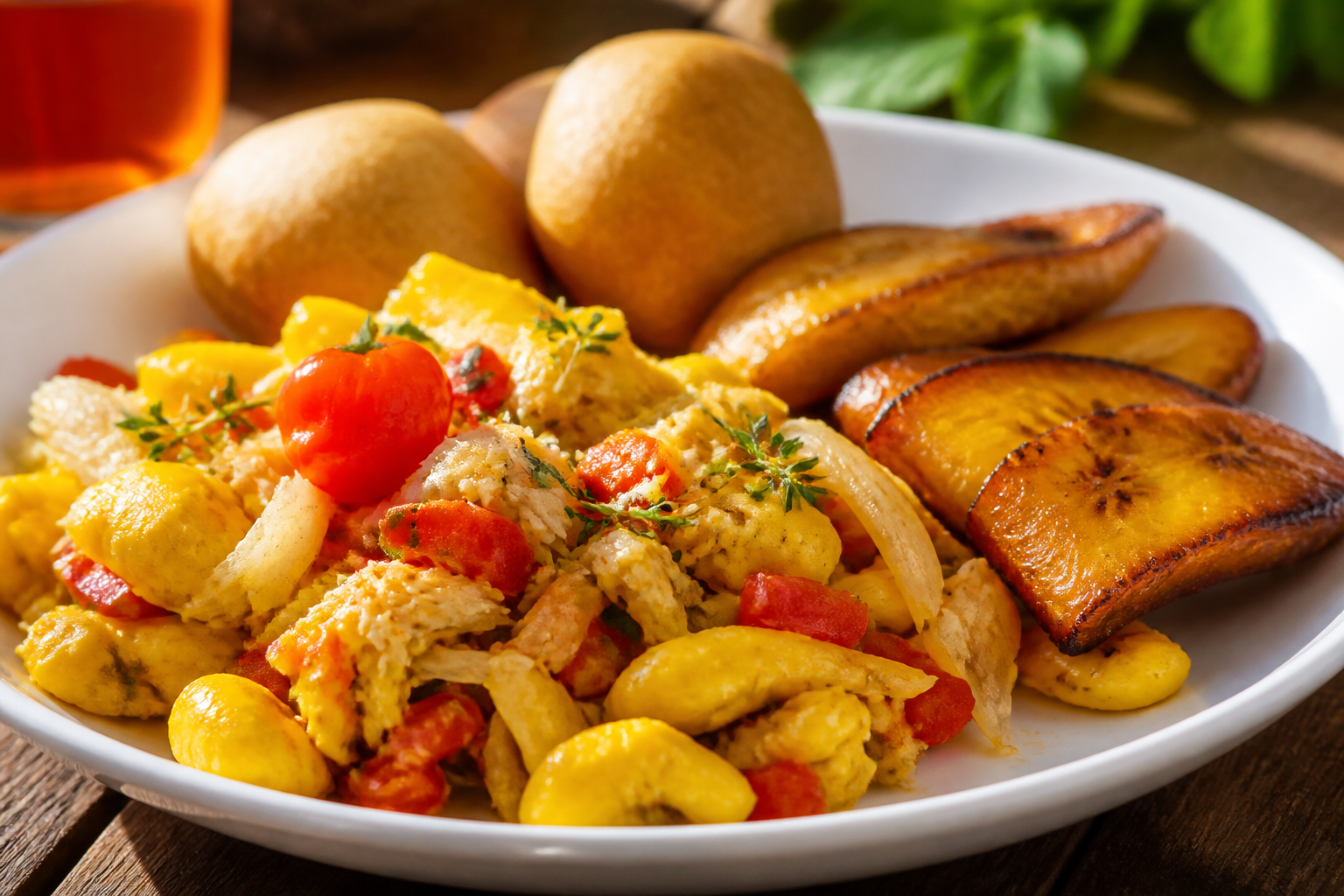
Jamaican Ackee and Saltfish
Jamaica's national dish of silky ackee sauteed with flaked salt cod, peppers, onion, tomato, and thyme, a savoury, comforting plate traditionally served for breakfast.
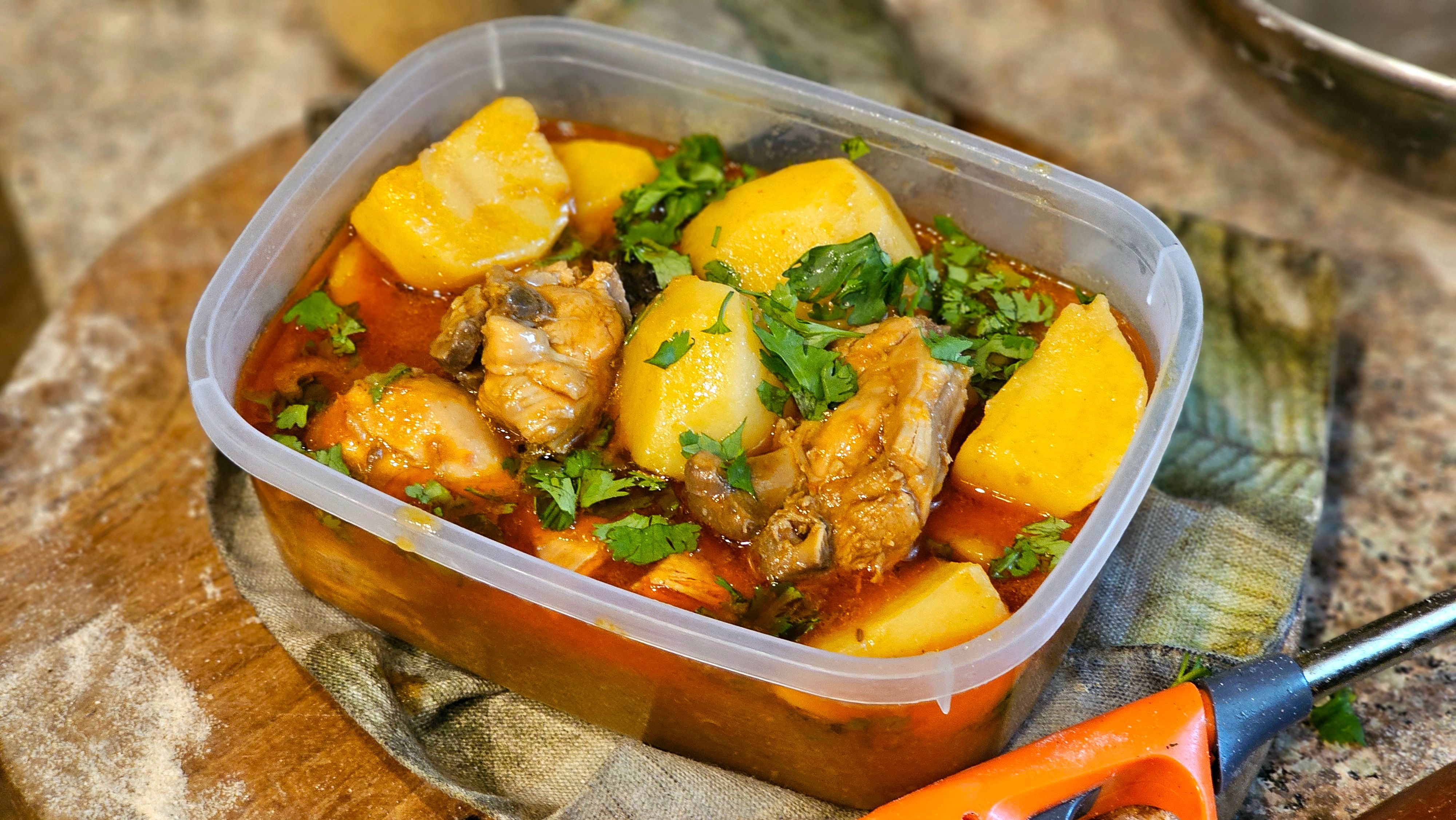
Poulet Nan Sos
Haiti's beloved stewed chicken — pieces marinated in citrus and epis, seared, then simmered in a rich tomato-and-pepper Creole sauce until tender and glossy.
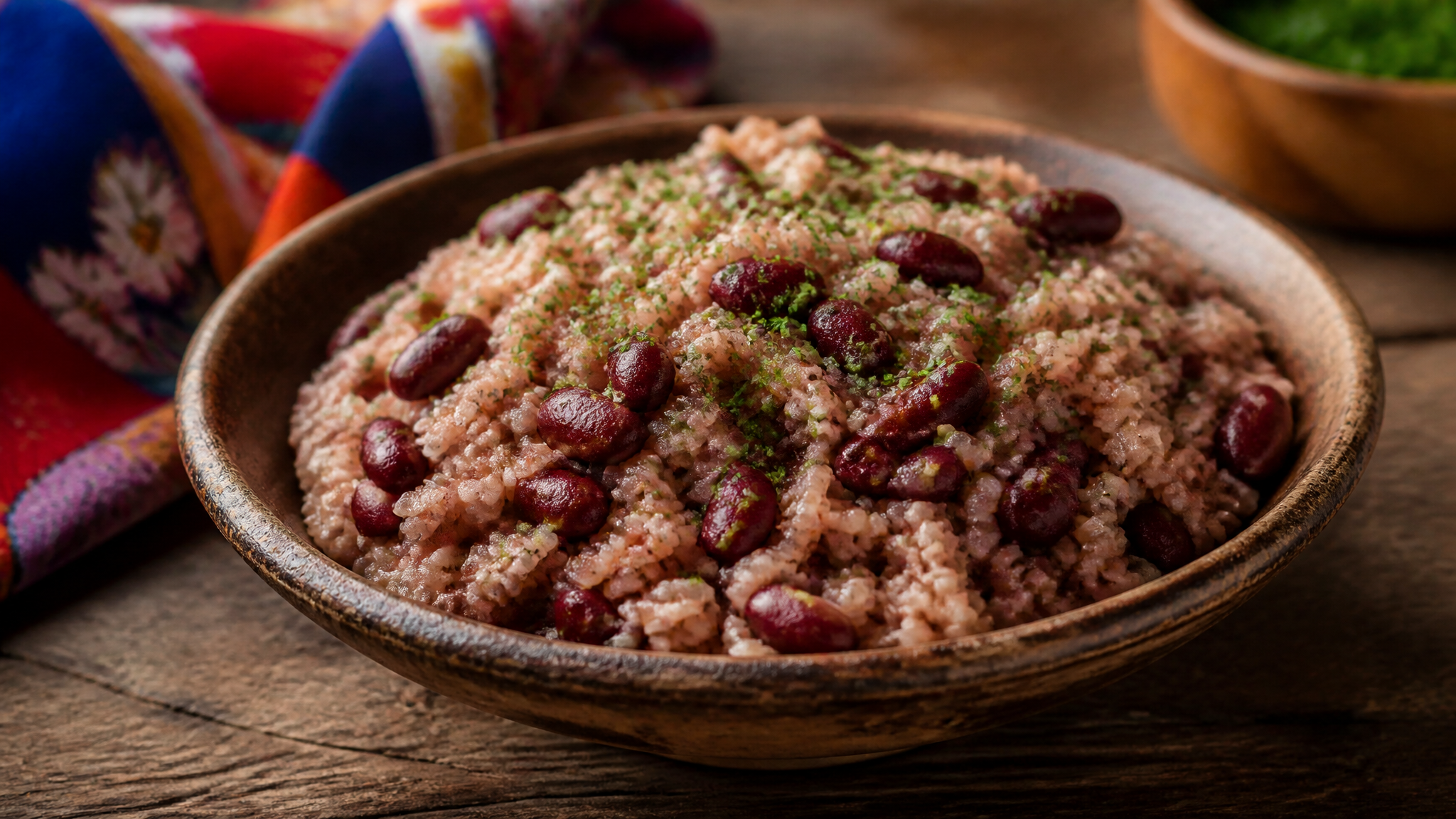
Diri ak Pwa
Haiti's everyday rice and beans — kidney beans and rice cooked together in one pot with epis, thyme, and a whole scotch bonnet for gentle heat and deep, savory flavor.

Soup Joumou
Haiti's symbolic freedom soup, traditionally served on Independence Day — a rich, golden squash-based soup with beef, vegetables, and pasta, celebrating liberation and community.
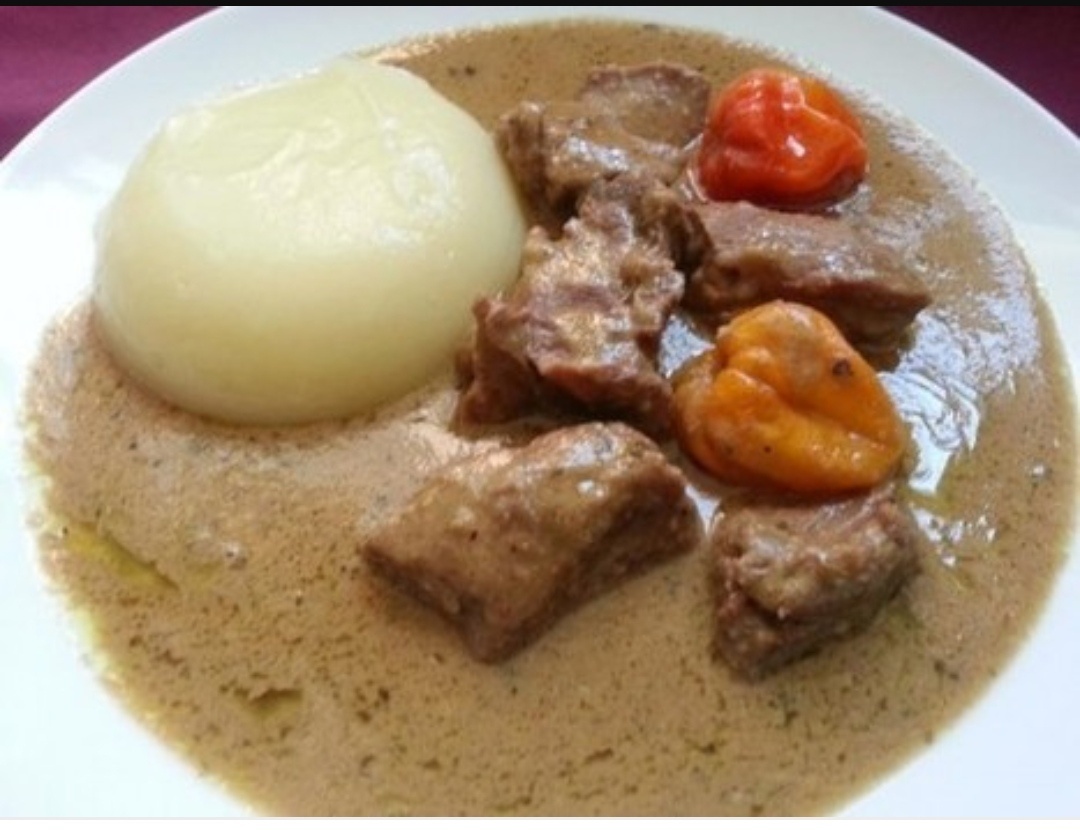
Senegalese Mafe
A comforting West African peanut stew from Senegal, slow-simmering beef with tomato and peanut butter into a thick, russet sauce studded with root vegetables and served over rice.
Explore Related Cuisines
Related Ingredients

Cooking Guides You May Like
The Essentials of Caribbean & Latin American Cooking
Bright citrus, smoky spice, and fresh seafood define the cooking of the Caribbean and Latin America. Here is an introduction.
Seasoning to Taste: Balancing Salt, Acid, Fat, and Heat
The difference between a home cook and a great one is rarely a recipe — it is knowing how to taste a dish and fix what it is missing.