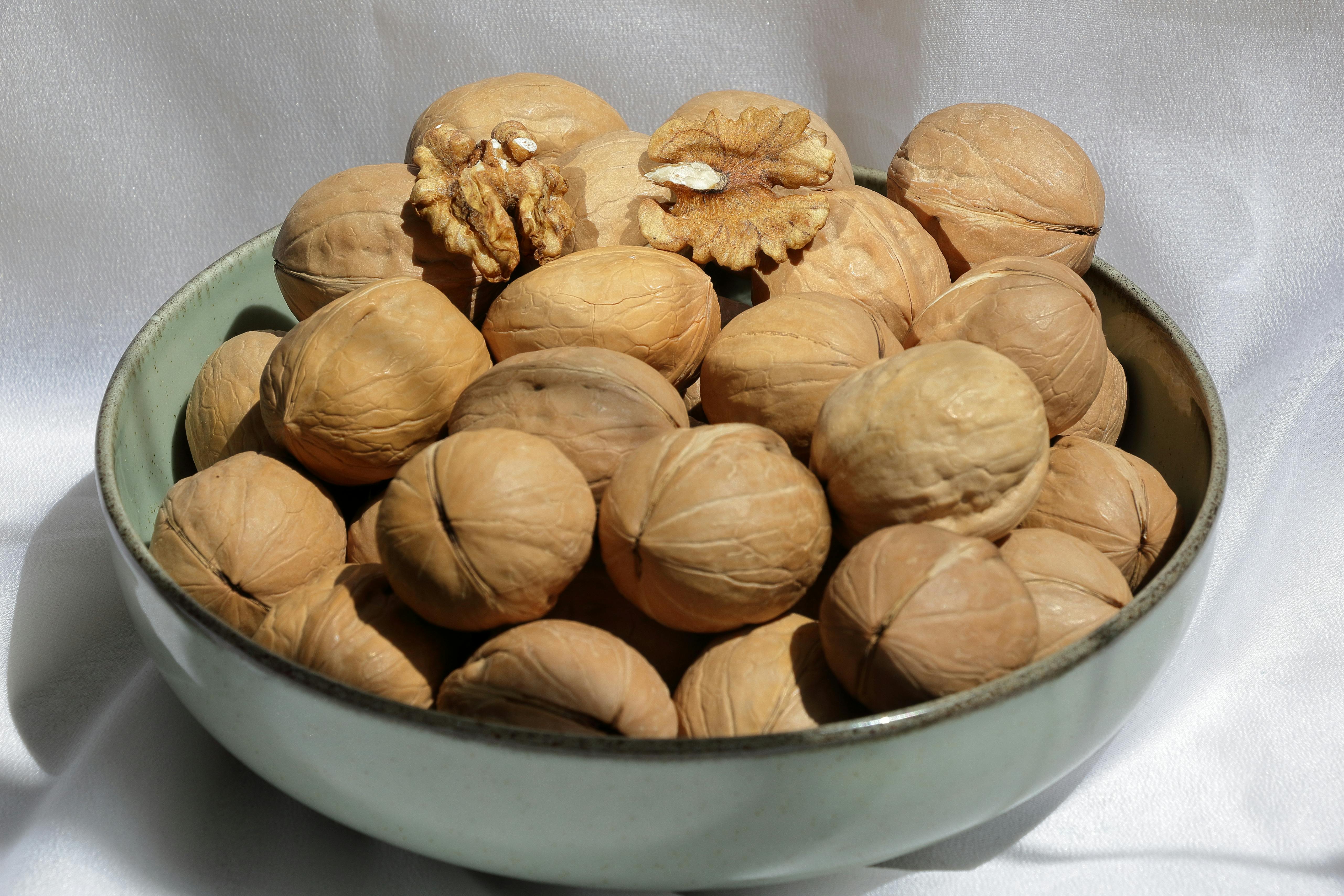
Walnuts
Rich, earthy, and brain-shaped — the nut highest in omega-3 fats.
Also known as: Juglans regia, English walnuts, Persian walnuts
Overview
Walnuts are one of the oldest tree foods known to humans, with a rich, slightly bitter, earthy flavor that works in both sweet and savory applications. They are the only tree nut with significant omega-3 fatty acid content (alpha-linolenic acid).
In cooking, walnuts appear in Italian pesto alla genovese variations, Middle Eastern muhammara, Georgian satsivi, baklava, banana bread, and Waldorf salad. Toasting them transforms their flavor from mild and slightly tannic to deeply nutty and aromatic.
Culinary Uses
- Chopped and folded into banana bread, brownies, cookies, and coffee cakes.
- Toasted and tossed into salads with blue cheese, pear, and honey.
- Ground into walnut pesto or muhammara (roasted red pepper and walnut dip).
- Candied or spiced as a cocktail snack or salad topping.
Flavor Profile
- Raw walnuts are mildly bitter with a tannic astringency from the skin.
- Toasting deepens the flavor to rich, warm, and nutty while reducing bitterness.
- Walnut oil has a pronounced, almost perfume-like nuttiness — use as a finishing oil, not for cooking.
Storage
- Store in an airtight container in the refrigerator for up to 6 months or freeze for up to a year.
- Walnuts go rancid faster than most nuts due to their high polyunsaturated fat content.
- Taste before using — rancid walnuts are noticeably bitter and paint-like.
Preparation
- Toast in a dry skillet for 5-7 minutes over medium heat, or spread on a sheet pan and bake at 350°F for 8-10 minutes.
- For a less bitter flavor, blanch shelled walnuts in boiling water for 2 minutes, then rub off the skins.
- Chop with a knife rather than a food processor for more even pieces — processors can over-process into paste.
Nutrition
Walnuts are uniquely high in ALA omega-3 fatty acids among tree nuts.
They are calorie-dense but associated with improved cardiovascular markers in research.
The richest tree nut source of alpha-linolenic acid.
Supports energy production and nervous system function.
Important for bone formation and metabolism.
Antioxidant compounds concentrated in the skin.
Dietary Considerations
- A tree nut — one of the major food allergens.
- Naturally vegan, gluten-free, and dairy-free.
- Calorie-dense (about 650 kcal per 100g) — a small handful (28g) is a standard serving.
Nutrition information is educational and approximate; it varies by variety, portion, and preparation, and is not a substitute for professional dietary advice.
Common Pairings
Recipes with Walnuts
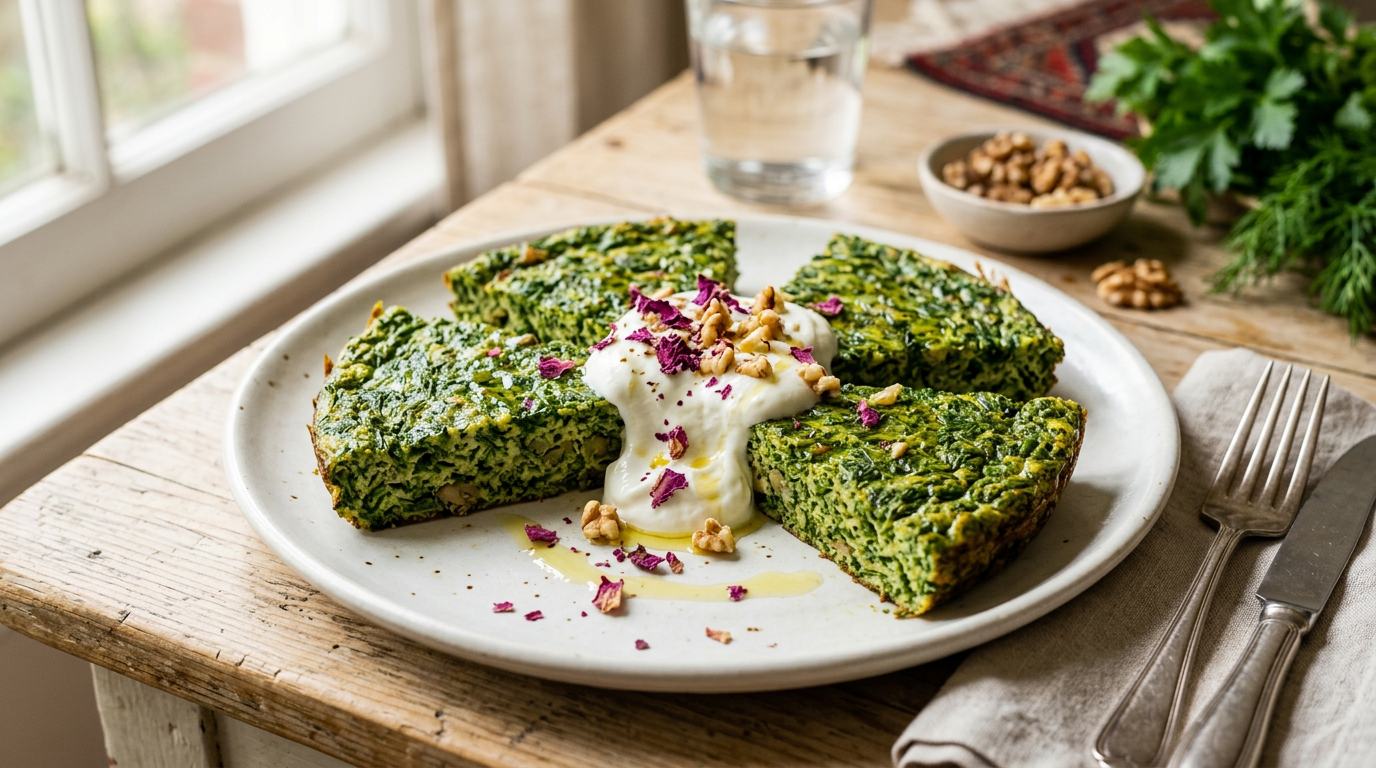
Persian Kuku Sabzi (Herb Frittata)
A vivid green Persian herb frittata packed with parsley, cilantro, dill, and chives, bound with just enough egg — served warm or cold for Nowruz, picnics, or a light vegetarian supper.
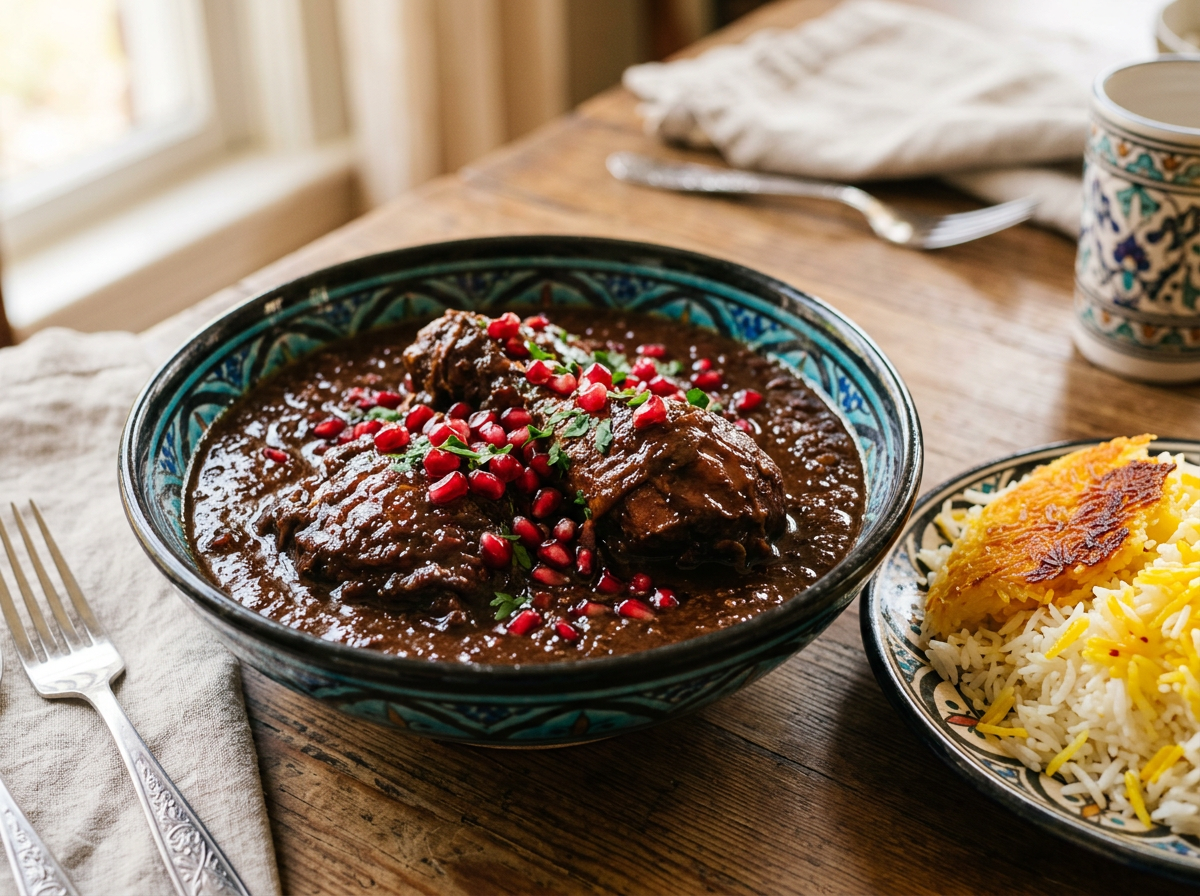
Persian Fesenjan (Walnut & Pomegranate Chicken)
A jewel of the Persian table: chicken gently braised in a velvety sauce of ground toasted walnuts and tart-sweet pomegranate molasses until deep mahogany and luxuriously rich. Served with saffron rice for a special-occasion meal.

Peruvian Aji de Gallina
Shredded chicken in a creamy, gently spicy sauce of aji amarillo, walnuts, and bread, served over potato and rice.
Explore Related Cuisines
Related Ingredients
Cooking Guides You May Like
A Practical Guide to High-Protein Eating
Protein keeps you full, supports muscle, and steadies energy. Here is how to get enough without overthinking it.
Mediterranean Diet Foundations
More a pattern than a strict diet, Mediterranean eating is one of the most studied and sustainable ways to eat well. Here is the foundation.