A cuisine of extraordinary diversity
Peru is one of the most exciting food cultures on earth, the product of remarkable geographic and cultural diversity. Its landscapes — Pacific coast, high Andes, and Amazon basin — supply an astonishing range of ingredients, and its people layer Indigenous Andean traditions with Spanish, African, Chinese, Japanese, and Italian influences brought by centuries of immigration. Peru is, in a real sense, the original fusion cuisine.
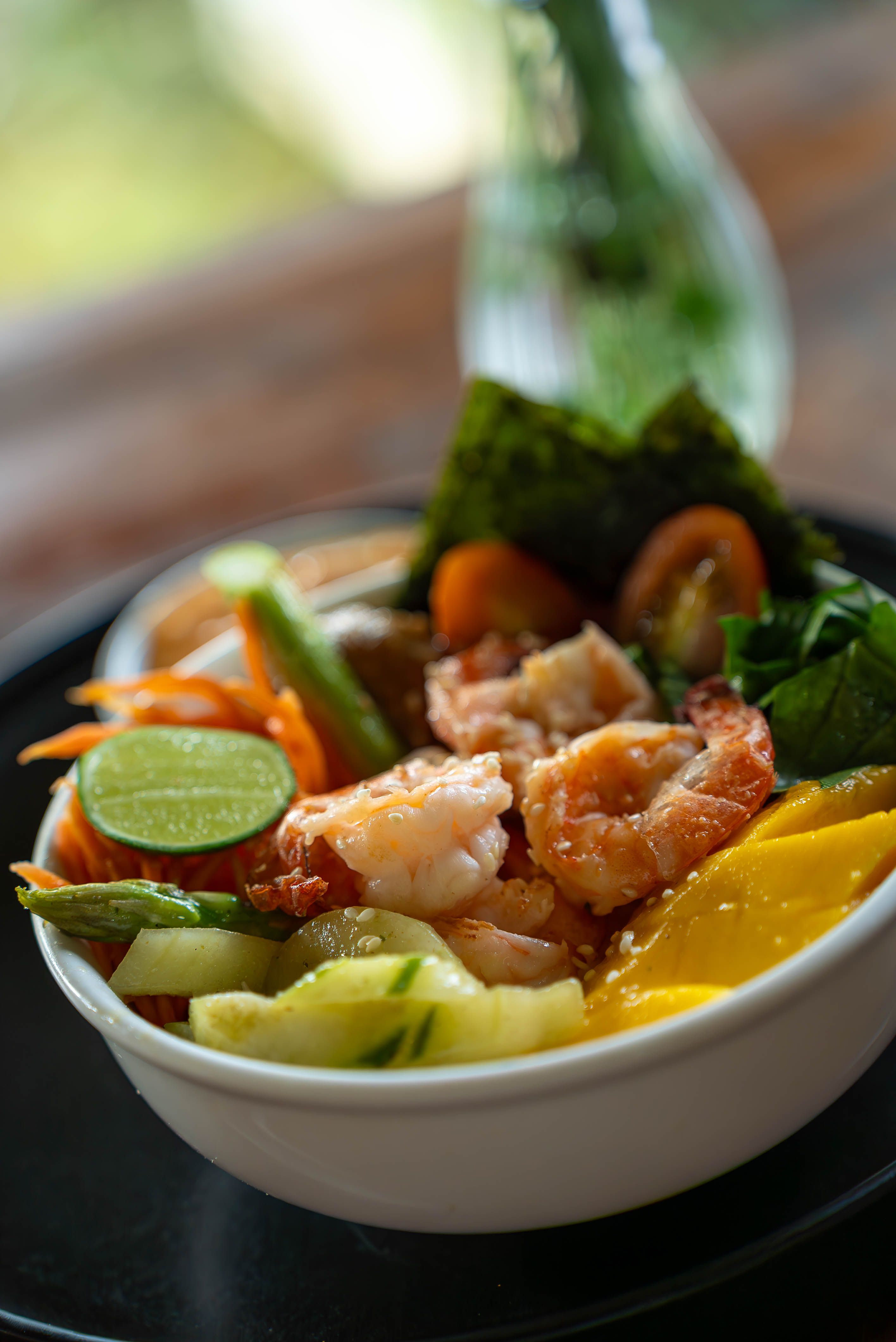
Two immigrant traditions are so established they have their own names: chifa (Chinese-Peruvian) and nikkei (Japanese-Peruvian). Alongside ancient staples like potatoes — Peru has thousands of native varieties — corn, and quinoa, this fusion has produced a cuisine of vivid color, bright acidity, and bold, layered flavor that now draws diners from around the world.
Essential ingredients: aji peppers and native staples
The soul of Peruvian flavor is the aji pepper. Aji amarillo (a fruity yellow chile), aji panca (a mild, smoky red), and fiery rocoto appear as pastes in nearly every savory dish, providing color, gentle heat, and depth. Lime is used generously for the bright acidity that defines the cuisine, and cilantro, garlic, and red onion form the aromatic base.
Native staples ground the cuisine: potatoes in countless colors and textures, corn (including the giant-kerneled choclo and toasted cancha), and the protein-rich grain quinoa. Coastal cooking leans on superb fresh seafood, while the Andes contribute hearty stews and roots. Soy sauce and ginger (from chifa) and the citrus-forward marinades of nikkei show how immigrant pantries became Peruvian.
Ceviche, stir-fry, and core techniques
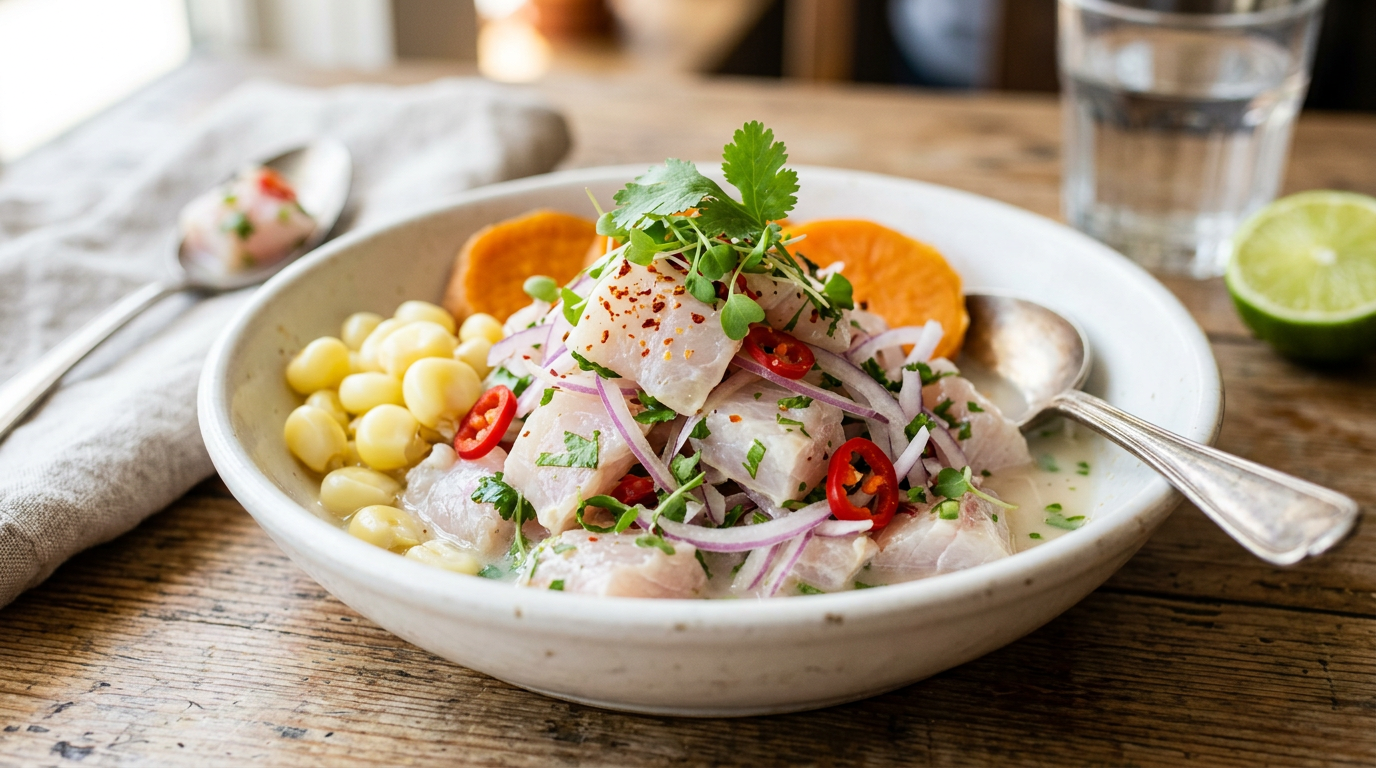
Ceviche is Peru’s national dish and its defining technique: fresh raw fish “cooked” purely by the acid of lime juice, seasoned with aji, red onion, and cilantro, and served with sweet potato and corn. The marinade, known as leche de tigre (“tiger’s milk”), is prized in its own right. The method demands the freshest possible fish and a quick hand — modern ceviche is dressed and served within minutes, not left to sit for hours.
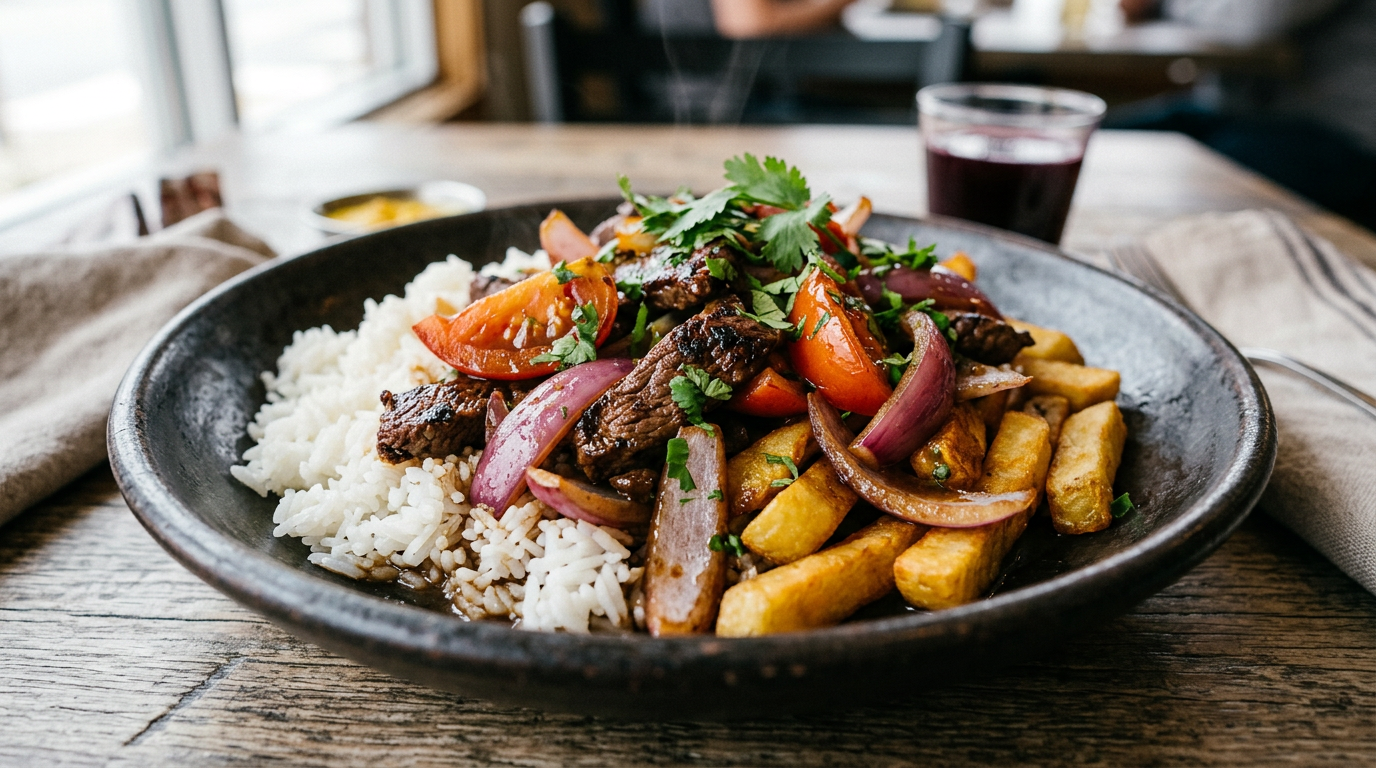
The other great technique is the chifa-derived stir-fry, seen in lomo saltado — beef seared hard in a screaming-hot wok with onion, tomato, and soy sauce, then served with both fries and rice. This marriage of Chinese wok technique with Peruvian ingredients captures the fusion spirit perfectly. Slow Andean braises and the pachamanca (an earth-oven feast) represent the older, Indigenous end of the repertoire.
Signature dishes to know
Beyond ceviche and lomo saltado, explore aji de gallina (shredded chicken in a creamy, gently spicy aji amarillo sauce), causa (layered chilled potato terrine), and anticuchos (marinated grilled skewers, classically beef heart). Papa a la huancaina — potatoes in a creamy cheese-and-aji sauce — is a beloved starter.
The chifa and nikkei traditions contribute arroz chaufa (Peruvian fried rice) and tiradito (a sashimi-like cousin of ceviche without onion). Hearty highland dishes, quinoa soups, and a wealth of street food and tropical fruit round out one of the most varied cuisines anywhere.
Cooking Peruvian food at home
The gateway to Peruvian cooking is the aji paste. A jar of aji amarillo paste unlocks aji de gallina, causa, and huancaina sauce, while good limes and the freshest fish open the door to ceviche. Keep red onion, cilantro, garlic, and soy sauce on hand, and much of the repertoire is within reach.
Cook with confidence and speed where the cuisine calls for it: dress ceviche just before serving, and sear stir-fries fast over the highest heat you can manage. Balance the bright acidity and gentle chile heat that run through the cuisine, and start with ceviche and lomo saltado — two dishes that between them capture Peru’s coastal freshness and its fusion soul.