A crossroads cuisine shaped by history
Moroccan cooking sits at the meeting point of Amazigh (Berber), Arab, Andalusian, and Mediterranean traditions, and every one of those influences is still visible on the plate. The indigenous Amazigh people gave the cuisine its foundational techniques — the clay tagine, the communal couscous, and slow cooking over coals. Arab traders brought spices, dried fruits, and the pastry traditions behind dishes like pastilla, while the arrival of Andalusian refugees from Spain added olives, citrus, and refined confections.
The result is a cuisine defined by contrast and balance: sweet against savory, the brightness of preserved lemon against the richness of slow-braised lamb, warm spice against cooling herbs. Meals are traditionally communal and generous, built around sharing from a single vessel, and hospitality is inseparable from the food itself. Understanding Moroccan cooking means understanding that flavor is layered patiently rather than rushed.
The spice pantry: ras el hanout, saffron, and preserved lemon
The backbone of Moroccan flavor is its spice pantry. Cumin, coriander, ginger, turmeric, cinnamon, sweet paprika, and black pepper appear constantly, often blended into ras el hanout — a complex mix whose name means “head of the shop,” signifying the best a spice merchant has to offer. Saffron lends its floral color to celebratory dishes, while harissa, a fiery chile paste, brings heat when it is wanted.
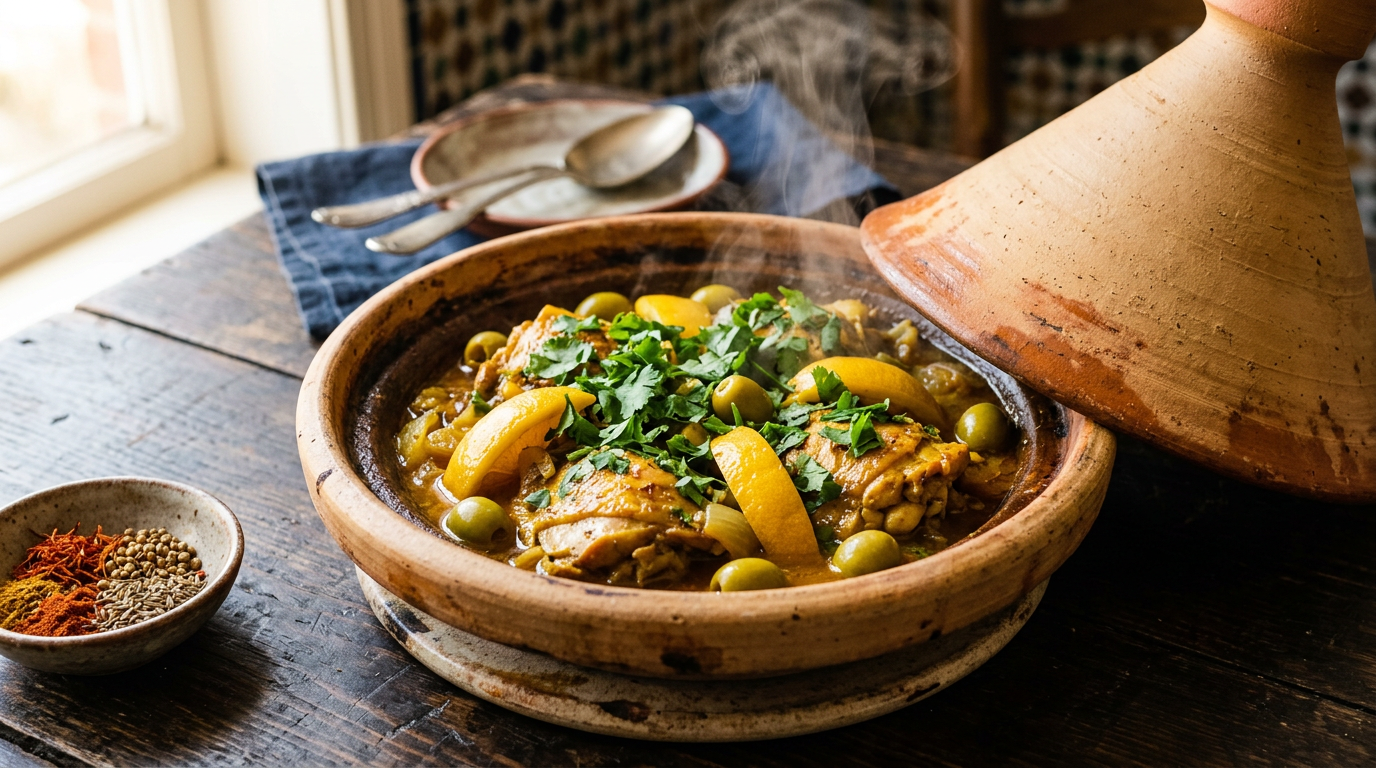
Two preserved ingredients define the cuisine as much as any spice. Preserved lemons — whole lemons cured in salt until soft and intensely aromatic — add a mellow, almost fermented citrus note that fresh lemon cannot replicate. Olives, cured in countless styles, bring brine and depth. Together with fresh cilantro and flat-leaf parsley, these are the finishing touches that make a Moroccan braise unmistakable.
Core techniques: the tagine and steamed couscous
The tagine — both the conical earthenware vessel and the dish cooked in it — is the heart of Moroccan technique. Its shape traps rising steam, condenses it, and returns it to the pot, so meats and vegetables braise gently in very little liquid and emerge meltingly tender. At home you can approximate this with a heavy lidded pot or Dutch oven over low heat; the principle is the same, a long, slow, self-basting braise.
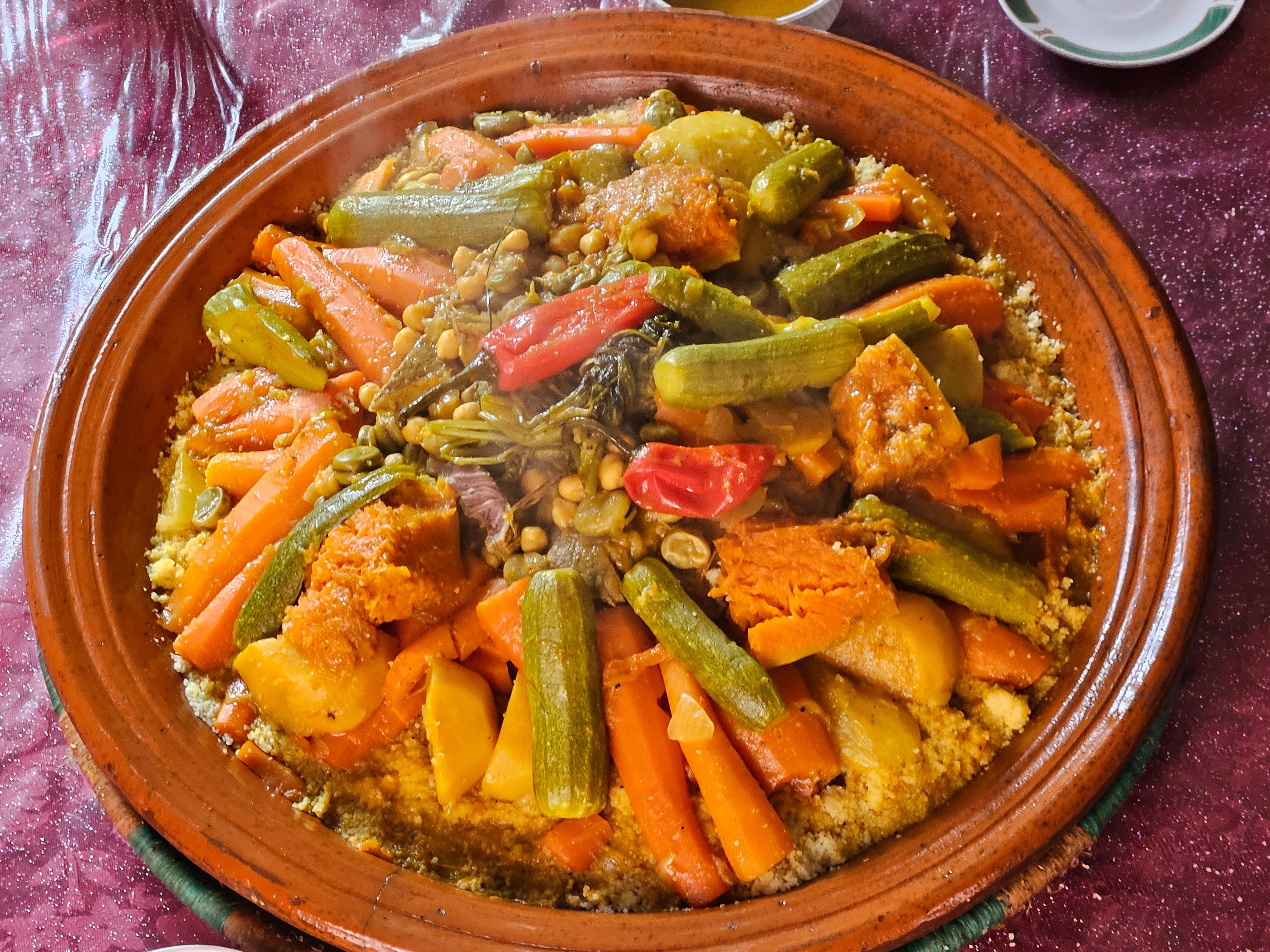
Couscous, contrary to common belief, is not simply boiled. Traditionally the fine semolina granules are steamed over a simmering stew in a couscoussier, fluffed, and steamed again — sometimes three times — until each grain is separate and light. This patient method is why authentic couscous is airy rather than gummy. Reserving a bit of the fragrant broth to serve alongside keeps the finished dish moist and flavorful.
Signature dishes to know
Start with the classics: chicken tagine with preserved lemon and olives, lamb tagine with prunes and almonds, and seven-vegetable couscous, the traditional Friday meal. Harira, a hearty tomato, lentil, and chickpea soup, breaks the fast during Ramadan and warms any winter table. Bastilla (pastilla), a shimmering pie of poultry, almonds, and cinnamon wrapped in paper-thin warqa pastry and dusted with sugar, showcases the sweet-savory interplay at its most dramatic.
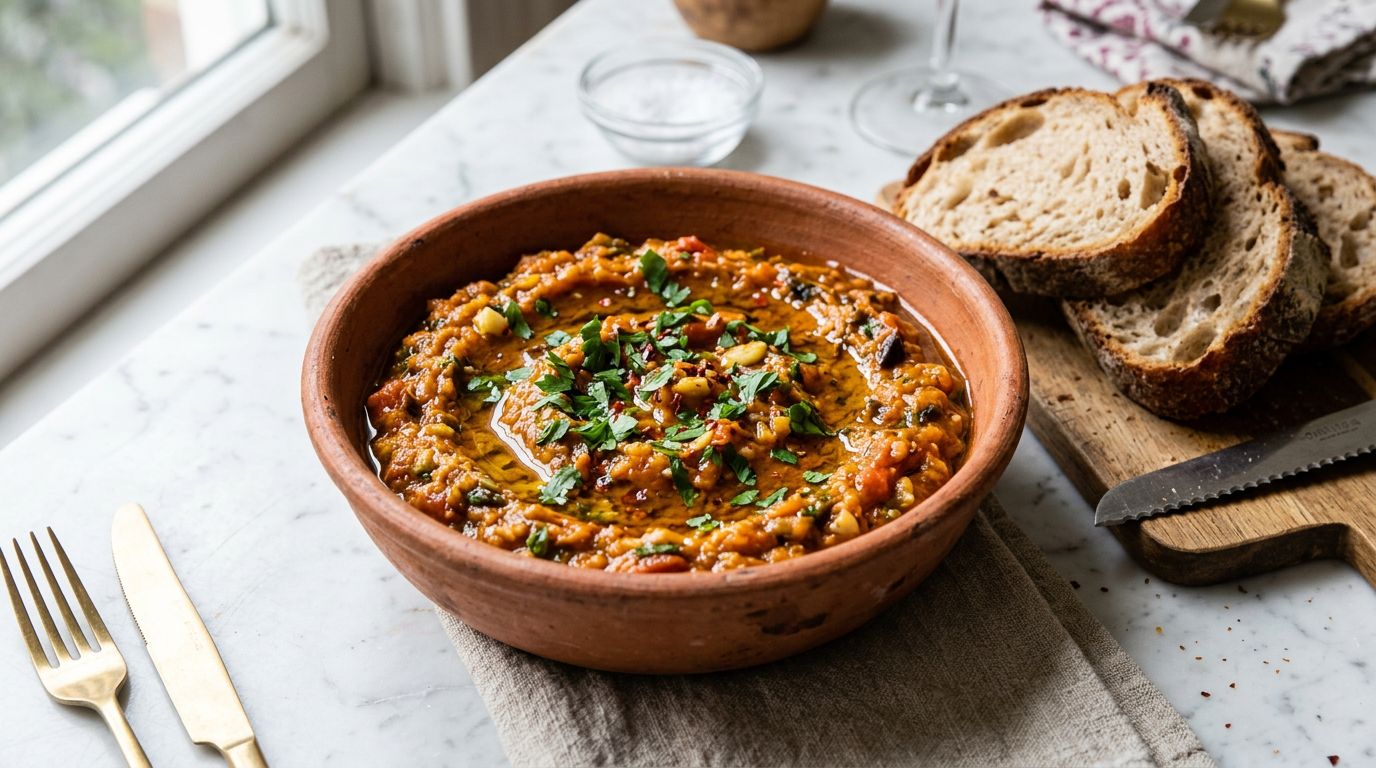
Everyday cooking is simpler but no less flavorful: zaalouk (a smoky cooked eggplant and tomato salad), taktouka (peppers and tomatoes), grilled kefta skewers, and bowls of olives and warm khobz bread. Mint tea, poured from a height into small glasses, closes nearly every meal and is itself a ritual of hospitality.
Cooking Moroccan food at home
You do not need specialized equipment to begin. A Dutch oven stands in for a tagine, and a fine-mesh steamer basket over a pot approximates a couscoussier. Invest first in quality spices and a jar of preserved lemons (which you can make yourself with only lemons and salt over about a month). Build your braise by blooming spices in oil, layering aromatics, then cooking low and slow.
Balance is everything: taste for the interplay of salt, acid from preserved lemon, sweetness from dried fruit or a touch of honey, and warmth from spice. Finish with fresh herbs and serve with bread to scoop up the sauce. Once you internalize the rhythm — bloom, layer, braise, finish — the whole repertoire opens up.