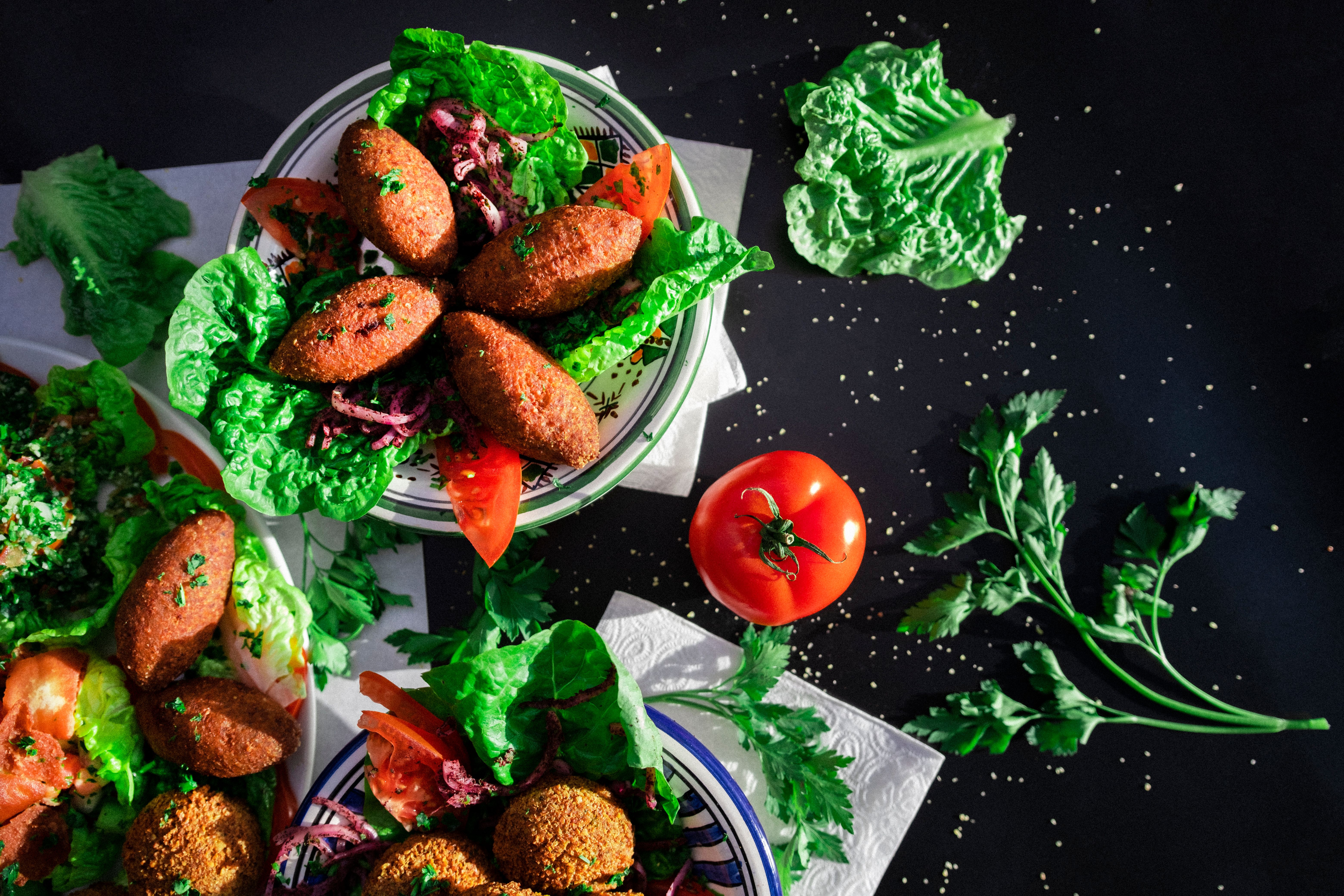
An imperial cuisine at the crossroads of continents
Turkish cuisine is one of the world’s most influential, refined over centuries in the kitchens of the Ottoman Empire, which drew ingredients and ideas from the Balkans, the Caucasus, the Middle East, North Africa, and Central Asia. Straddling Europe and Asia, Turkey inherited a vast larder — the seafood of the Aegean and Black Sea coasts, the grains and pulses of Anatolia, the fruits and nuts of the highlands — and a court cuisine that prized refinement and variety.
What emerged is a cuisine of remarkable range: smoky grilled meats, elaborate vegetable dishes cooked in olive oil, hearty bean and grain stews, and a pastry tradition that gave the world baklava. Regional identity is strong — the spicy kebabs of the southeast differ sharply from the olive-oil vegetables of the Aegean — yet bread, tea, and hospitality unite the whole country.
Essential ingredients
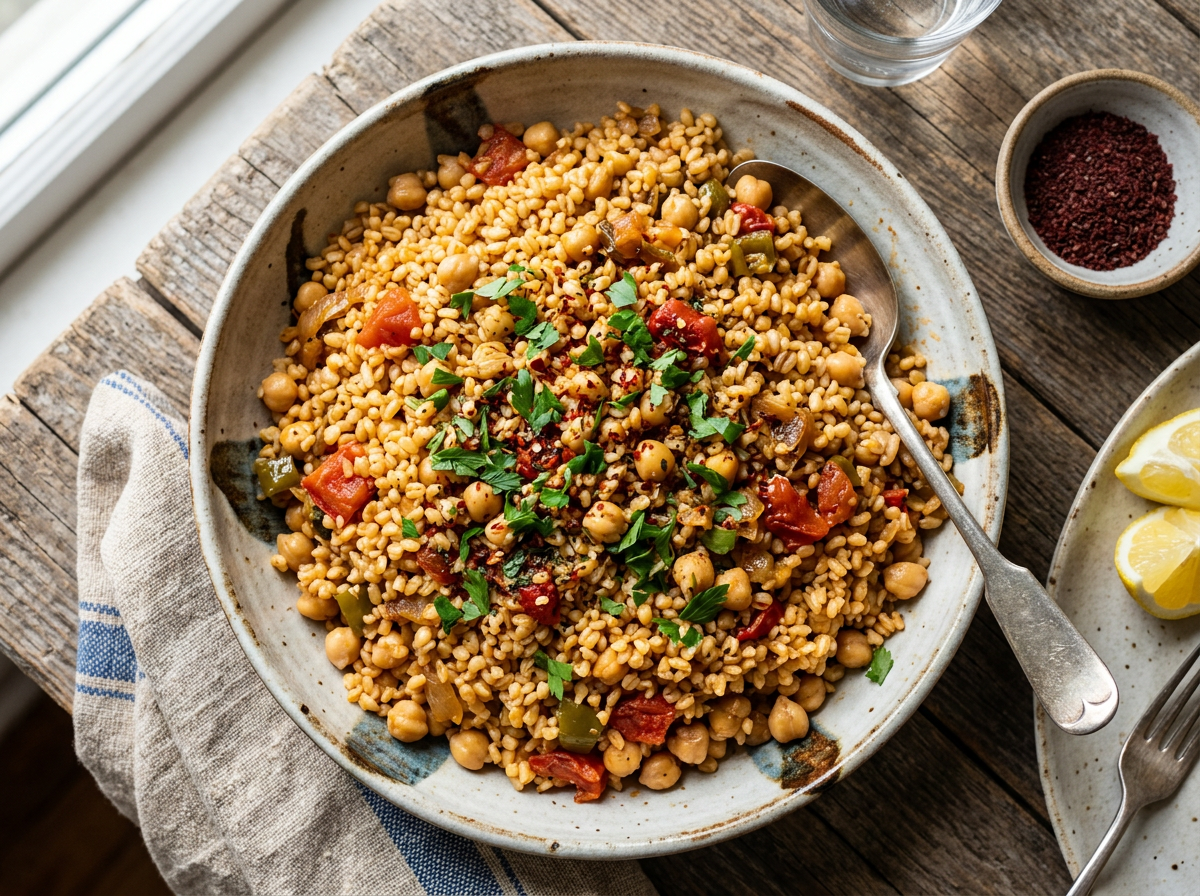
Turkish flavor rests on lamb and beef, yogurt, eggplant, tomatoes and peppers (both fresh and as concentrated pastes, salca), bulgur, and dried beans and chickpeas. Olive oil dominates the western coast, while butter and tail fat enrich the interior. Nuts — pistachios, walnuts, hazelnuts — appear in both savory dishes and sweets.
The spice hand is warm and measured: cumin, sumac, dried mint, Aleppo-style pepper flakes (pul biber), and black pepper are staples, alongside fresh parsley and dill. Yogurt is nearly ubiquitous — spooned over dumplings and vegetables, thinned into the drink ayran, or strained thick. Pomegranate molasses and lemon supply the cuisine’s bright, sour edge.
Kebabs, meze, and core techniques
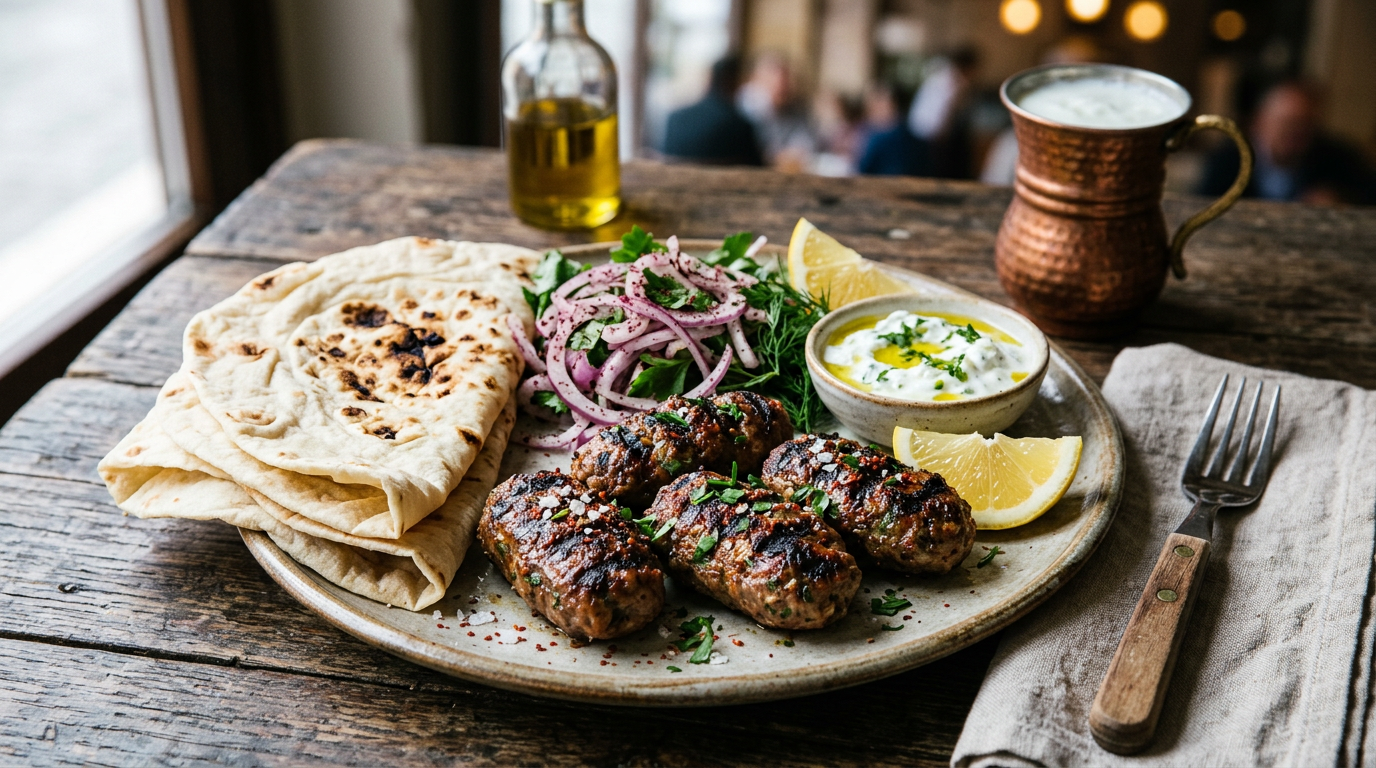
Grilling is central: the mangal (charcoal grill) turns out marinated şiş kebabs, minced-meat Adana and İskender kebabs, and köfte. But Turkish cooking is far more than grilled meat. The meze table — cold and hot small plates like haydari (thick herbed yogurt), ezme (spicy tomato-pepper relish), stuffed grape leaves, and fried eggplant — opens most meals, echoing the mezze traditions of the wider region.
A signature category is zeytinyağlı — vegetables such as green beans, artichokes, or stuffed peppers cooked slowly in olive oil and served at room temperature. Bread is everywhere, from pillowy pide to sesame-crusted simit, and yufka (thin pastry) underpins both savory börek and sweet baklava. Long, slow braising and careful layering of yogurt and butter finish many dishes.
Signature dishes to know
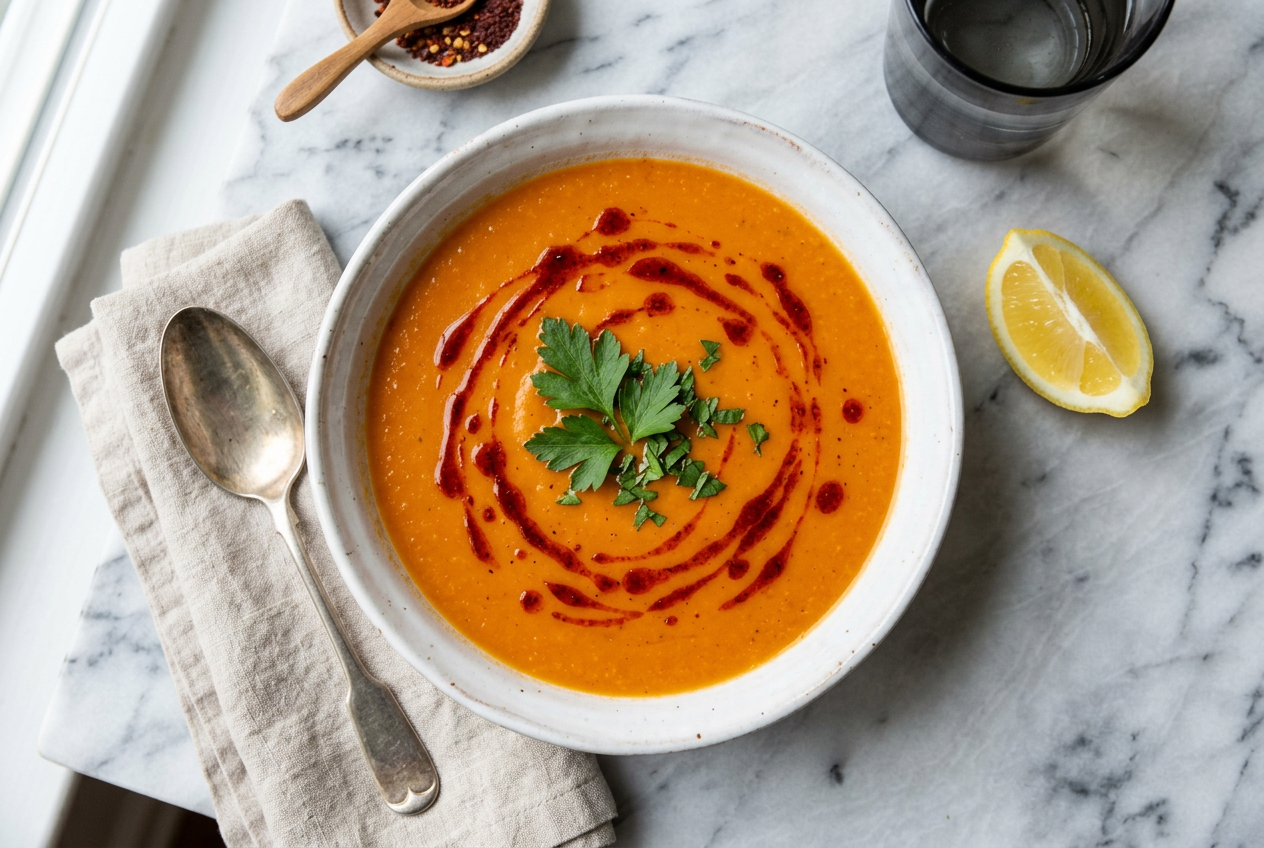
Start with mercimek çorbası (red lentil soup), the comforting opener found on every table, and menemen (soft eggs scrambled with tomato and pepper) for breakfast. Among mains, explore Adana and şiş kebabs, İskender kebab (sliced döner over bread with tomato sauce and yogurt), and manti — tiny dumplings under garlicky yogurt and chile butter. Karnıyarık and imam bayıldı showcase eggplant stuffed and braised to silkiness.
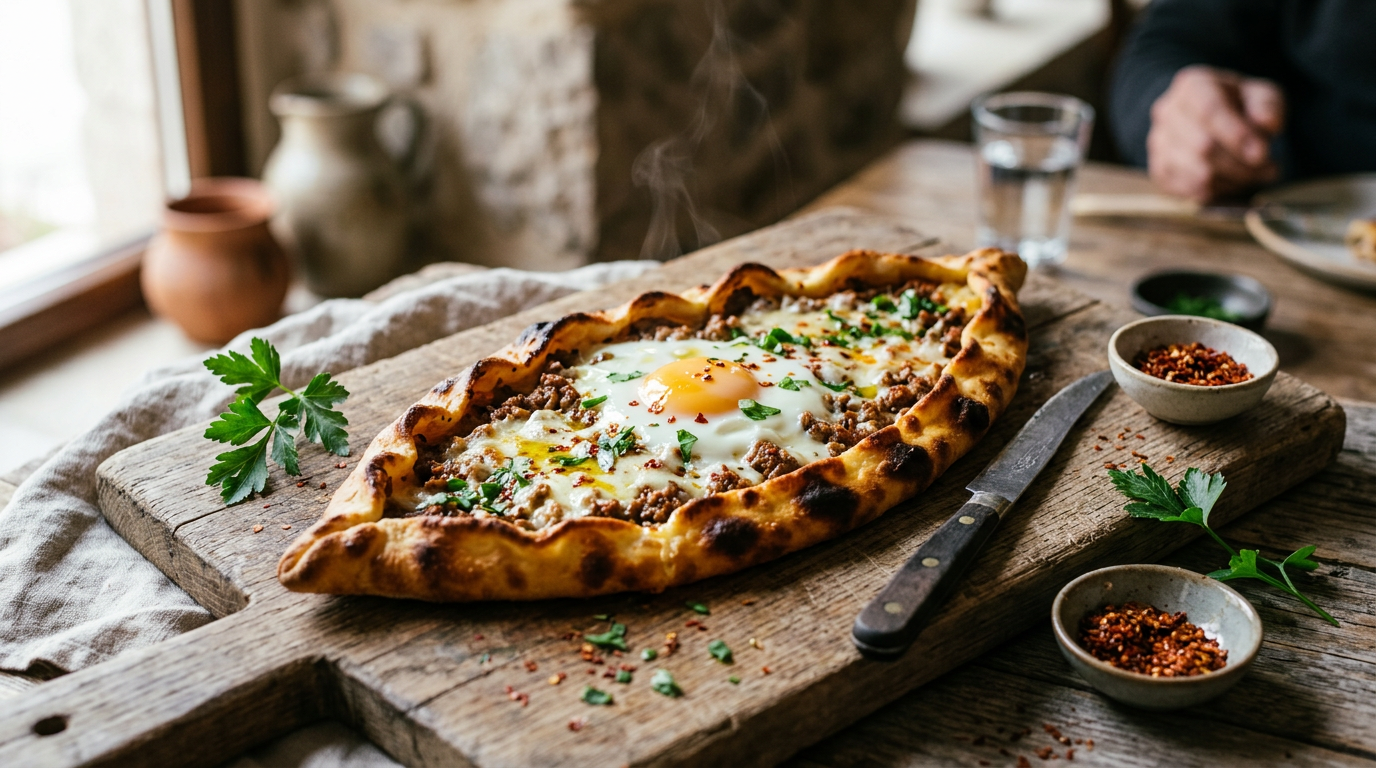
Savory börek (flaky filled pastries) and pide (boat-shaped flatbreads) are beloved everyday foods. For dessert, baklava, künefe (a warm cheese pastry in syrup), and milk puddings like sütlaç are classics, all traditionally followed by small glasses of strong tea or Turkish coffee.
Cooking Turkish food at home
Turkish home cooking is approachable and deeply satisfying. Stock red lentils, bulgur, good olive oil, pepper and tomato paste (salca), pul biber, and thick yogurt, and you can cook widely. Many vegetable dishes are meant to be served warm or at room temperature, so they suit making ahead.
Lean on the cuisine’s signature moves: pair rich, spiced meat with cooling yogurt; brighten stews with a spoon of pepper paste and a squeeze of lemon; and finish with dried mint sizzled in butter. Begin with lentil soup, a yogurt-topped dish, and a simple köfte, and the wider repertoire quickly follows.