One of the world’s oldest cuisines
Persian cuisine is among the most ancient and refined in the world, developed over more than two and a half millennia across the Iranian plateau. It profoundly influenced the cooking of the Middle East, the Caucasus, Central Asia, and the Indian subcontinent — the Mughal kitchens that gave rise to biryani drew directly on Persian technique. Yet it retains a distinctive identity built on subtlety, aroma, and an almost philosophical pursuit of balance.
That balance is rooted in an old idea of “hot” and “cold” foods, a system of harmonizing ingredients believed to keep the body and the meal in equilibrium. In practice it produces a cuisine of extraordinary nuance: sweet and sour held in tension, herbs used by the handful, and spices deployed for fragrance rather than heat.
Essential ingredients: saffron, dried limes, and herbs
No ingredient is more emblematic of Persian cooking than saffron, bloomed in warm water to release its color and perfume and used to gild rice, stews, and desserts. Dried limes (limoo amani) lend a distinctive, haunting sourness to stews, while barberries, pomegranate, sour cherries, and unripe grape juice (verjuice) provide the tart notes the cuisine loves. Rosewater and orange-blossom water scent sweets and drinks.
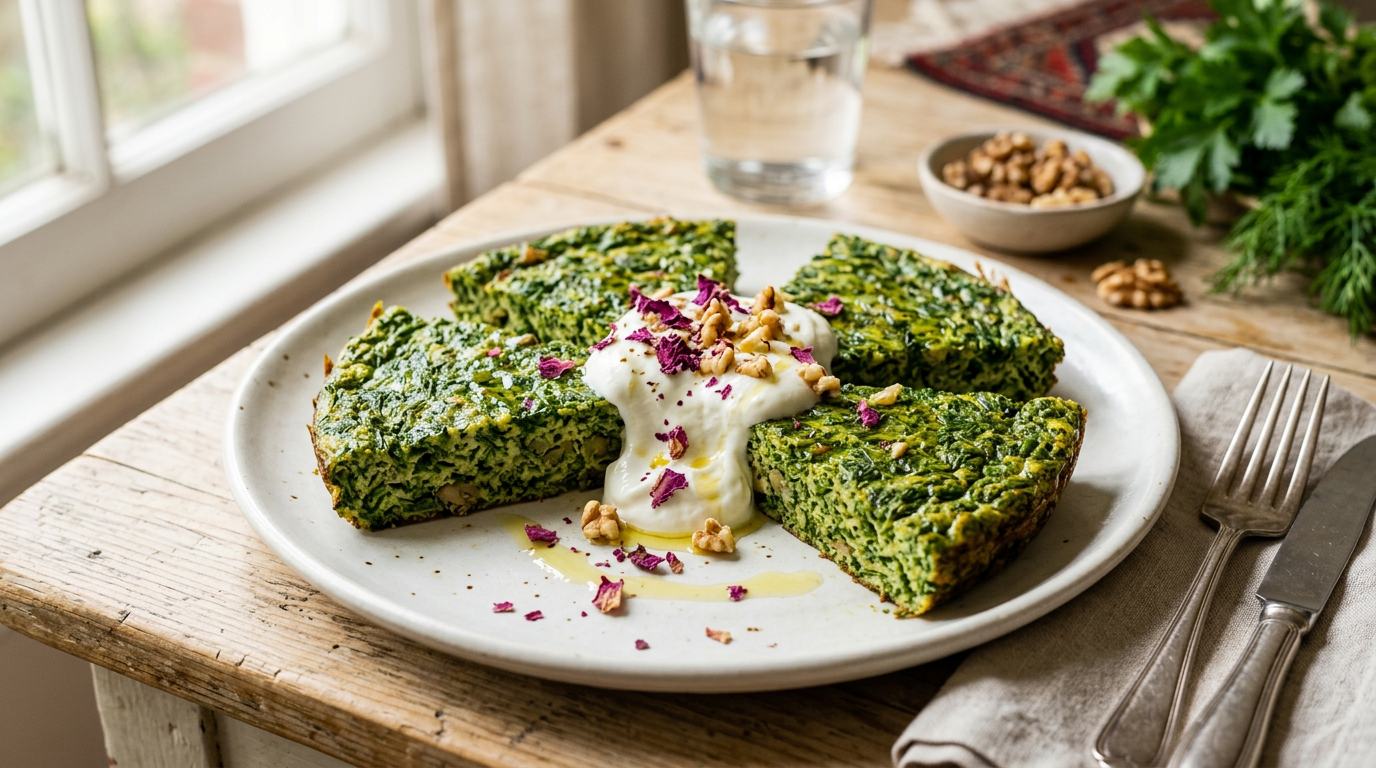
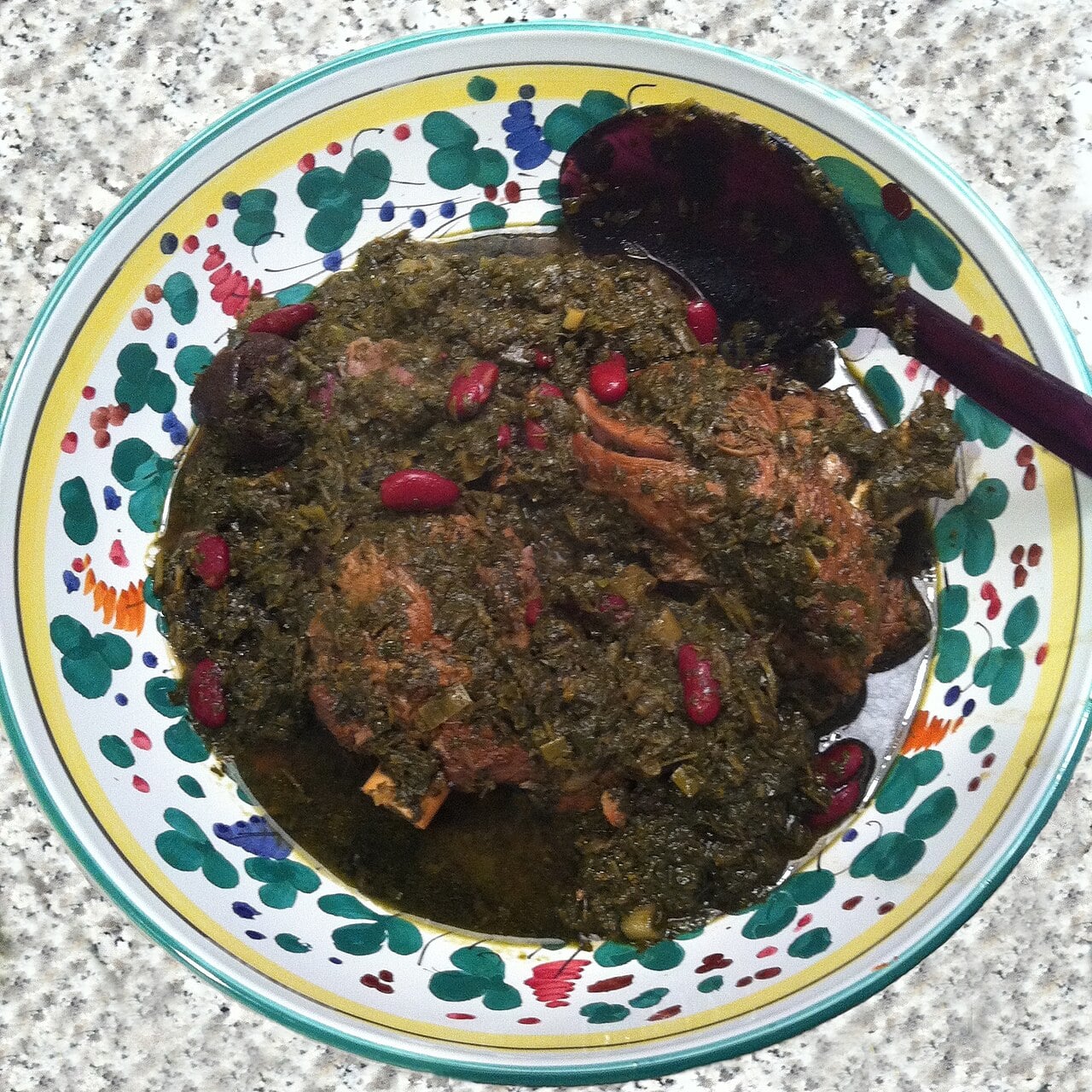
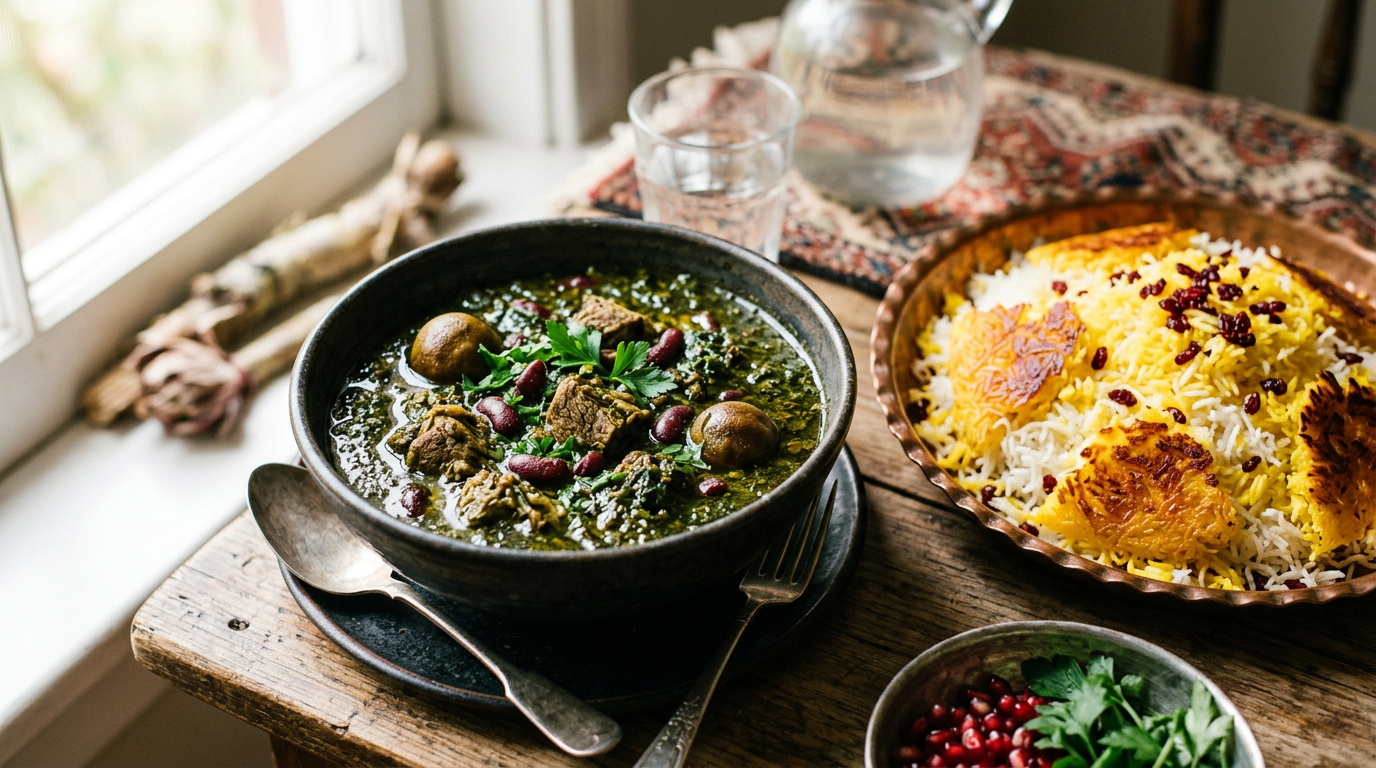
Fresh herbs are used in quantities that surprise newcomers — parsley, cilantro, dill, mint, fenugreek, and chives appear by the bunch, most famously in the herb stew ghormeh sabzi and the New Year herb rice sabzi polo. Walnuts, almonds, pistachios, and dried fruits add richness and texture, and warm spices like cinnamon, cardamom, turmeric, and dried rose petals are used with a light, aromatic hand.
The art of rice and tahdig
Rice is the pride of the Persian table, and cooking it is treated as an art. The prized method, chelow, involves soaking long-grain basmati, parboiling it, then steaming it slowly so each grain stands separate, elongated, and fluffy. The reward for patience is tahdig — the golden, crackling crust that forms at the bottom of the pot from rice, and sometimes bread, potato, or yogurt. Tahdig is so beloved that it is often the most fought-over part of the meal.
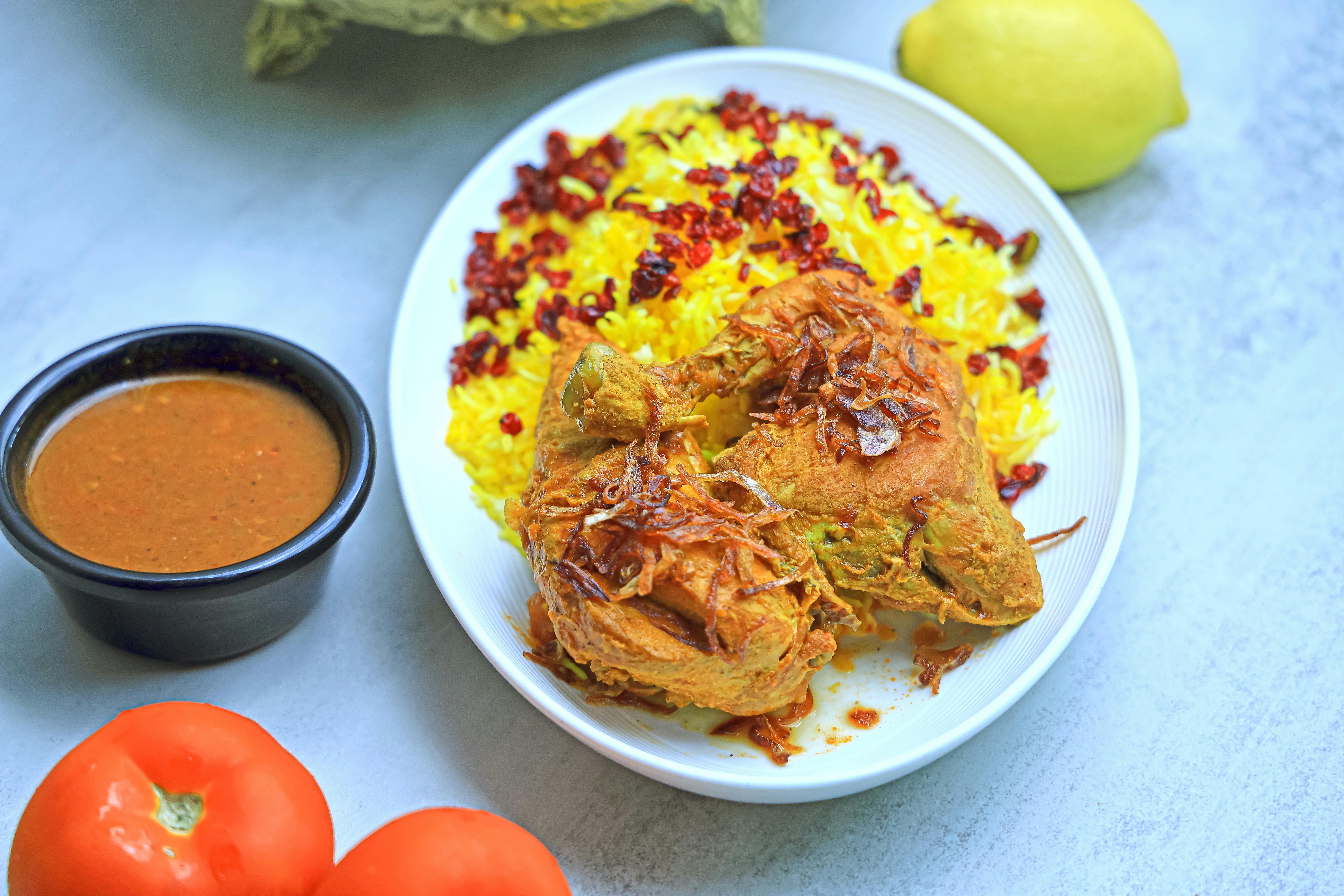
Beyond plain chelow, layered rice dishes (polo) fold in ingredients like barberries and saffron (zereshk polo), fava beans and dill (baghali polo), or sour cherries. The technique looks intimidating but rewards practice: the keys are rinsing the rice well, salting the parboiling water generously, and steaming gently under a cloth-wrapped lid to draw off excess moisture.
Signature dishes to know
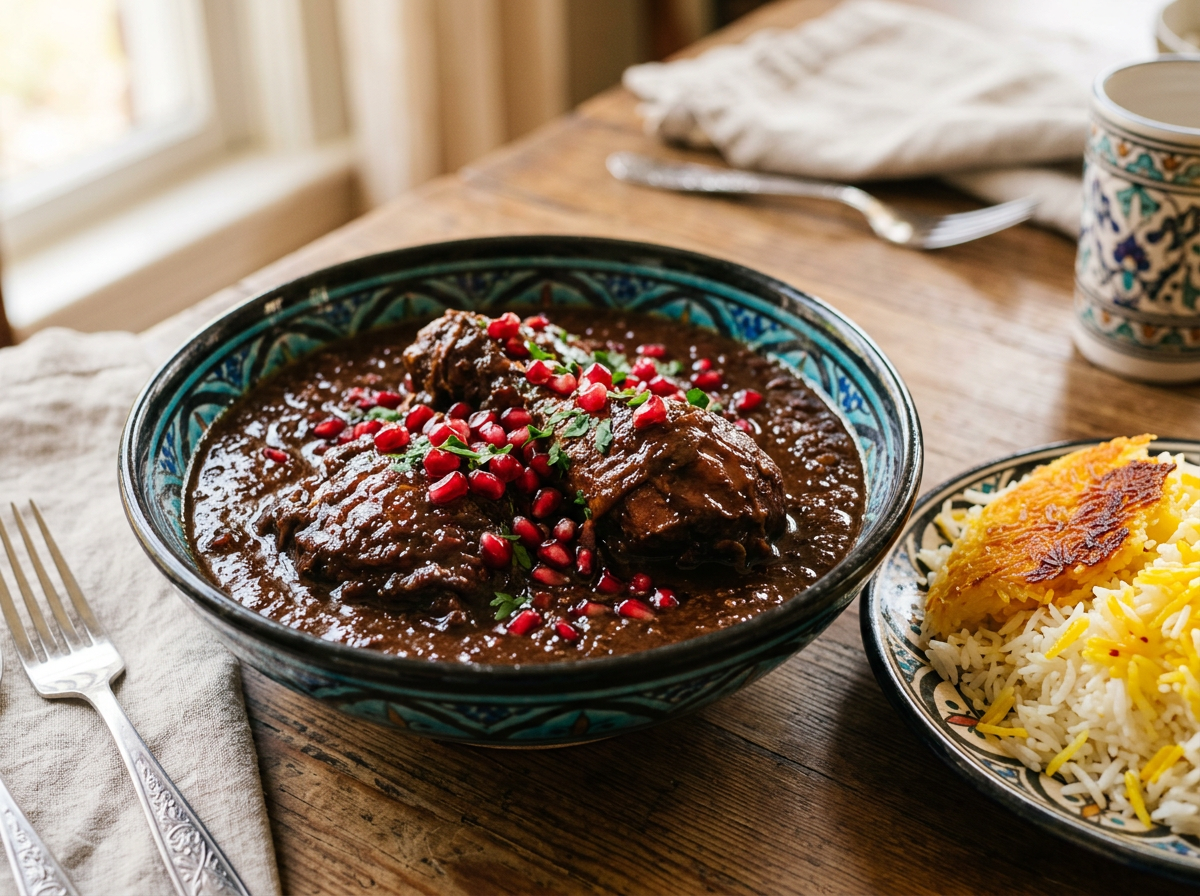
The great stews (khoresh) are the soul of home cooking. Ghormeh sabzi simmers mountains of herbs with dried lime and beans; gheimeh pairs split peas and tomato with crisp fried potato; and fesenjan, a luxurious stew of ground walnuts and pomegranate molasses, is a celebration dish of remarkable depth. Each is served over chelow rice.
Grilled kababs — especially koobideh (seasoned ground meat) and joojeh (saffron-yogurt chicken) — are the other pillar, served with grilled tomato, sumac, and rice or flatbread. Ash reshteh, a thick herb-and-noodle soup, and dishes like tahchin (a saffron-yogurt baked rice cake) round out a rich repertoire.
Cooking Persian food at home
Persian cooking rewards patience more than technique-heavy skill. Buy good saffron and a few dried limes, keep basmati rice on hand, and do not be shy with fresh herbs. Bloom your saffron in advance, taste stews for the signature sweet-sour-savory balance, and give rice the time it needs to soak and steam.
Start with a simple saffron chelow and a pot of ghormeh sabzi, and you will understand the cuisine’s rhythm: aromatic, gently sour, herb-rich, and never overpowering. Once tahdig comes out golden and intact, you will be hooked — it is one of the great pleasures of the global table.