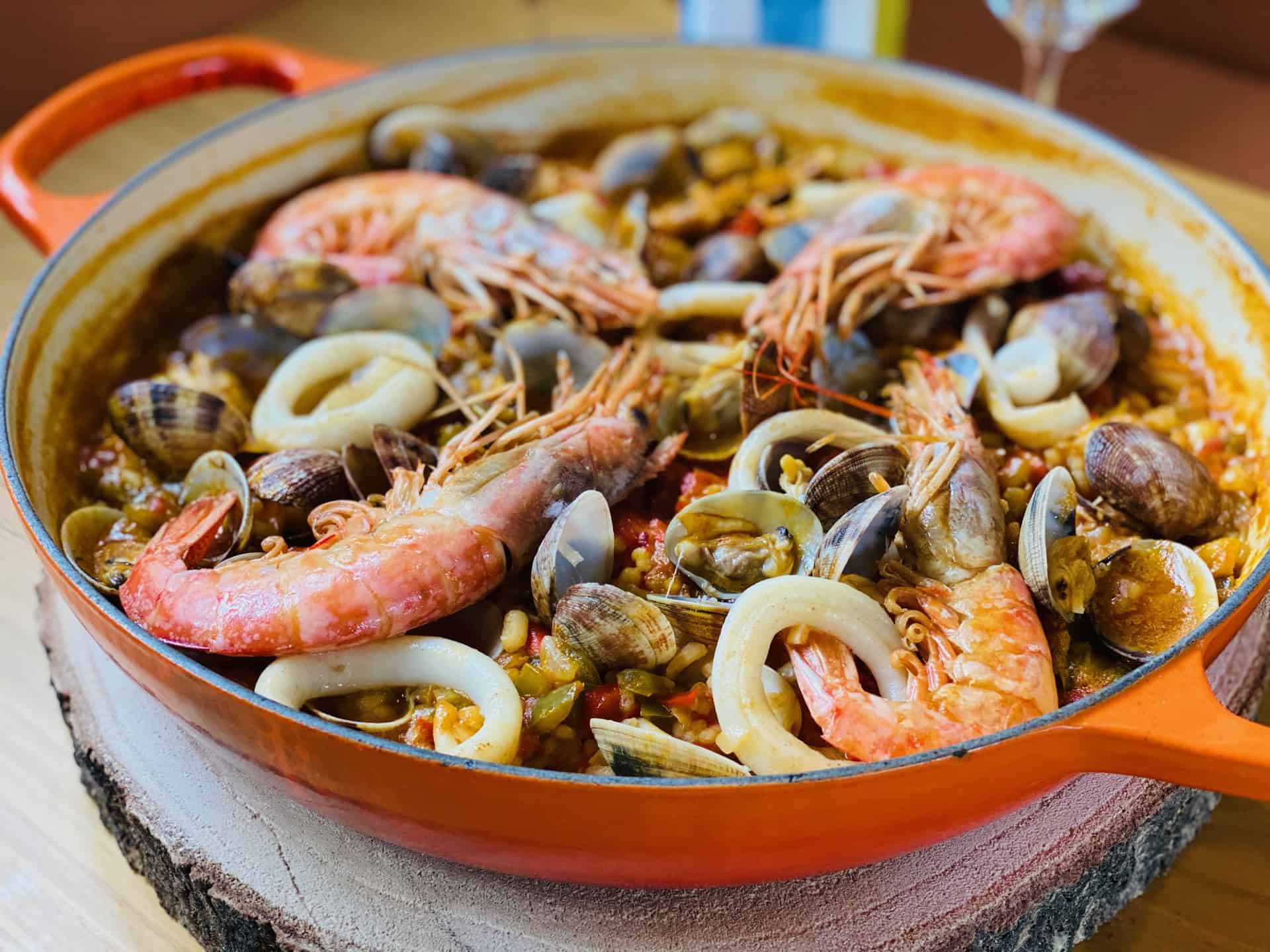
Seafood Paella
Saffron-scented rice cooked with shrimp, mussels, and calamari until it forms the prized crispy socarrat.
About This Recipe
This festive Spanish seafood paella is a classic, crowd-pleasing showpiece that brings the vibrant flavors of the Mediterranean straight to your table. Naturally gluten-free and dairy-free, this dish is defined by its rich combination of tender calamari, plump mussels, and juicy shrimp, all nestled in a bed of perfectly seasoned rice.
The secret to this recipe's success lies in the building of flavor and texture. Starting with a rich tomato and onion sofrito base provides a deeply savory foundation, while infusing the fish stock with saffron threads ensures that every grain of Bomba rice absorbs that signature golden hue and earthy aroma. Crucially, leaving the rice undisturbed as it simmers allows the coveted socarrat—the crispy, caramelized layer of rice at the bottom of the pan—to develop its prized texture.
When preparing this dish, patience is key during the simmering stage, as resisting the urge to stir is essential for achieving that perfect bottom crust. If mussels are unavailable, you can easily substitute them with hard-shell clams to maintain the dish's briny depth.
For the ultimate communal dining experience, serve this beautiful paella family-style directly from the wide pan, garnished generously with fresh lemon wedges to cut through the rich flavors. While best enjoyed immediately, any leftovers can be stored in an airtight container in the refrigerator for up to two days and gently reheated.
Ingredients
- 400 g Bomba rice
- 300 g Shrimp
- 400 g Mussels
- 200 g Calamari
- 1 pinch Saffron
- 1 L Fish stock
- 1 cup Sofrito (tomato-onion)
Instructions
- 1
Build a sofrito base of onion, garlic, and tomato in a wide pan.
8 min
- 2
Toast the rice, then add saffron-infused stock.
4 min
- 3
Simmer without stirring so the socarrat forms on the bottom.
18 min
- 4
Nestle in the seafood and cook until just done.
8 min
- 5
Rest, then serve straight from the pan with lemon.
3 min
Nutrition Facts
480
kcal
Calories
30
g
Protein
62
g
Carbs
10
g
Fat
3
g
Fiber
980
mg
Sodium
Rate This Recipe
Beverage Pairings
Spain drinks with its tapas: chilled Cava and Albariño for seafood, Rioja with jamón and grilled meats, and fruit-filled sangria on a warm evening. Sharing plates call for versatile, refreshing drinks that keep pace across the table.
Wine, Beer & Spirits
A saline coastal white made for paella and seafood tapas. A crisp, mineral profile is a natural match for seafood.
Serve well chilled (8–10°C).
Crisp bubbles cut through fried tapas and refresh the palate. A crisp, mineral profile is a natural match for seafood.
Serve cold (6–8°C).
Oak-aged Tempranillo with leather and cherry suits jamón and grilled meats.
Serve at 16–18°C.
Zesty acidity lifts delicate fish. A crisp, mineral profile is a natural match for seafood.
Serve well chilled (8–10°C).
Fruity and easy — the convivial partner to a tapas spread.
Serve cold over ice.
Non-Alcoholic
A fruit-forward, alcohol-free version that keeps the same festive spirit.
Serve cold over ice with fruit.
A clean refresher between varied small plates.
Serve cold with a citrus twist.
Light and palate-cleansing — a safe, refreshing choice.
Steep at 75–80°C for 2 minutes.
Tips & Guidance
- 1Use bomba or Calasparra rice — these short-grain Spanish varieties absorb liquid without releasing excess starch, producing distinct grains rather than risotto-like mush. Do not substitute with arborio.
- 2Build the socarrat (the prized crispy rice crust on the bottom) by increasing the heat for the final 2–3 minutes of cooking. Listen for a faint crackling sound and watch for wisps of smoke. This is the most celebrated part of an authentic paella.
- 3Add the seafood in stages based on cooking time: mussels and clams first (they need time to open), then shrimp and squid (which cook in minutes). Overcooked shrimp are rubbery; overcooked squid is tough.
Provides color but lacks saffron's distinctive flavor. If budget allows, even a few threads of saffron make a noticeable difference.
Available in most supermarkets. Use slightly less liquid (3:1 instead of 3.5:1) as Calrose absorbs less than bomba.
For a classic paella mixta. Brown the chicken and chorizo first to render fat, then build the sofrito in the rendered fat for deeper flavor.
- Stirring the rice after adding the stock. Paella is not risotto — stirring releases starch and creates a sticky, gummy texture. Distribute the rice evenly, then do not touch it.
- Using a pot instead of a wide, shallow paella pan (or large skillet). The rice should be no more than 1 inch deep so it cooks evenly and develops the socarrat.
- Adding too much liquid. The ratio matters: roughly 3 to 3.5 cups of hot stock per cup of bomba rice. Adding more produces soggy, waterlogged rice.
Paella is best served immediately from the pan. Refrigerate leftovers for up to 2 days. Reheat in a skillet over medium heat with a splash of broth, covered, for 5–7 minutes. The socarrat will not re-form, but the flavor remains excellent. Do not freeze — the seafood texture degrades.
- Paella Arancini — form cold paella into balls, stuff with a cube of manchego, bread and fry until golden. Serve with aioli.
- Paella Frittata — press leftover paella into a hot, oiled oven-safe skillet, pour beaten eggs over the top, and finish under the broiler.
- Paella Stuffed Squid — mix leftover rice with chopped herbs, stuff into cleaned squid bodies, and grill or bake briefly.
You Might Also Like
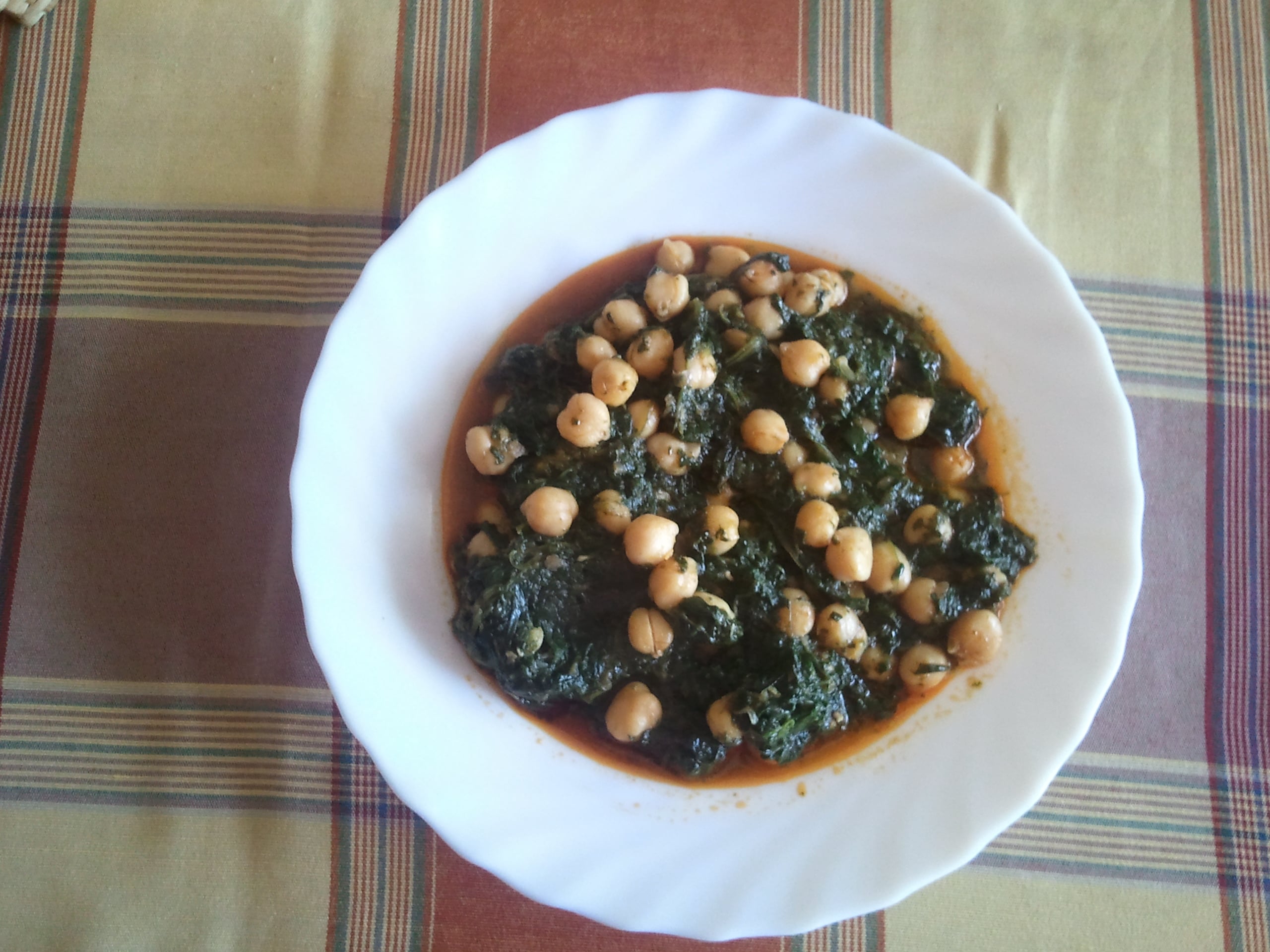
Spanish Garbanzos con Espinacas
An Andalusian tapas favorite — chickpeas and spinach in a smoky paprika and garlic sauce. Vegan, quick, and endlessly satisfying with crusty bread.
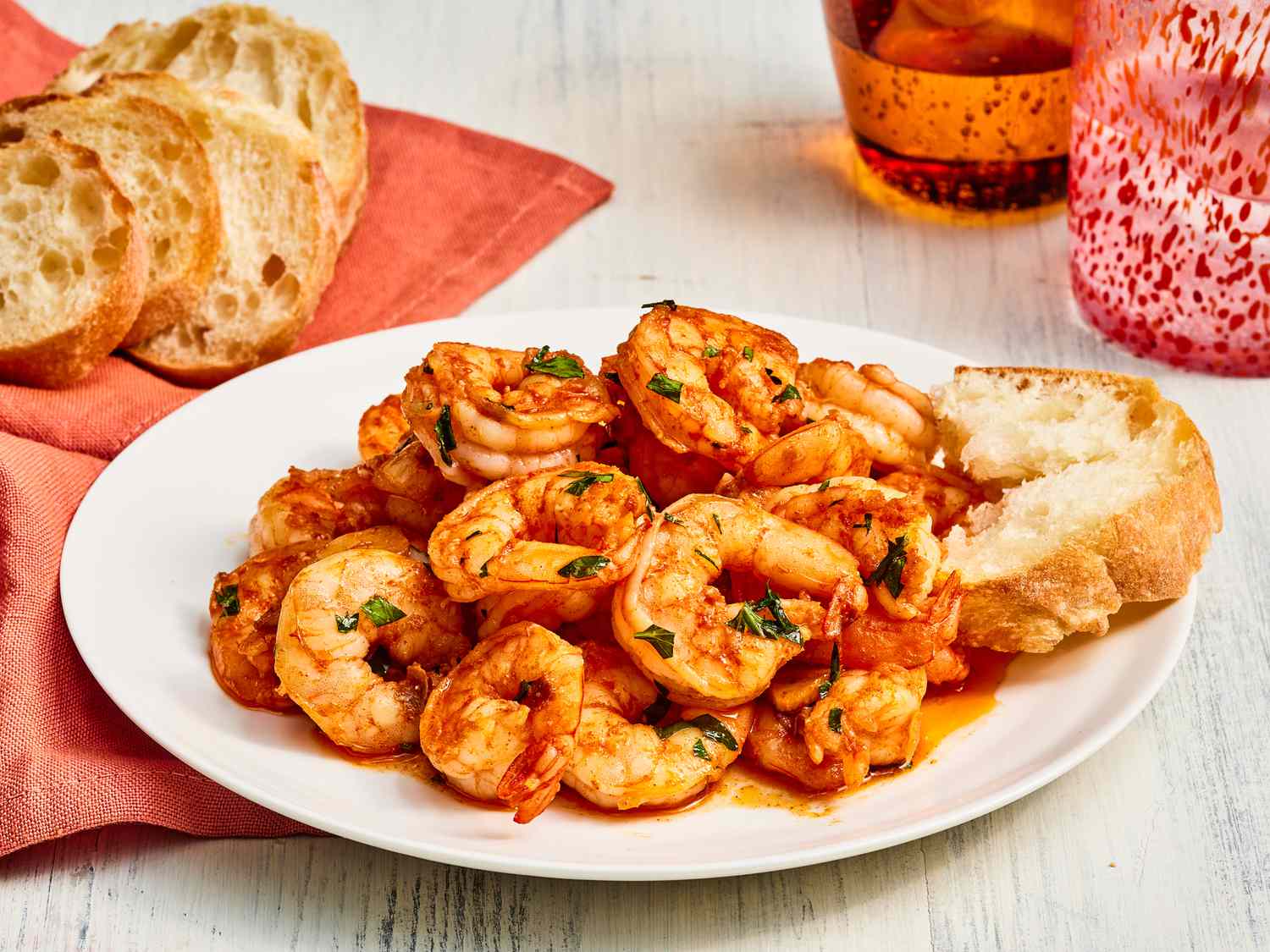
Gambas al Ajillo
Sizzling garlic shrimp in olive oil with a whisper of chili — ready in minutes and made for crusty bread.
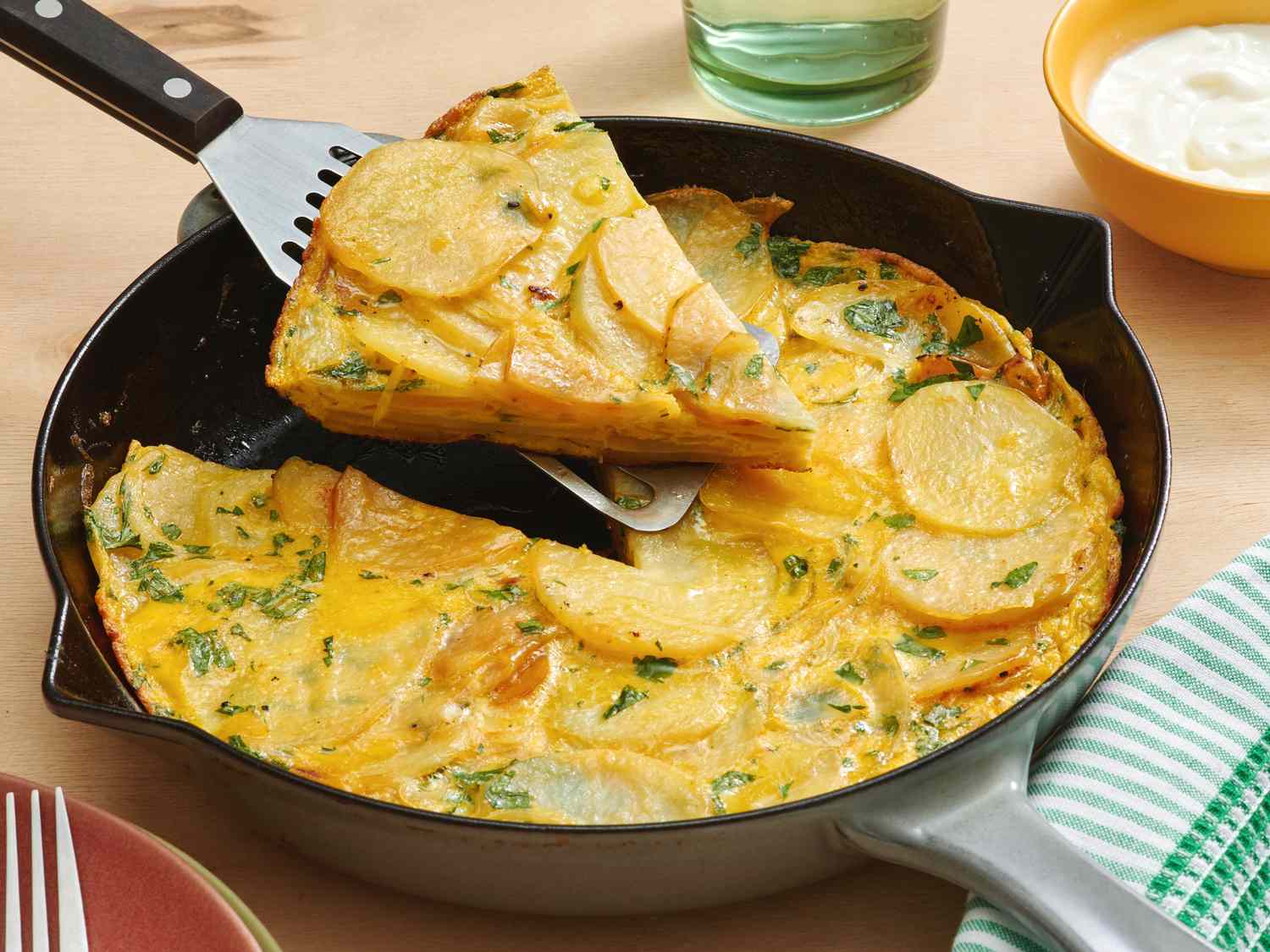
Spanish Tortilla
A thick, tender potato-and-onion omelette served warm or at room temperature — humble Spanish perfection.
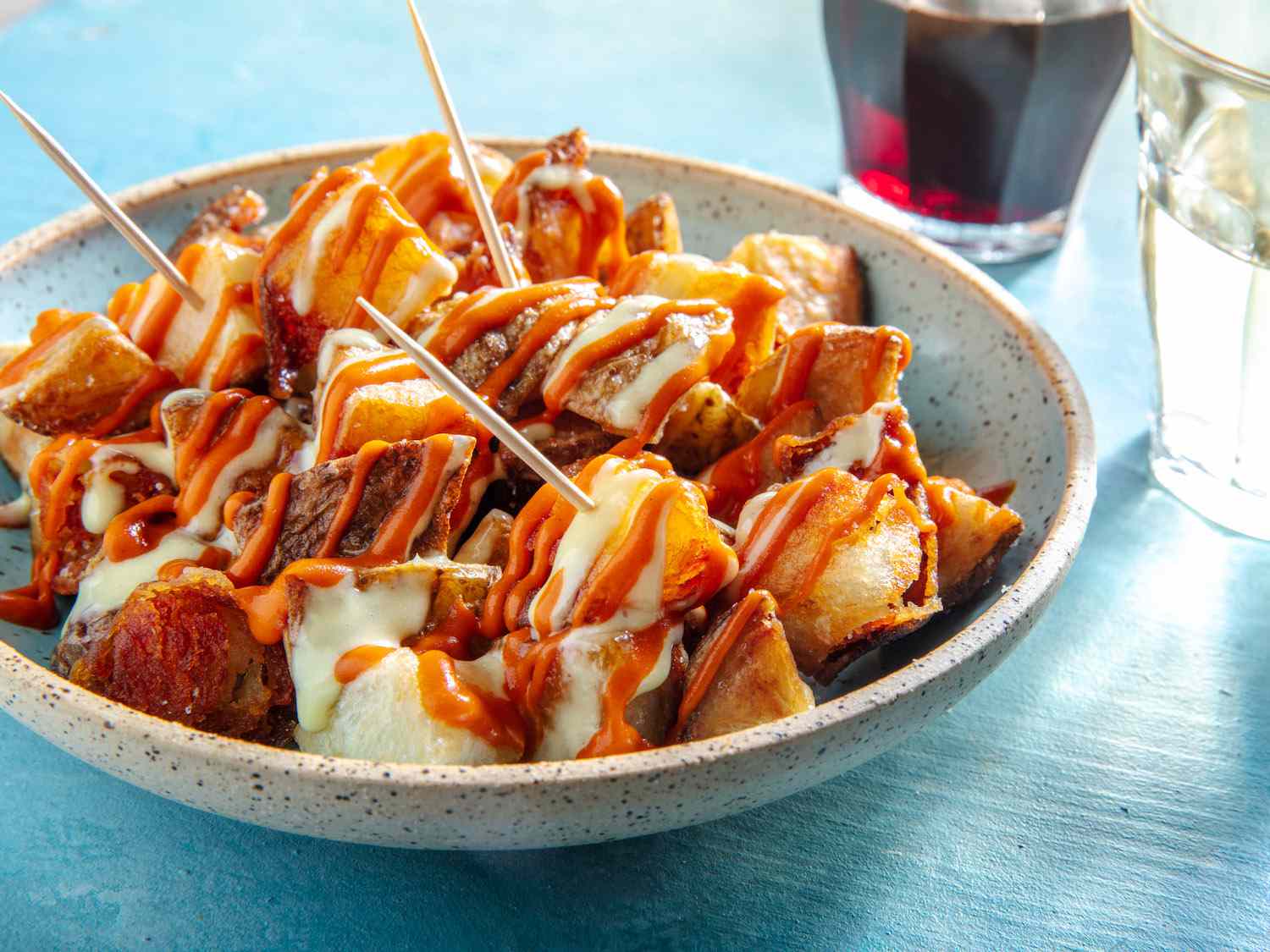
Patatas Bravas
Crisp fried potato cubes served with a smoky-spicy bravas sauce — the definitive Spanish tapa.
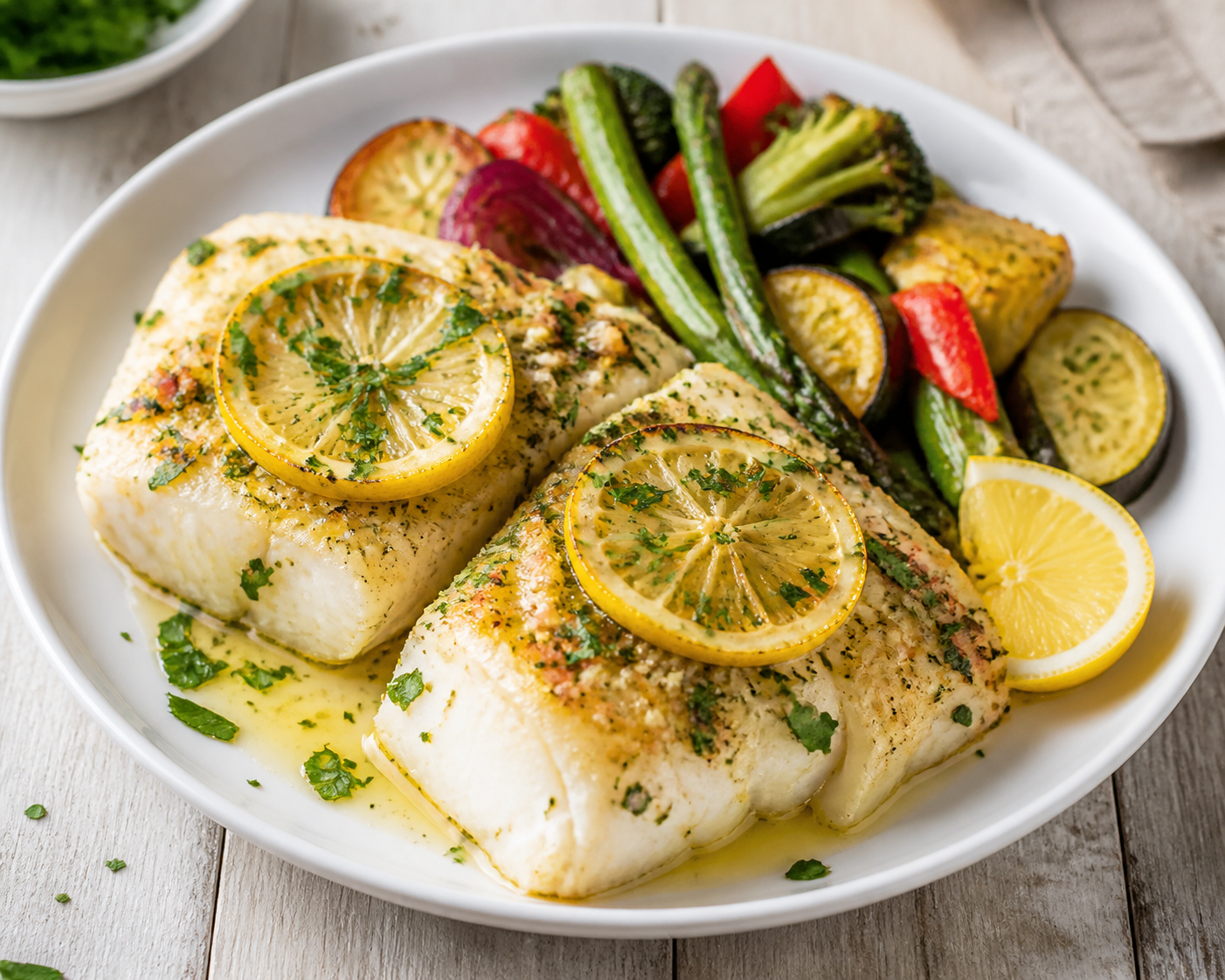
Baked Lemon Garlic Cod with Parsley
Tender cod fillets baked with bright lemon, fragrant garlic, and fresh parsley for a simple, flavorful weeknight dinner.
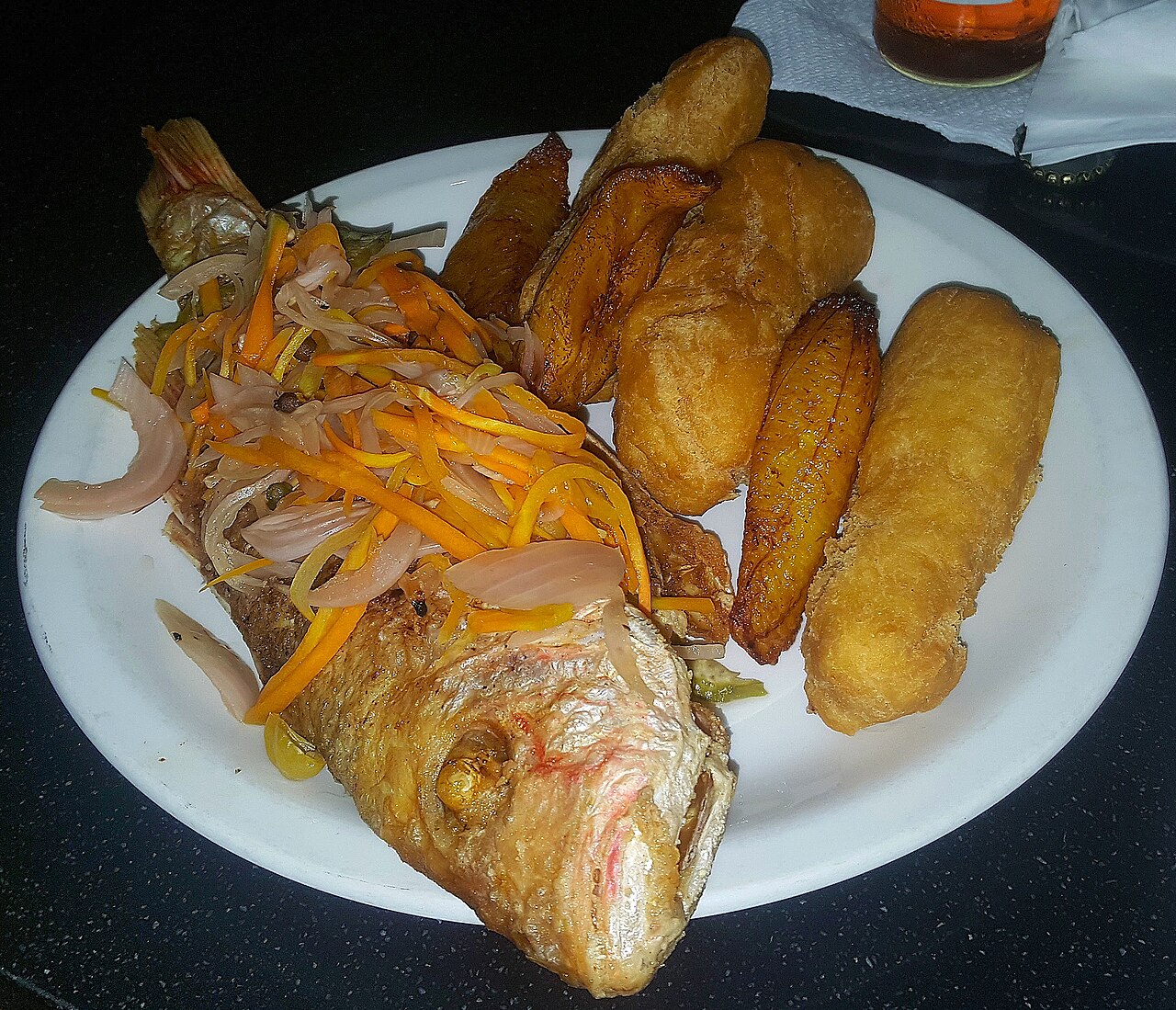
Jamaican Escovitch Fish
Crisp fried snapper topped with a bright, tangy pickle of vinegar-soused onion, carrot, bell pepper, and scotch bonnet — a festive Jamaican coastal favourite.
Explore Related Collections
Cooking Guides
Understanding Cooking Methods: Dry Heat, Moist Heat, and More
Every cooking method changes texture and flavor in a specific way. Knowing which to choose is the key to cooking anything well.
Read guideBuilding Balanced Meals: A Simple Framework
You do not need to count anything to eat well. A simple visual framework does the work for you.
Read guideEssential Kitchen Skills Every Home Cook Should Know
A short list of fundamental skills will do more for your cooking than any gadget. Here are the ones that matter most.
Read guide