Ghanaian Cuisine
Warm, hearty, and proudly flavorful — one-pot rice, palm-oil stews, and beloved street food.
Introduction
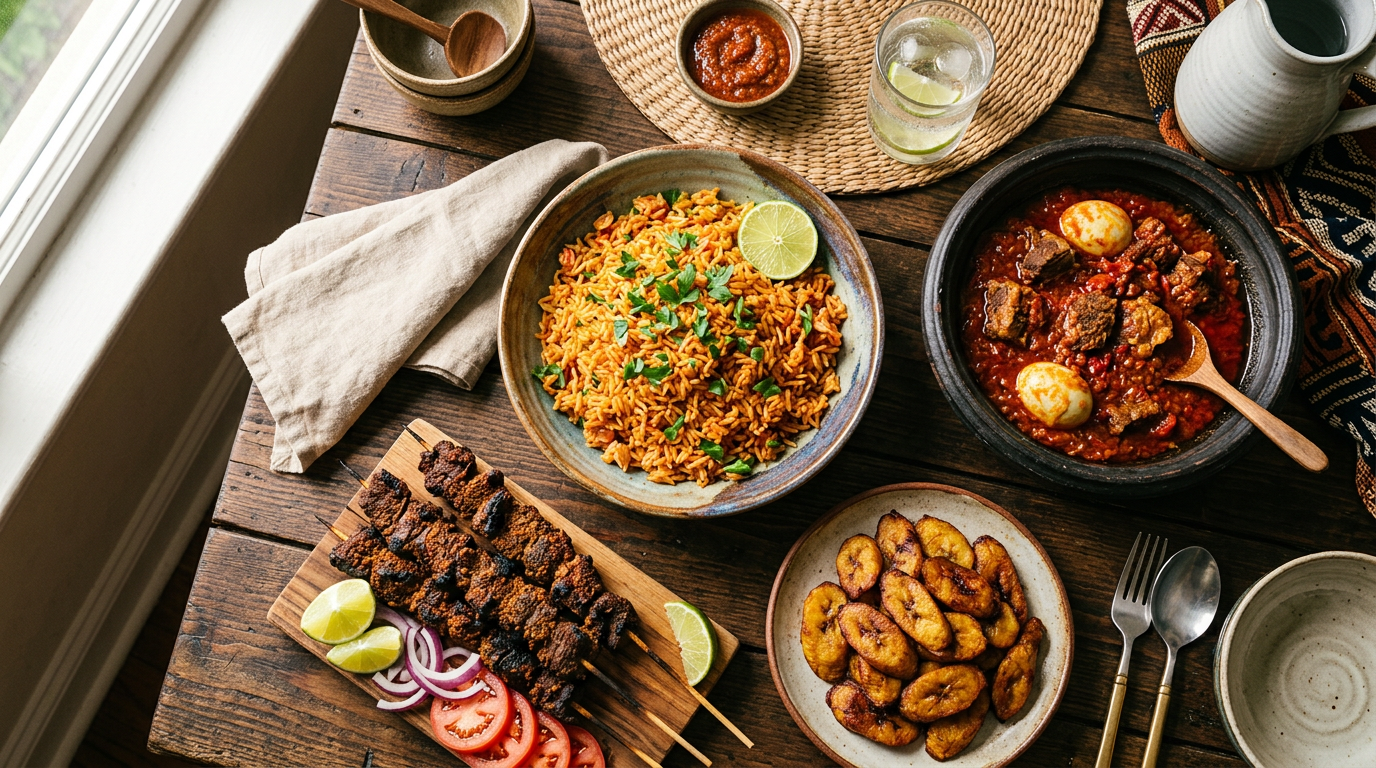
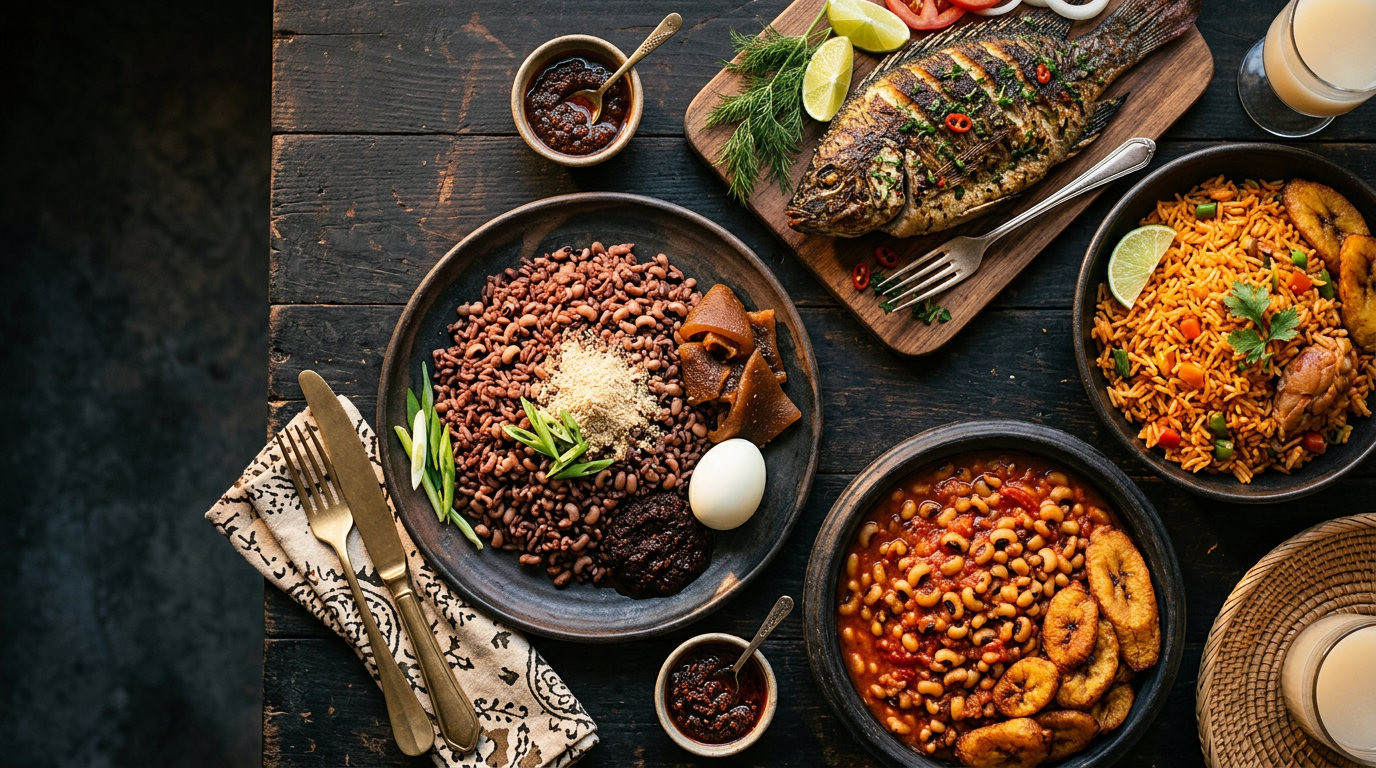
Ghanaian cuisine is warm, hearty, and built on bold West African spice. It celebrates one-pot rice dishes, rich palm-oil stews, and a street-food culture beloved across the country — from spicy kelewele to comforting bowls of waakye.
Ghanaian cooking balances starchy staples with deeply seasoned soups and sauces, and takes real pride in its jollof, the centerpiece of any celebration and the friendly rival to Nigeria's version.
History
Ghana's food traditions grew from the crops of the forest and coastal zones — cassava, plantain, maize, and yam — combined with the fish of the Atlantic and the spices of regional trade. Fermentation of maize and cassava produced staples such as banku and kenkey that remain central today.
Colonial-era trade introduced tomatoes and chilies that were absorbed into the Ghanaian stew base, while dishes like red red — a black-eyed pea stew cooked in red palm oil and served with fried plantain — showcase the marriage of indigenous legumes with imported ingredients.
Cultural Context
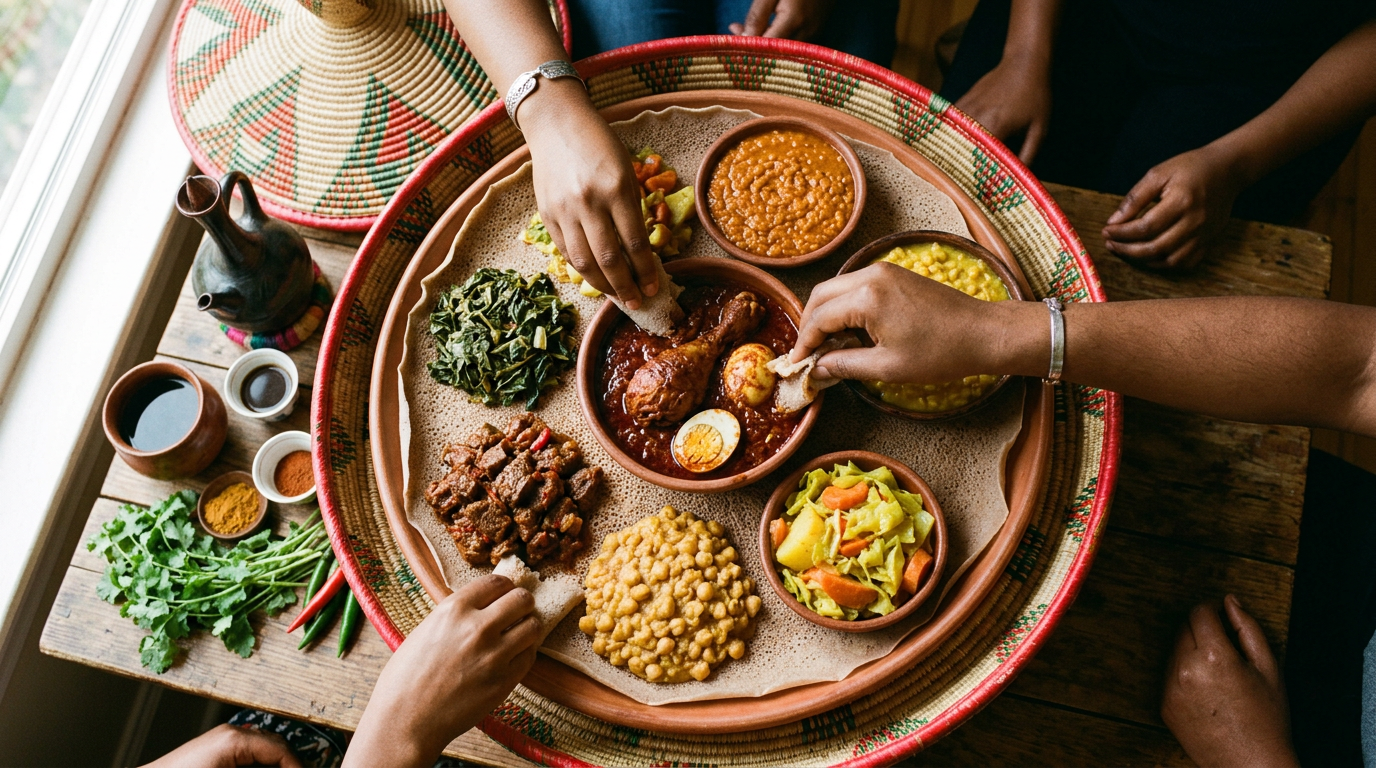
Sharing food is a mark of community and generosity in Ghana. Large family meals, festival feasts, and everyday street stalls all reflect a culture where food brings people together.
Meals typically pair a starchy staple — rice, banku, fufu, or kenkey — with a flavorful soup or stew. Street vendors are woven into daily life, offering waakye, kelewele, and grilled tilapia to workers and travelers alike.
Regional Variations
Seafood-forward, with grilled tilapia, kenkey, and hot pepper sauces (shito).
Fufu with light soup or groundnut (peanut) soup is a defining regional favorite.
Grain-based staples such as tuo zaafi (millet or maize dough) paired with rich, leafy soups.
Core Ingredients
Central to jollof and waakye, Ghana's celebrated rice-and-beans dish.
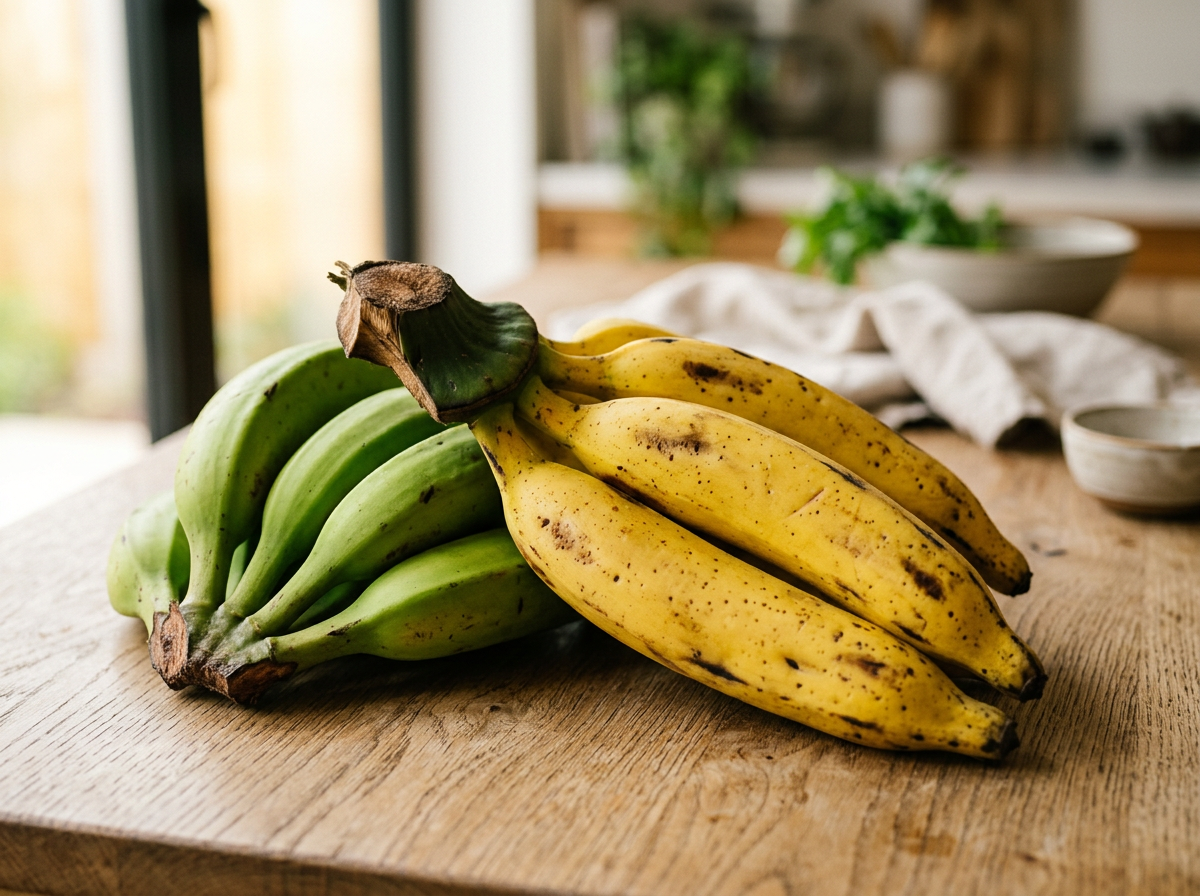
Fried into kelewele or dodo, or boiled — a staple partner to stews.
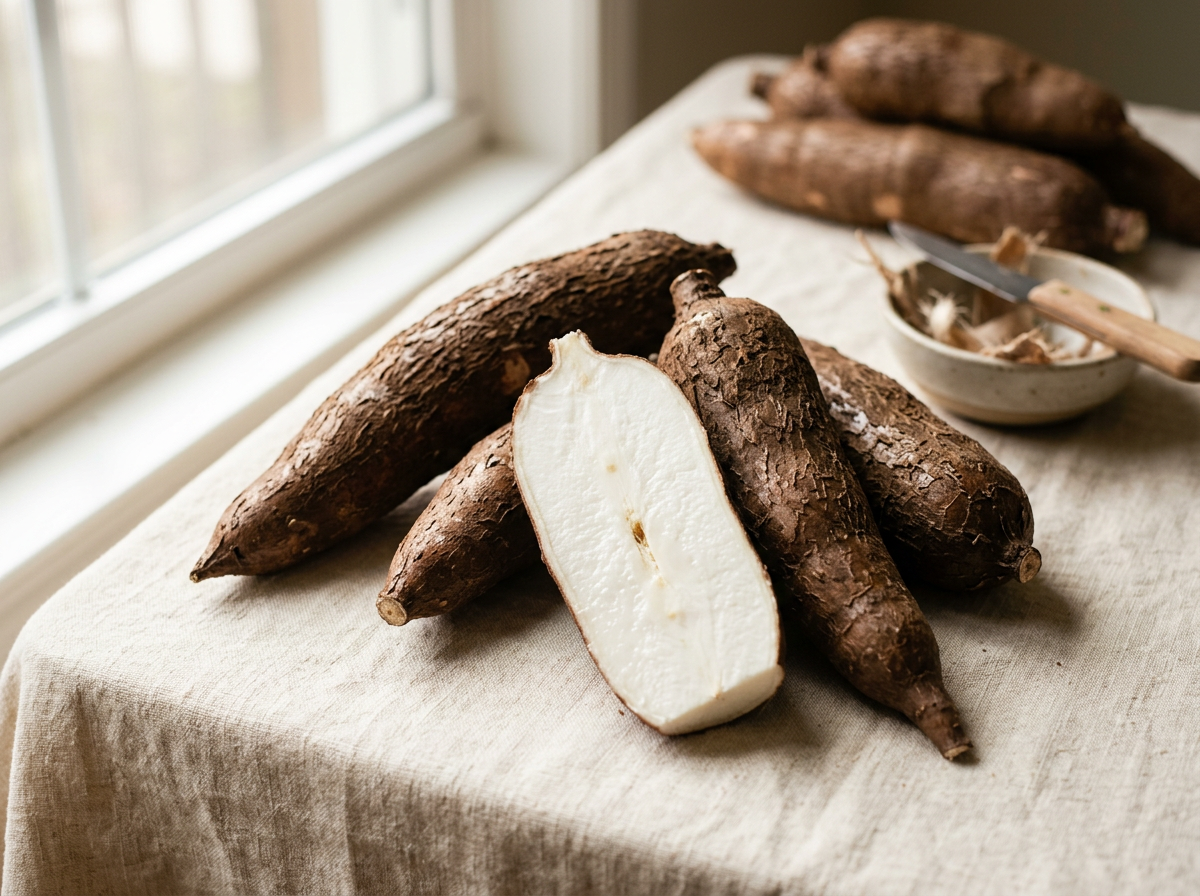
Turned into gari, fufu, and banku, the backbone of Ghanaian "swallow" foods.
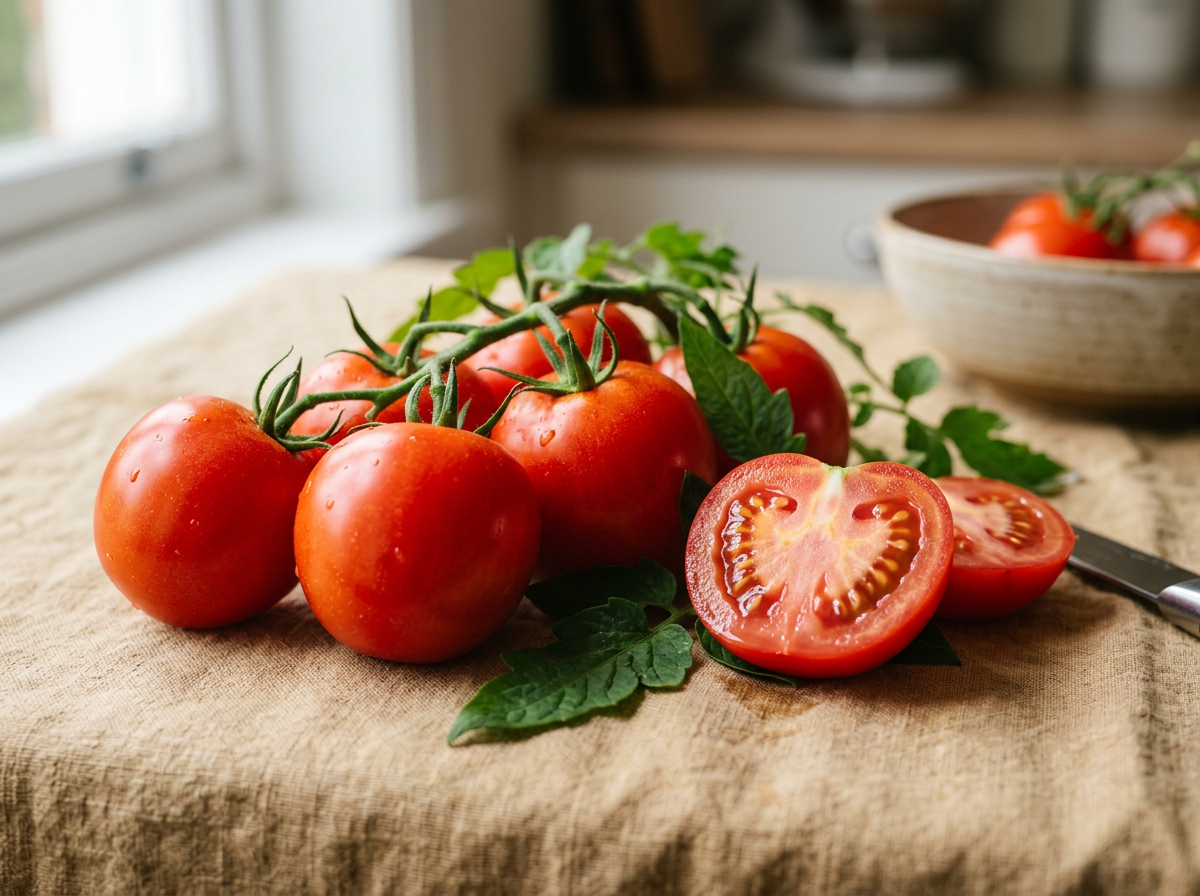
The base of stews and the fiery shito pepper sauce.
Gives red red and many stews their color and earthy depth.
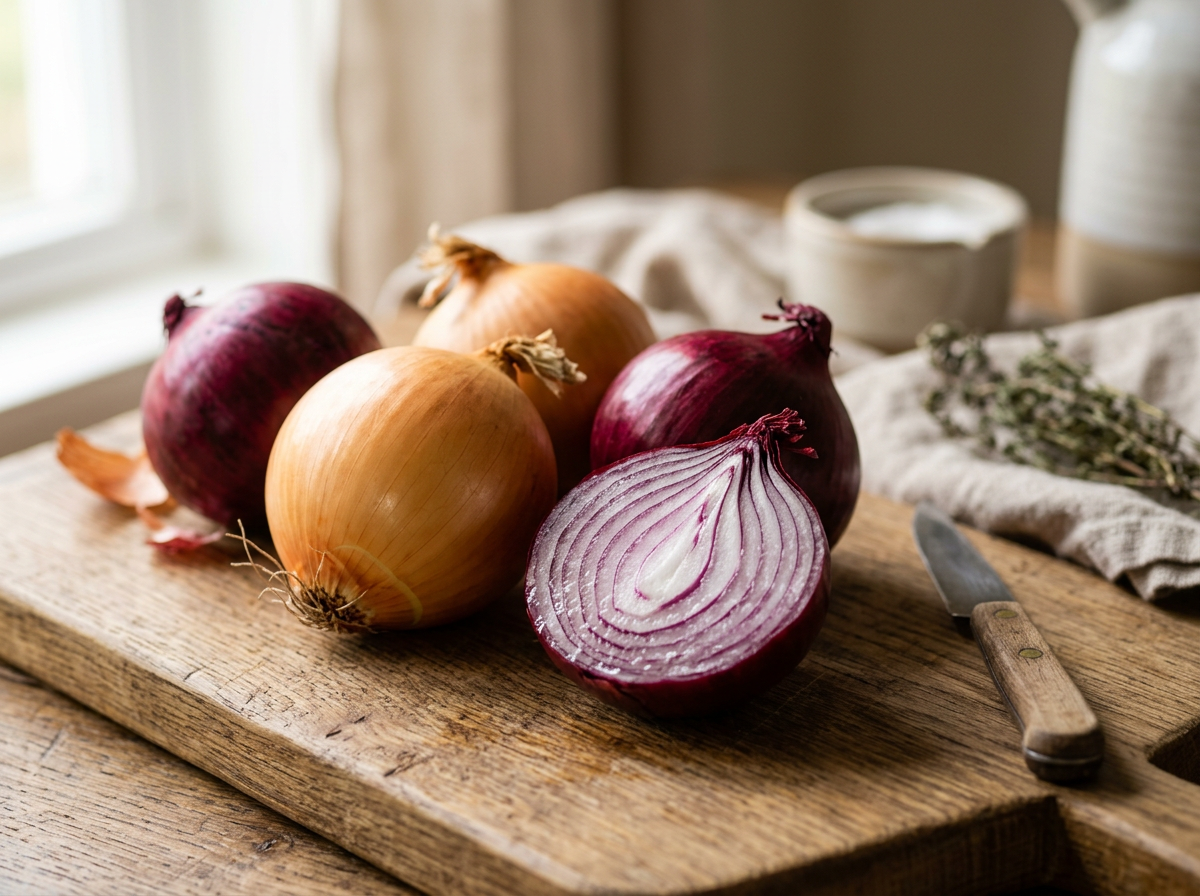
Foundational aromatic in stews, sauces, and jollof.
Signature Techniques
Cooking legumes and vegetables in red palm oil for color and richness, as in red red.
Maize and cassava are fermented to make banku and kenkey, giving a signature tang.
Rice simmered in a spiced tomato base until smoky and tender.
Kelewele (spiced fried plantain) and grilled tilapia are cooked fresh at stalls.
Signature Dishes
Rice and beans cooked with dried sorghum leaves, served with an array of sides.
Black-eyed pea stew in red palm oil, served with sweet fried plantain.
Fragrant one-pot rice, a proud national dish.
Spiced, fried ripe plantain cubes — a favorite street snack.
Rich peanut-based soup served with fufu or rice balls.
Ghanaian Recipes to Cook
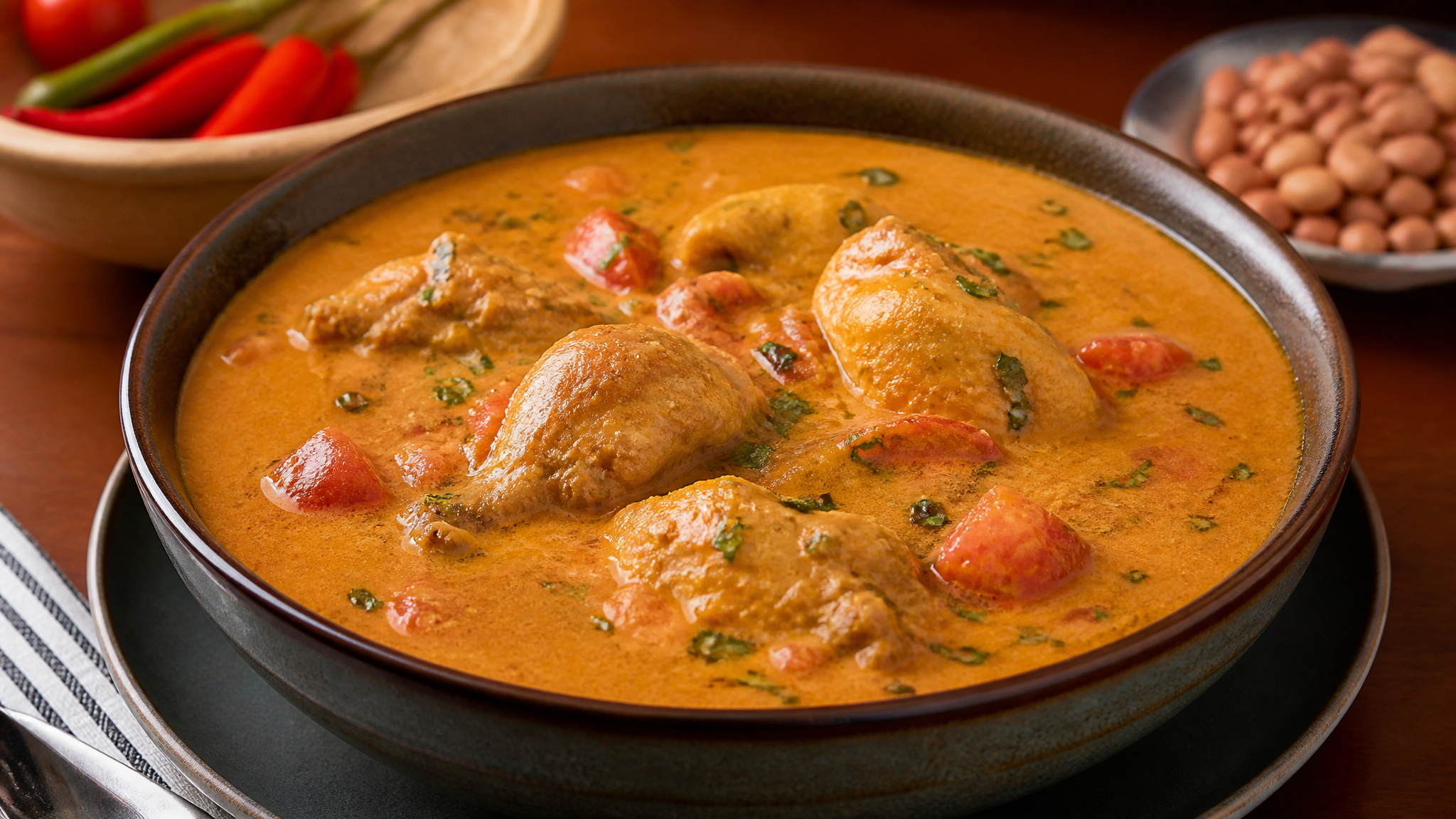
Ghanaian Groundnut Soup
A rich West African peanut soup from Ghana, simmering chicken with tomato, ginger, and smooth peanut butter into a deeply savory, warming bowl traditionally served with rice balls or fufu.

Kelewele
Ghanaian spiced fried plantains — ripe plantain cubes tossed with ginger, chili, and warm spices, then fried until caramelized outside and soft within. A sweet-savory-spicy snack or side.

Ghanaian Waakye
A hearty Ghanaian one-pot of rice and black-eyed peas cooked with dried sorghum leaves that lend a signature reddish hue — a beloved street-food staple served with sides and pepper sauce.
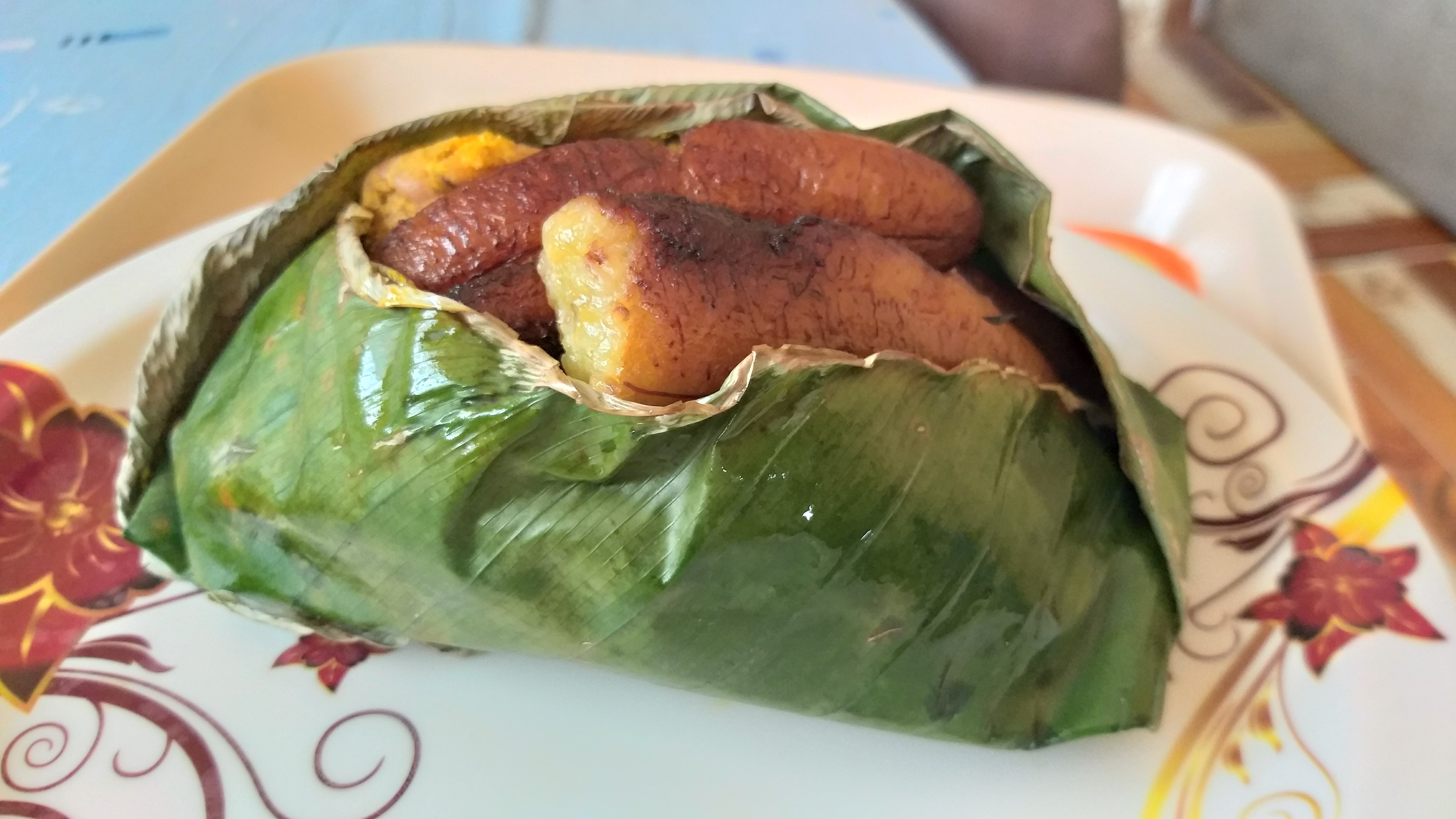
Ghanaian Red Red
A hearty Ghanaian black-eyed pea stew simmered in a red palm-oil and tomato base — smoky, rich, vegan, and made for batch cooking. Traditionally served with fried plantain.
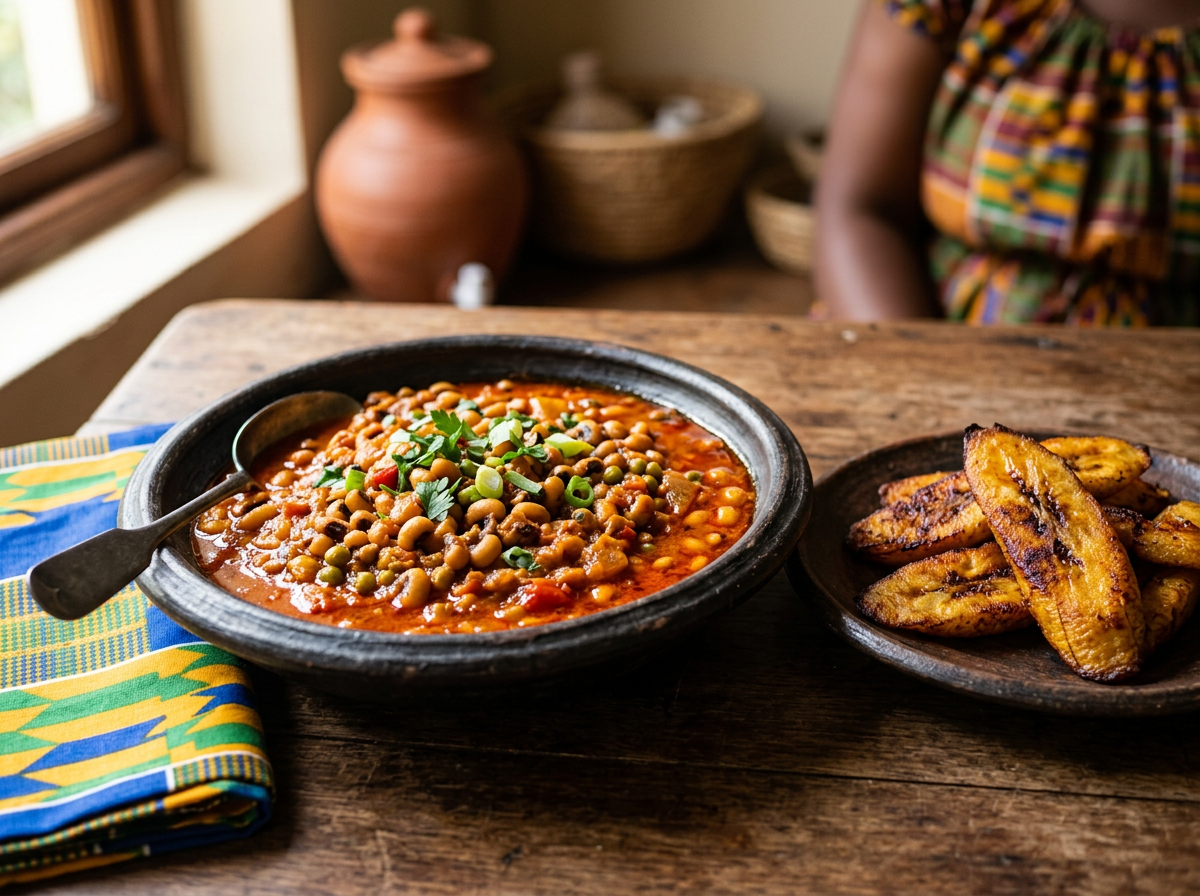
Ghanaian Red Red (Black-Eyed Pea Stew)
A beloved Ghanaian street-food classic of black-eyed peas simmered in a vivid red palm-oil and tomato sauce, served with sweet fried ripe plantains. Naturally vegan, deeply satisfying, and full of warm West African flavor.
Key Ingredients to Explore
Cooking Guides You May Like
A Guide to West African Cooking
From jollof rice to groundnut stew, West African cooking is generous, spice-forward, and made for sharing. Here is an introduction.
Understanding Cooking Methods: Dry Heat, Moist Heat, and More
Every cooking method changes texture and flavor in a specific way. Knowing which to choose is the key to cooking anything well.
Building Balanced Meals: A Simple Framework
You do not need to count anything to eat well. A simple visual framework does the work for you.