Indonesian Cuisine
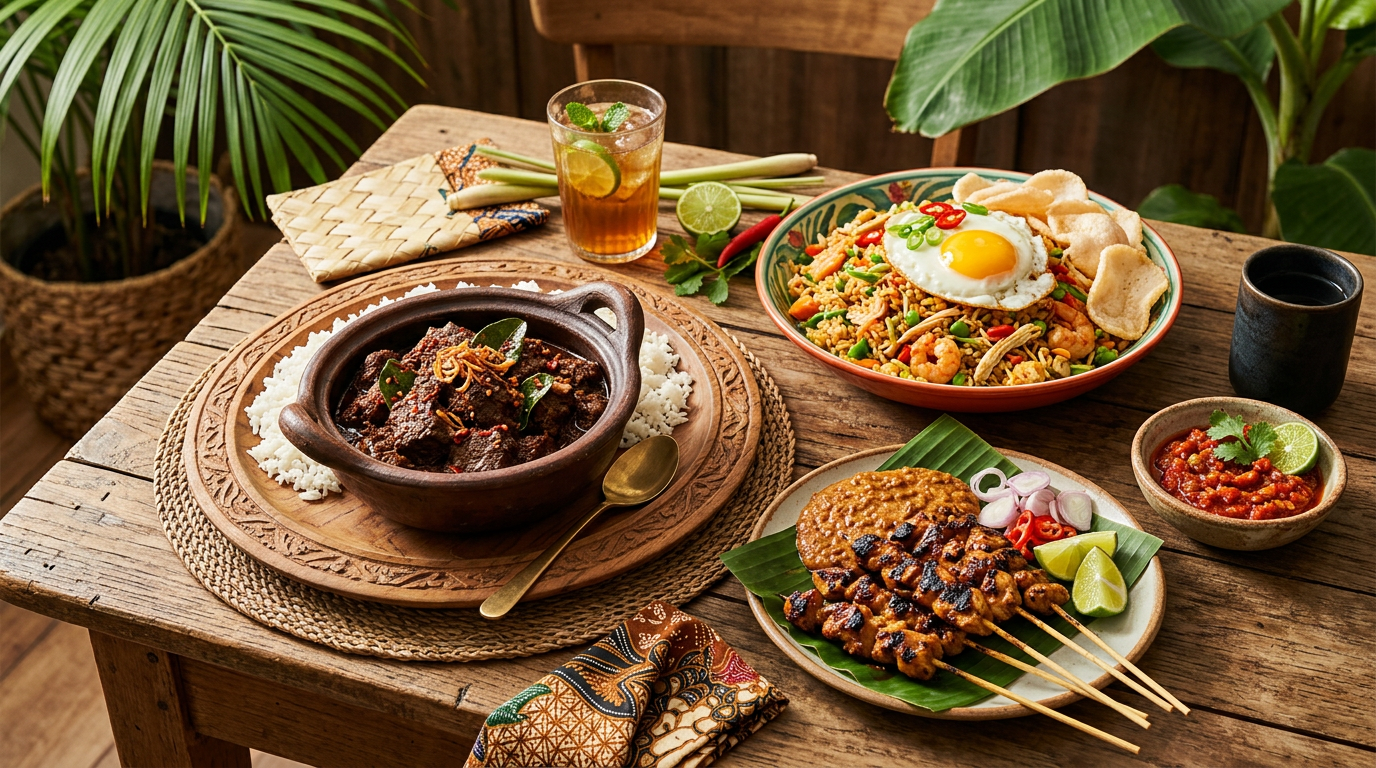
Intensely aromatic and richly spiced — slow-cooked rendang, fragrant rice, and fiery sambal.
Introduction
Indonesian cuisine spans the world's largest archipelago and its thousands of islands, delivering some of the most intensely aromatic and richly spiced food on earth. Slow-cooked rendang, fragrant nasi goreng, smoky satay, and ever-present sambal define a cuisine of extraordinary depth.
Spice pastes ground fresh from lemongrass, galangal, chili, and shallots form the aromatic base of countless dishes, while coconut, rice, and fiery sambal tie the vast regional repertoire together.
History
Indonesia sat at the center of the ancient spice trade, and its islands — the original "Spice Islands" — were sought after for nutmeg, cloves, and mace. This history is written into a cuisine defined by complex spicing.
Waves of influence from India, the Middle East, China, and later Dutch colonization layered new dishes and techniques onto indigenous foundations, producing curries, stir-fries, and braises adapted to local ingredients and tastes across a hugely diverse nation.
Cultural Context
Rice is sacred and central; a meal without it is scarcely considered a meal. Dishes are often served all at once for diners to share, as in the Padang tradition of many small plates.
Food reflects Indonesia's vast diversity of cultures and religions, from communal feasts (selamatan) to bustling street-food stalls (warungs) that are the beating heart of everyday eating.
Regional Variations
Bold, fiery, coconut-rich dishes including the famous rendang and nasi Padang spreads.
Often sweeter, with soy-based dishes, gudeg (jackfruit stew), and refined spicing.
Aromatic spice pastes (base genep), suckling pig, and seafood.
Core Ingredients
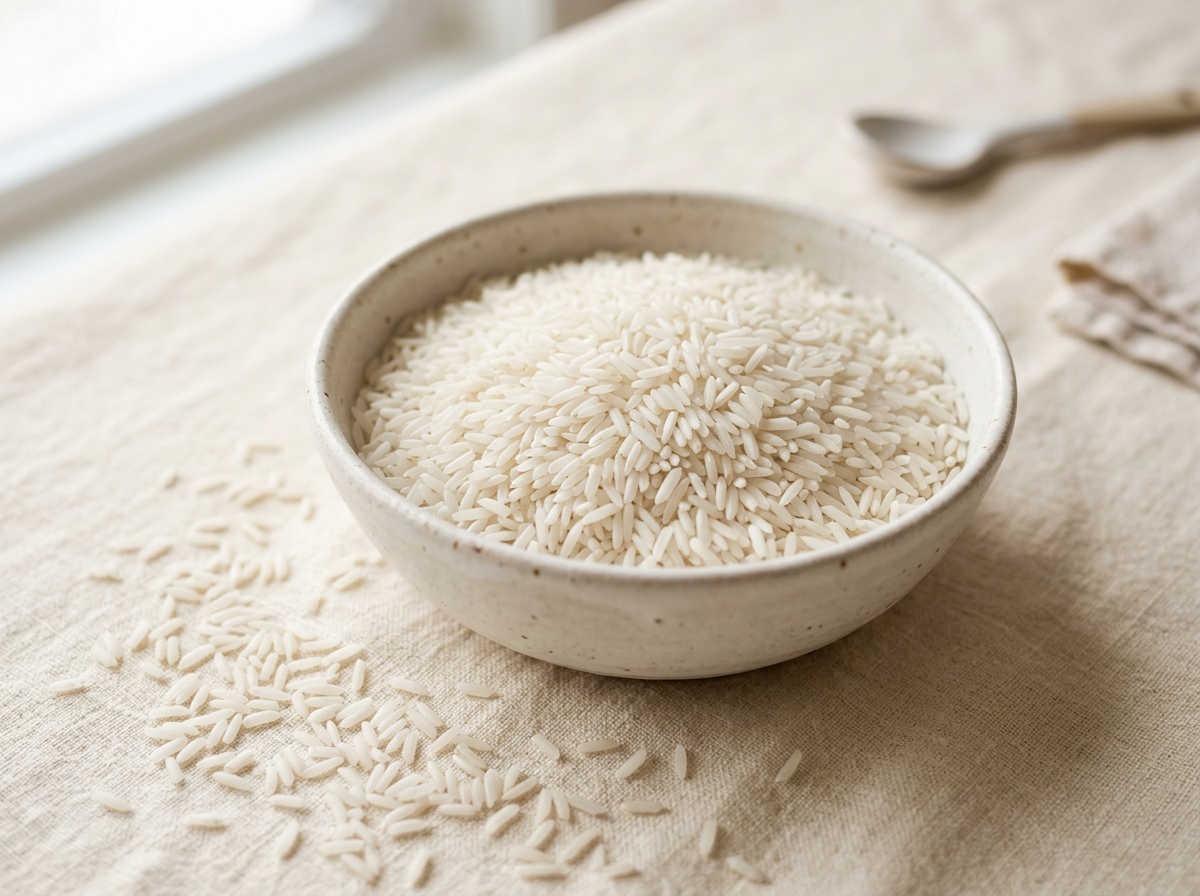
The essential staple, steamed or fried into nasi goreng.
Central proteins for satay, rendang, and soups.
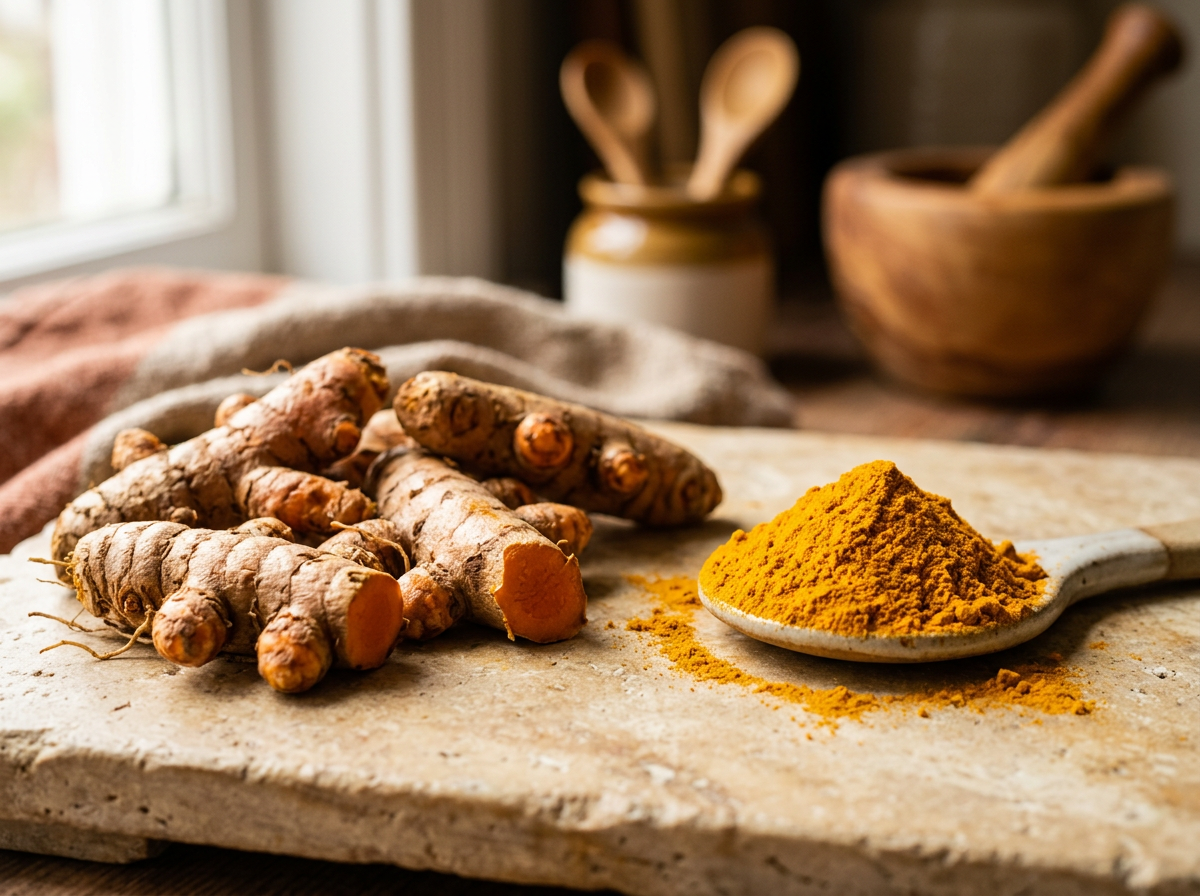
A key spice-paste ingredient giving color and earthiness.
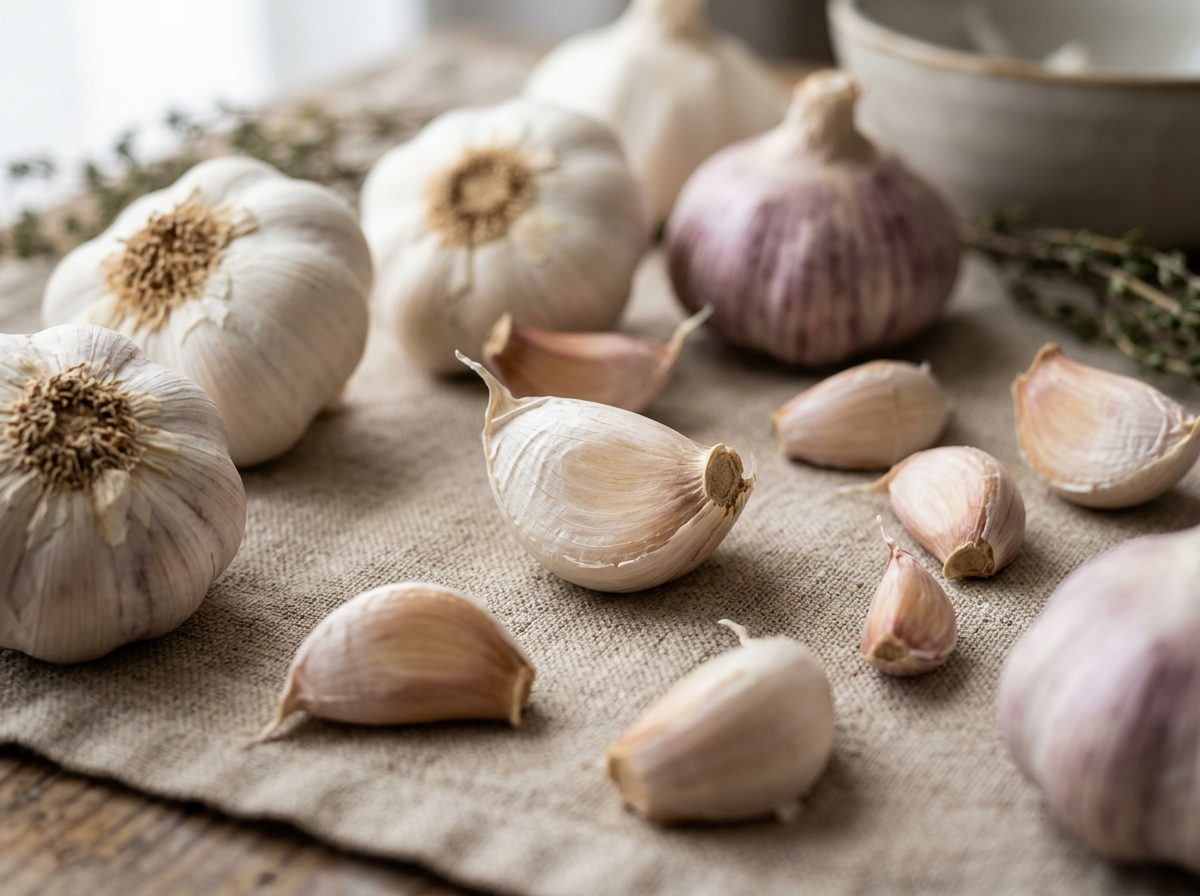
Ground into the aromatic bumbu paste at the base of most dishes.
Milk and grated flesh enrich curries, rendang, and desserts.
The fiery condiment served with nearly everything.
Signature Techniques
Grinding fresh aromatics into a paste and frying it to bloom the flavors is the foundation of Indonesian cooking.
Simmering beef in coconut milk and spice for hours until dark, dry, and intensely flavored.
Marinated skewers grilled over charcoal and served with peanut sauce.
Pounding chilies with aromatics into an endless variety of hot condiments.
Signature Dishes
Slow-cooked beef in coconut and spice, often called one of the world's most delicious dishes.
Indonesian fried rice with sweet soy, often topped with a fried egg.
Grilled marinated skewers with rich peanut sauce.
A vegetable salad dressed in warm peanut sauce.
A fragrant, turmeric-tinged soup found in countless regional forms.
Indonesian Recipes to Cook
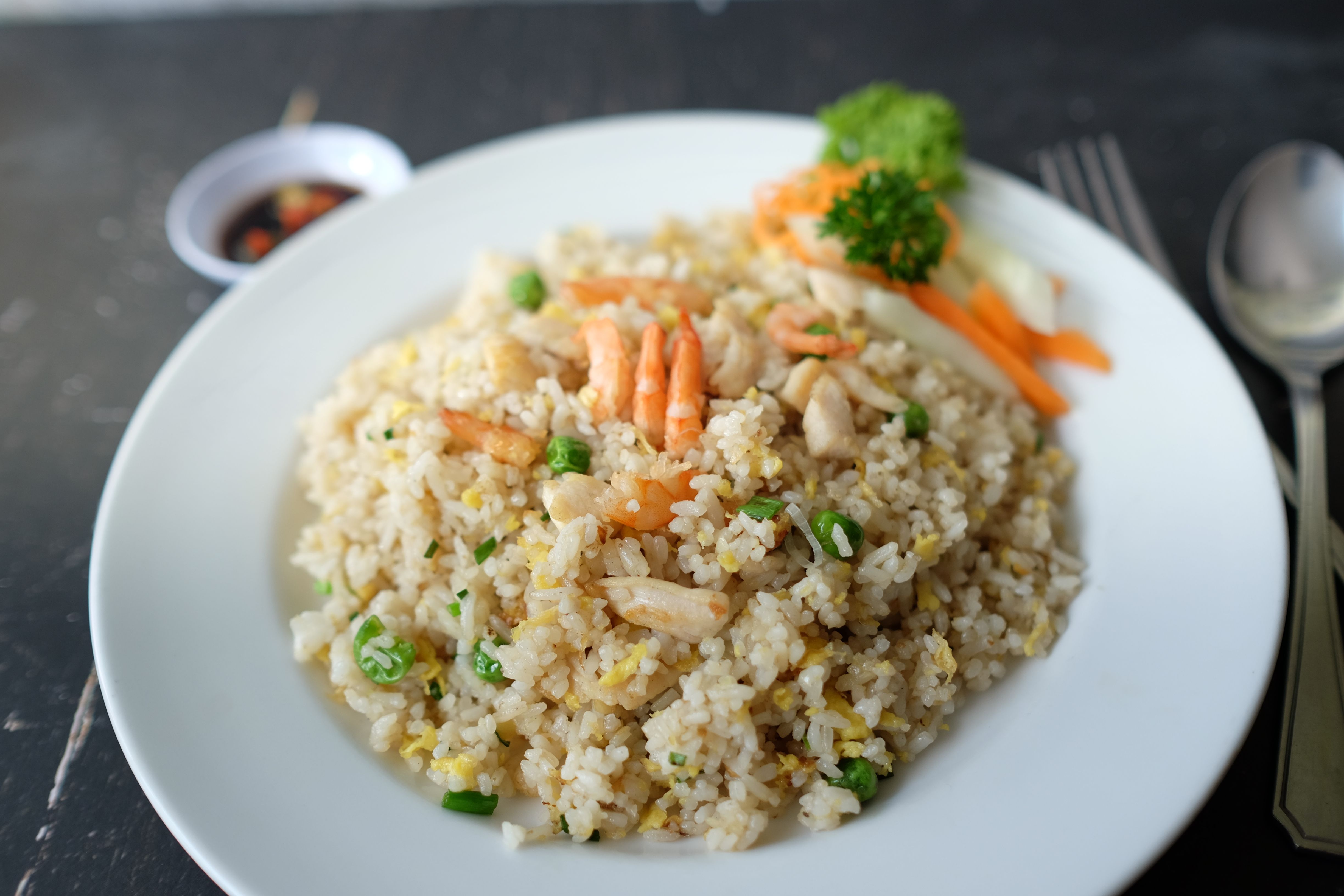
Indonesian Vegetable Nasi Goreng
Indonesia's beloved fried rice, wok-tossed with sweet soy, garlic, and crunchy vegetables — a brilliant way to turn leftover rice into a fast, satisfying family dinner.
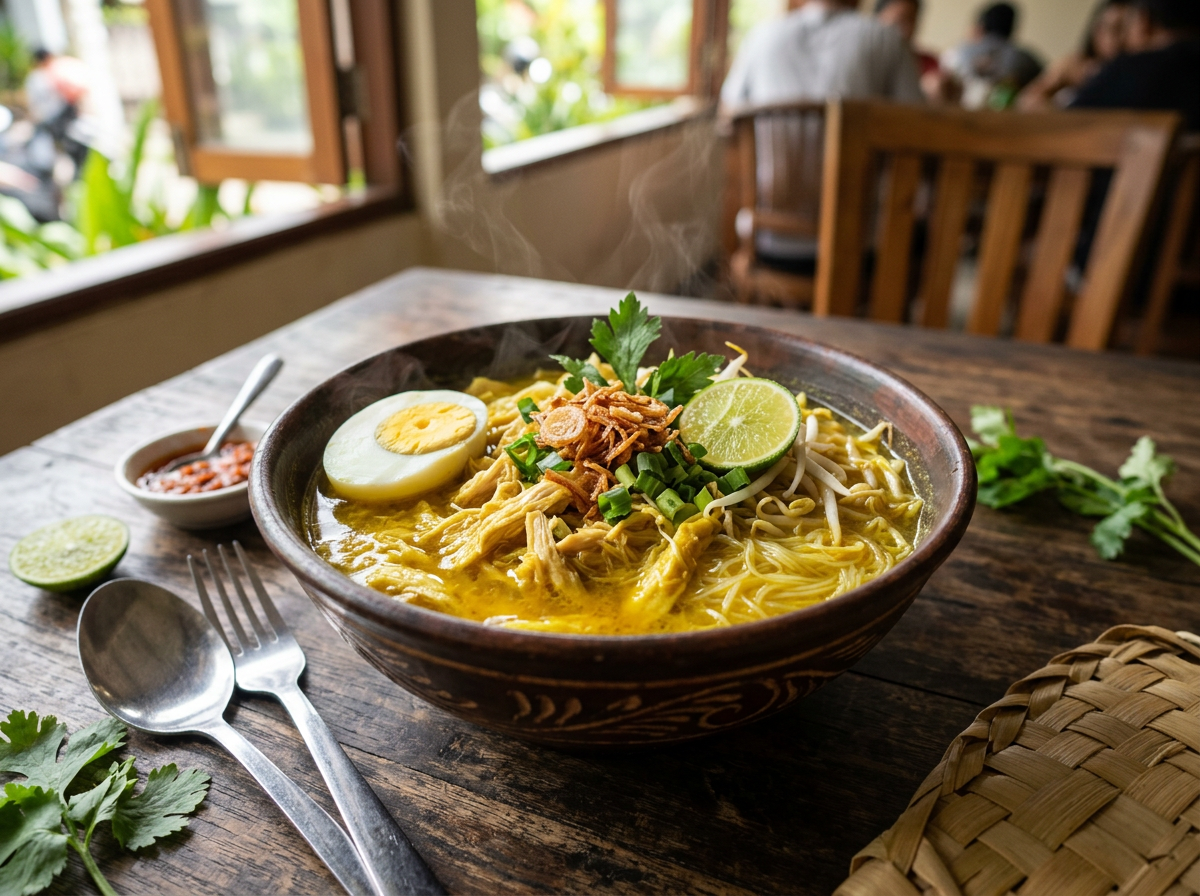
Indonesian Soto Ayam (Turmeric Chicken Soup)
A restorative Indonesian chicken soup glowing golden with turmeric and lemongrass, ladled over rice vermicelli and topped with boiled egg, bean sprouts, and crispy fried shallots. Bright, aromatic, and endlessly comforting.

Indonesian Gado-Gado Salad
A composed salad of blanched vegetables, potato, tofu, and egg dressed generously in a warm peanut sauce — a vibrant vegetarian classic.
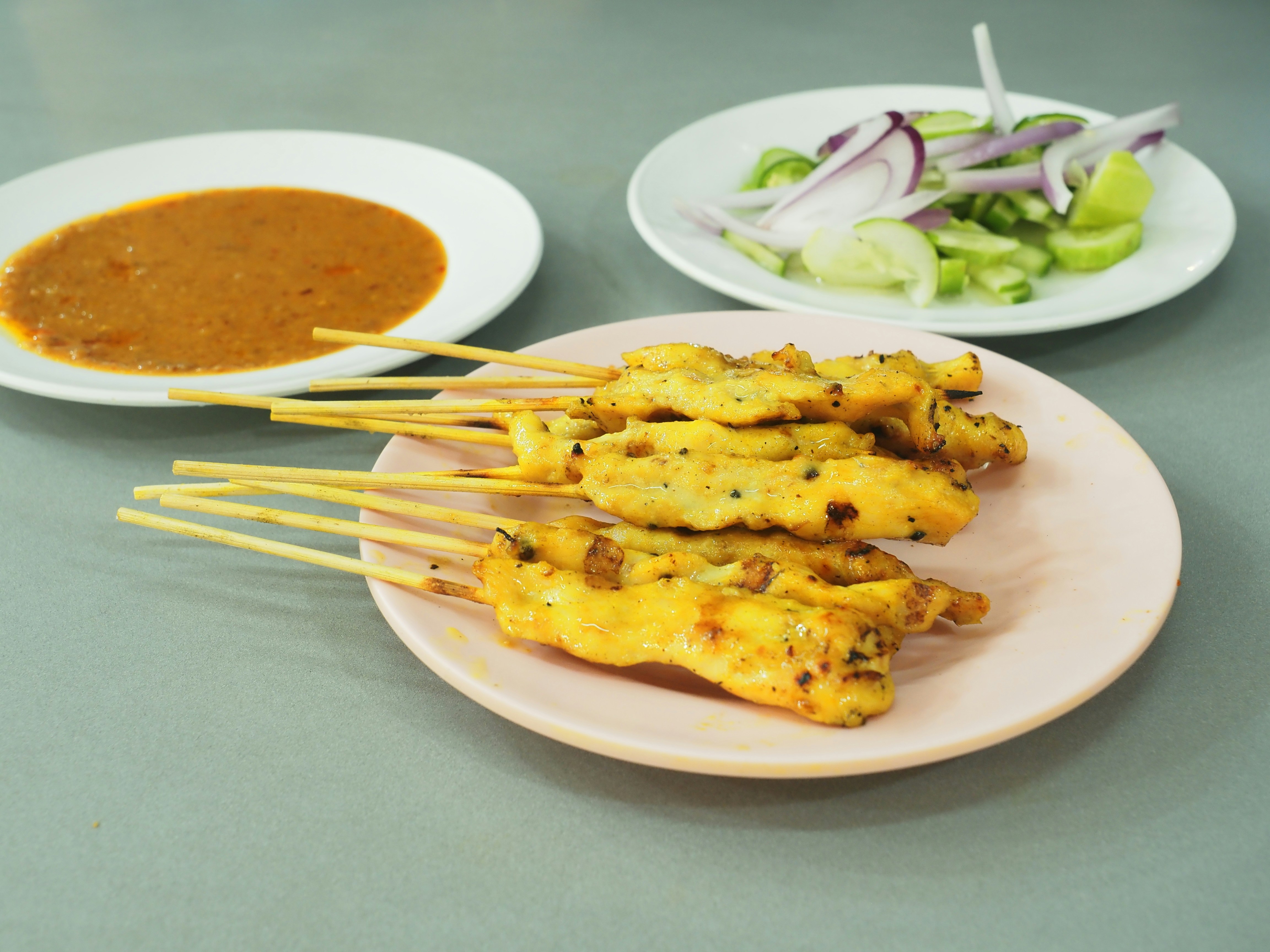
Indonesian Chicken Satay with Peanut Sauce
Skewers of marinated chicken grilled over high heat and served with a rich, roasted peanut sauce spiked with lime and chili.
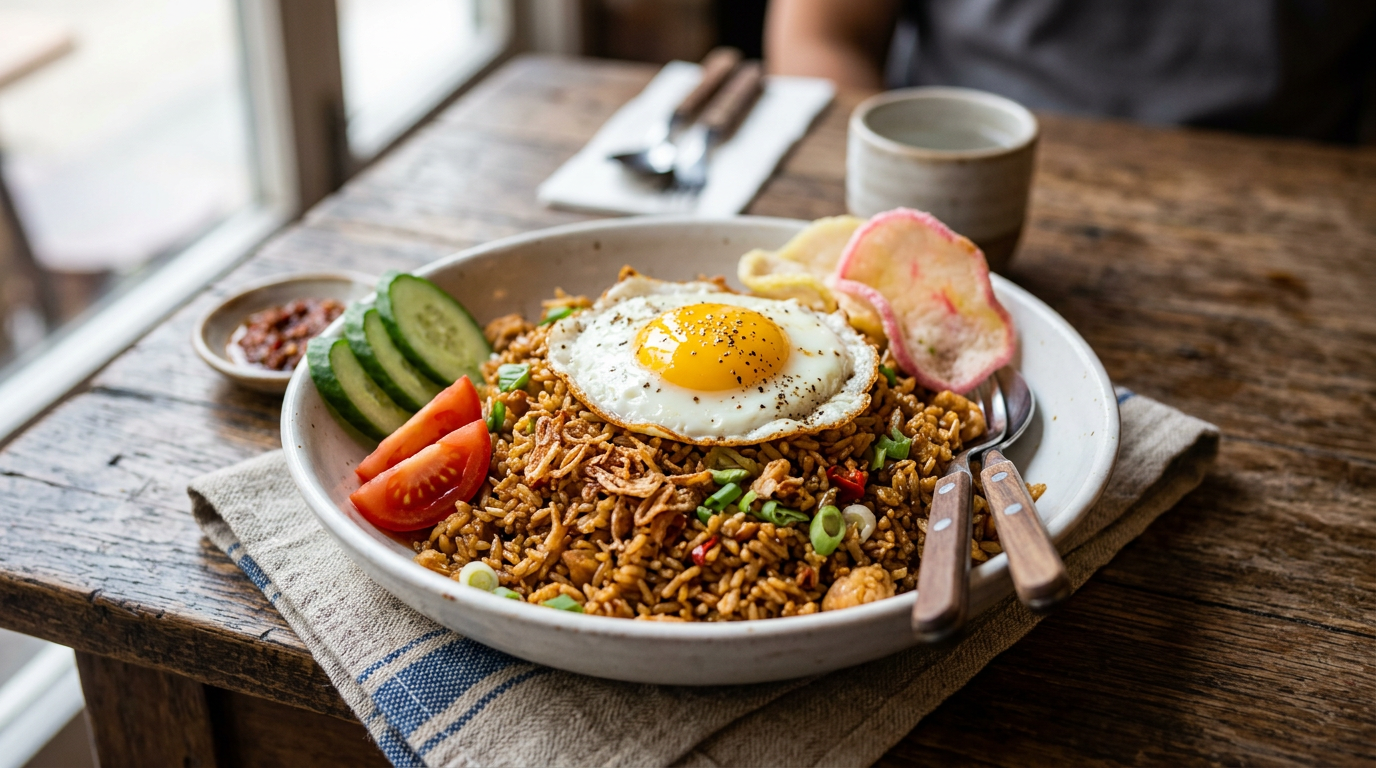
Indonesian Nasi Goreng
Indonesia’s beloved fried rice, wok-tossed with sweet soy, chili, and shallots and traditionally crowned with a runny fried egg.
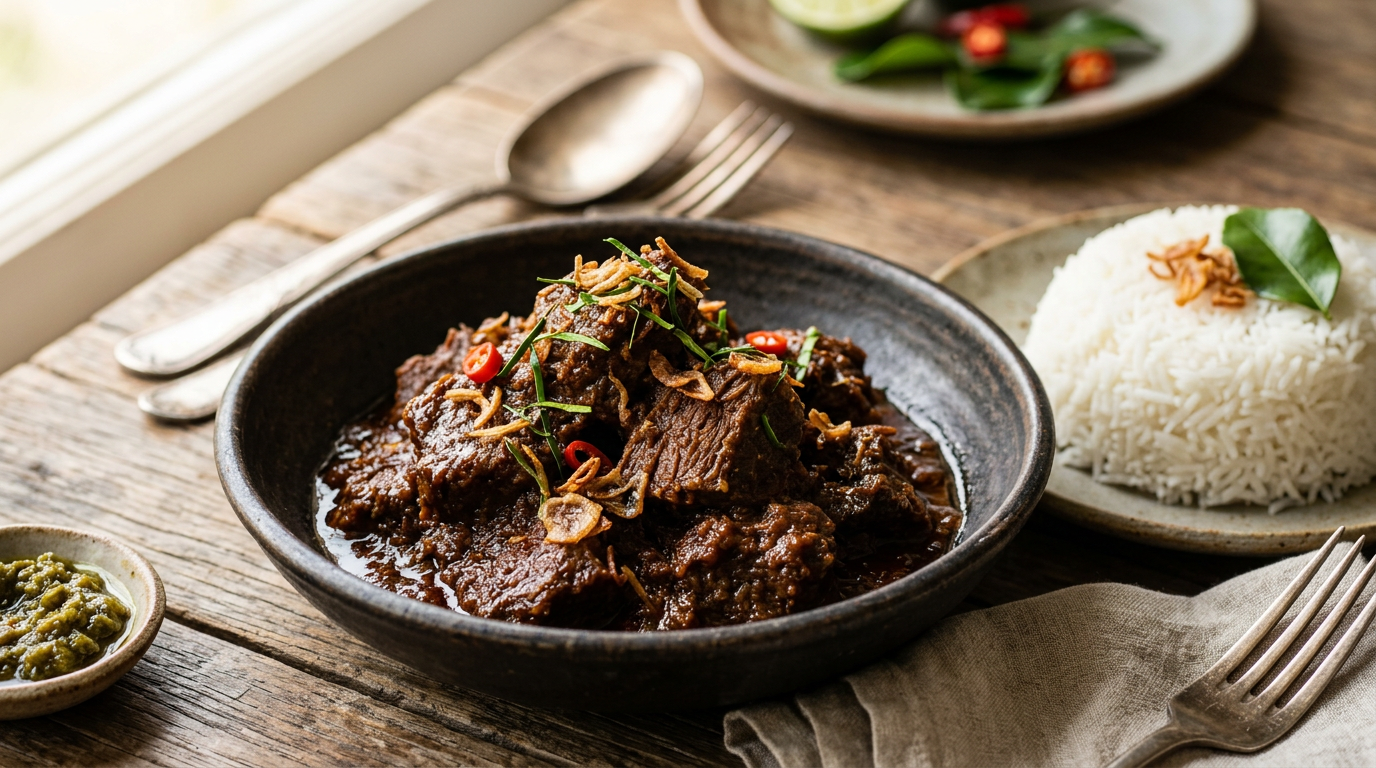
Indonesian Beef Rendang
Beef simmered low and slow in coconut milk and a fragrant paste of lemongrass, galangal, and chili until the sauce caramelises into a dark, intensely spiced coating.
Key Ingredients to Explore

Cooking Guides You May Like
A Guide to Southeast Asian Flavors
Southeast Asian cooking thrives on balance — salty, sour, sweet, and hot in every bite. Here is how those flavors come together.
Understanding Cooking Methods: Dry Heat, Moist Heat, and More
Every cooking method changes texture and flavor in a specific way. Knowing which to choose is the key to cooking anything well.
Building Balanced Meals: A Simple Framework
You do not need to count anything to eat well. A simple visual framework does the work for you.