Filipino Cuisine
Savory, tangy, and comforting — soy, vinegar, and citrus across beloved homestyle dishes.
Introduction
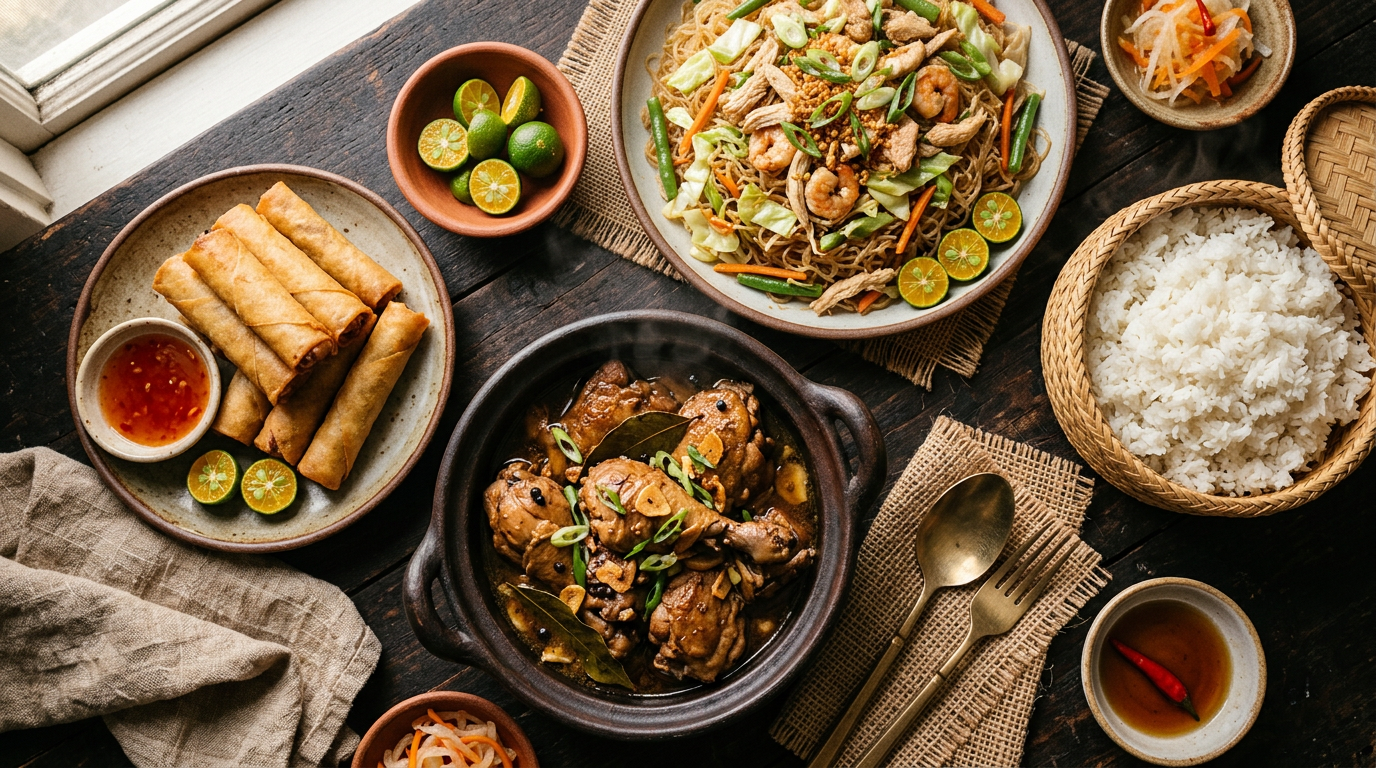
Filipino cuisine is a warm, deeply comforting tradition built on a signature balance of savory, sour, and sweet. Soy sauce, vinegar, garlic, and citrus (calamansi) run through its most beloved dishes, from the iconic adobo to the tangy tamarind soup sinigang.
Shaped by an archipelago of more than 7,000 islands and centuries of trade and colonization, Filipino food is at once distinctly local and openly global — a cuisine that embraces influence while keeping its own bold, home-cooked soul.
History
Filipino cooking is a layered blend: indigenous island ingredients and techniques, over three centuries of Spanish influence (evident in dishes like adobo and lechon), Chinese trade that brought noodles and stir-frying, and later American influence that added new convenience foods.
The result is a cuisine of fusion long before the word was fashionable — Spanish stews reinterpreted with local souring agents, Chinese noodles reborn as pancit, and native methods of preserving with vinegar and salt still central to the table.
Cultural Context
Filipino meals are communal and abundant, often centered on rice with several shared dishes. The tradition of kamayan — eating with the hands from food spread on banana leaves — celebrates togetherness and festivity.
Fiestas are a cornerstone of Filipino life, with families preparing lavish spreads for religious and community celebrations, and no gathering feels complete without both savory dishes and sweet treats.
Regional Variations
Home of Ilocano vegetable dishes (pinakbet), longganisa sausages, and hearty stews.
Famous for lechon (whole roast pig), fresh seafood, and sweeter flavor profiles.
Distinctive spiced and coconut-rich dishes reflecting Muslim and Southeast Asian influence.
Core Ingredients
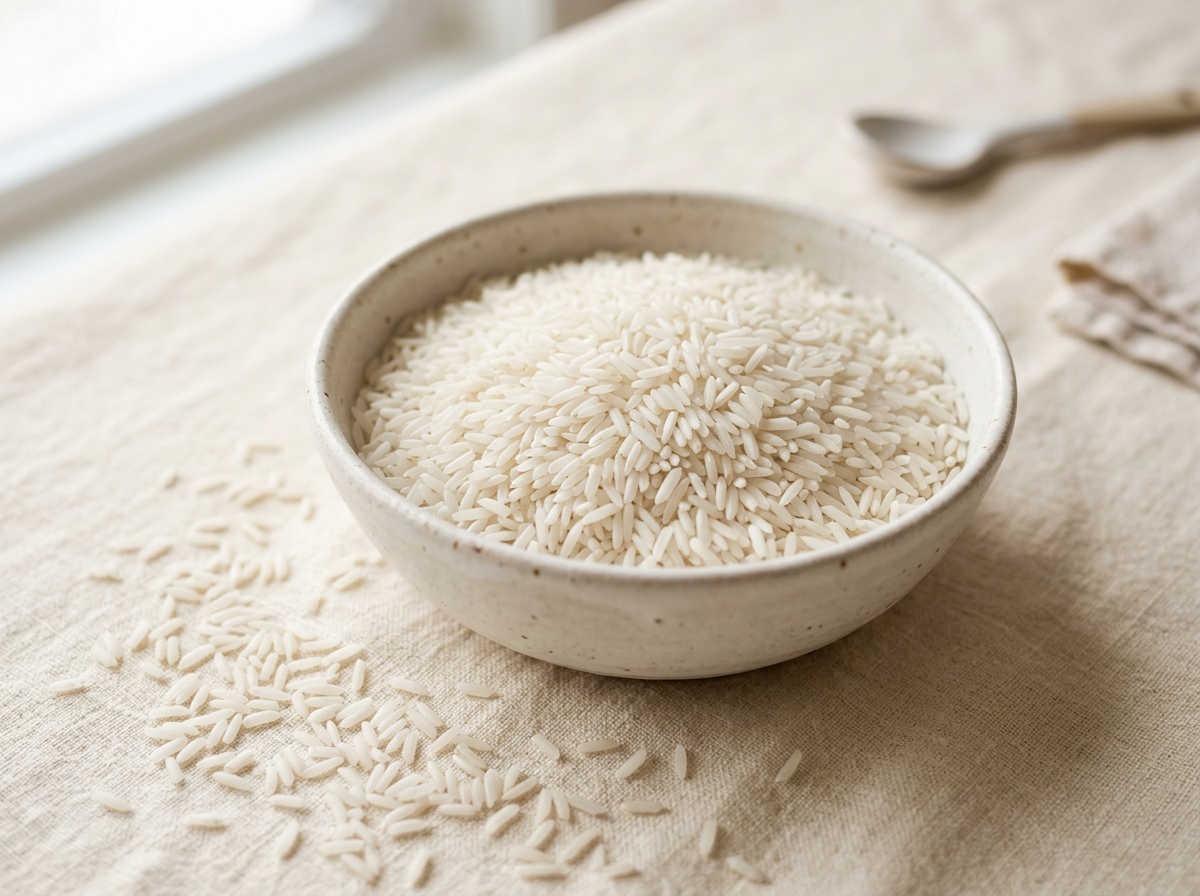
The heart of every meal, from steamed plates to garlic fried rice (sinangag).
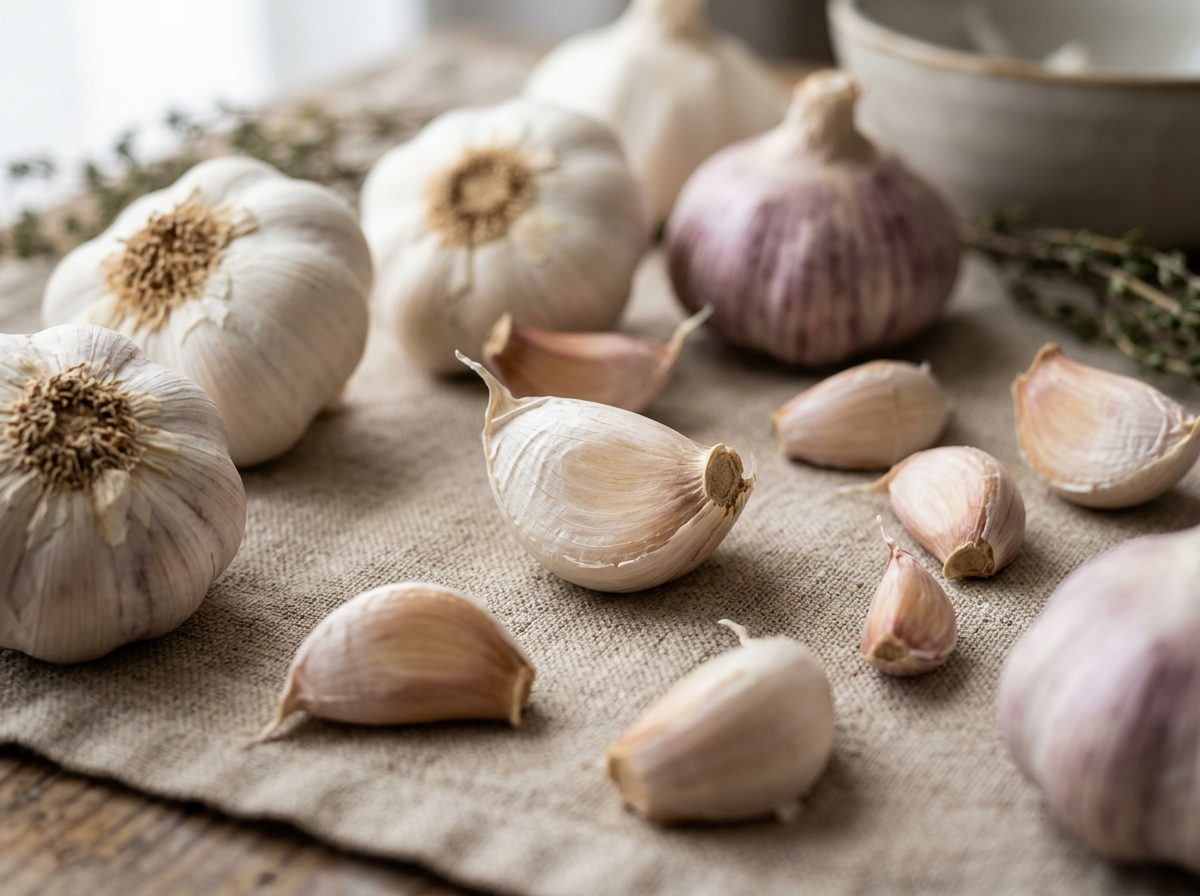
Fried until golden as a defining aromatic and garnish.
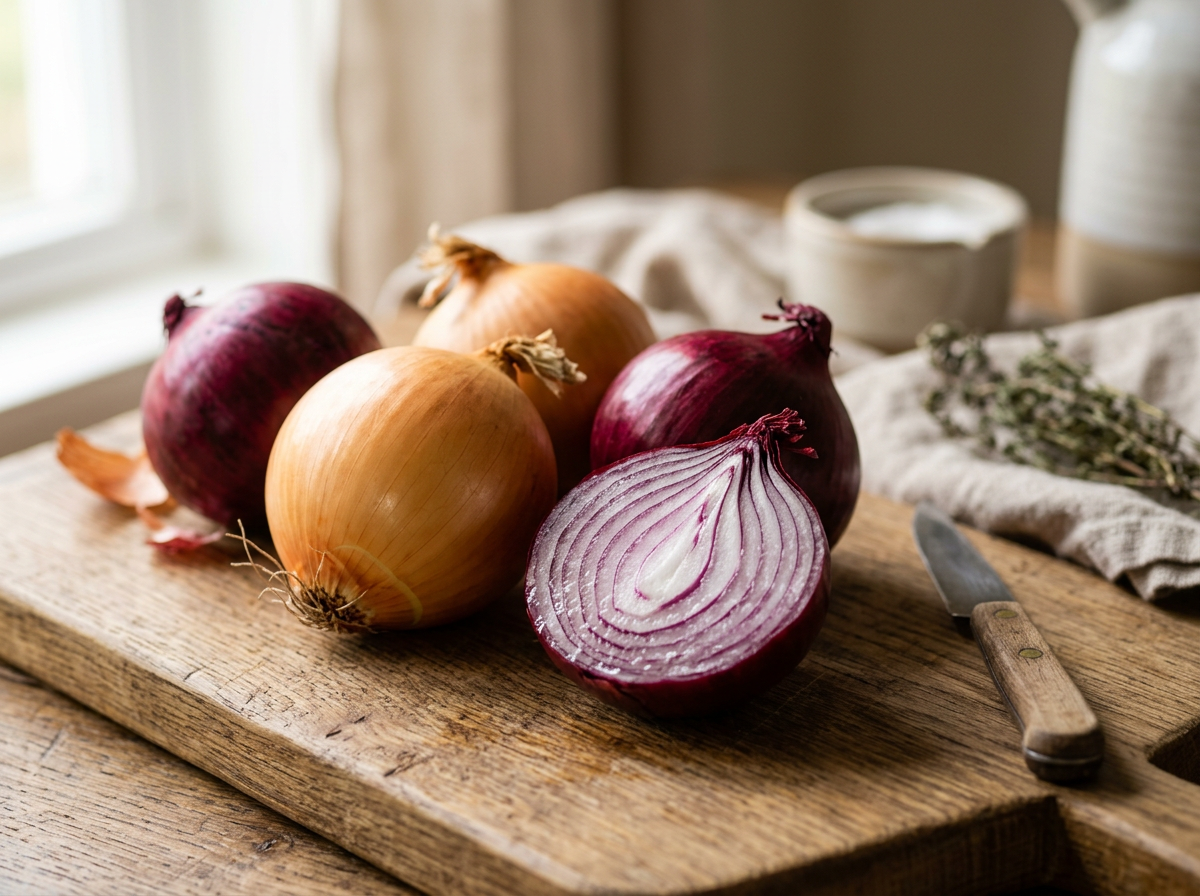
A base aromatic alongside garlic and tomato.
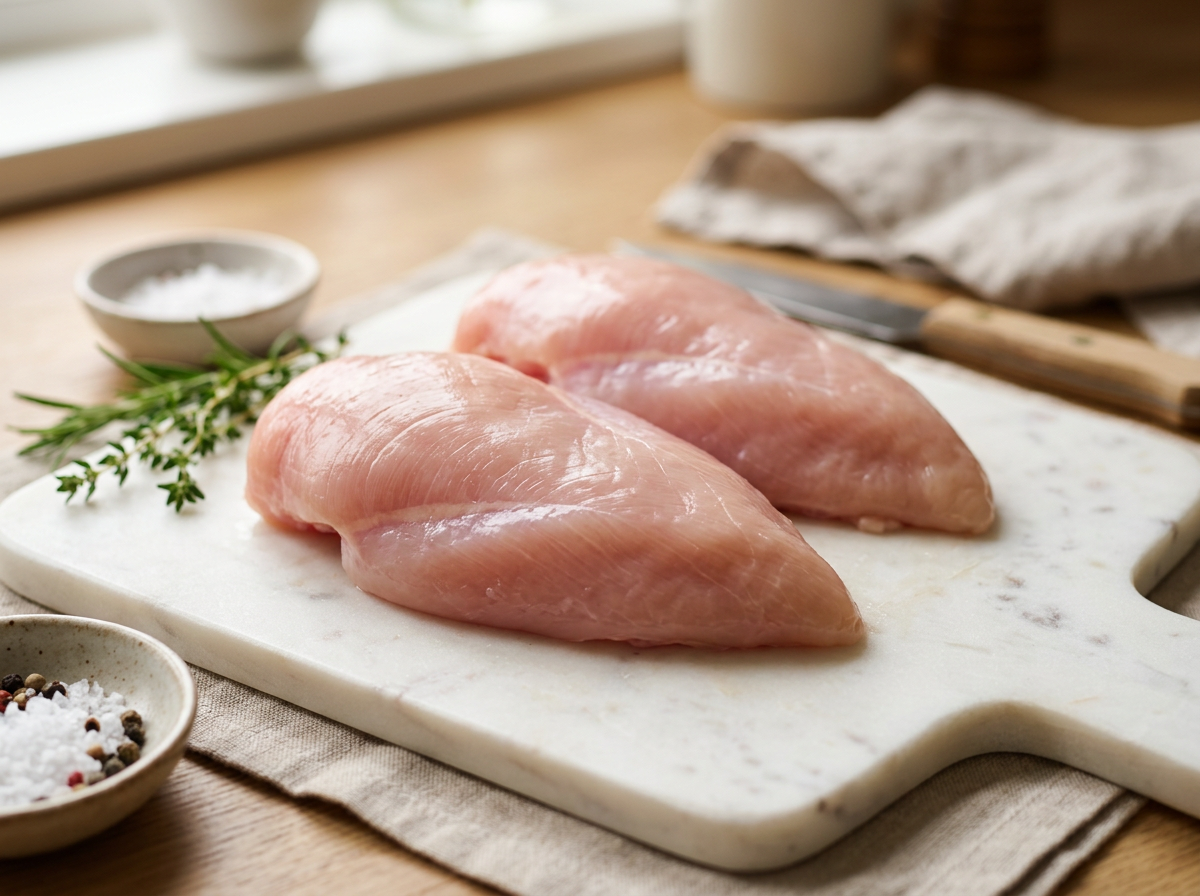
The proteins at the center of adobo, lechon, and countless stews.
The savory-sour backbone of adobo and dipping sauces.
A fragrant native citrus that brightens dishes and drinks.
Signature Techniques
Simmering meat in vinegar, soy sauce, garlic, and bay for a savory-tangy classic that keeps well.
Building sour soups with tamarind, calamansi, or other souring agents.
Lechon — spit-roasting a whole pig to crackling perfection for celebrations.
Pancit dishes stir-fried with vegetables and protein, a Chinese-influenced staple.
Signature Dishes
Meat braised in vinegar, soy, and garlic — the unofficial national dish.
A tangy tamarind-soured soup with pork or seafood and vegetables.
Stir-fried noodles with vegetables and meat, served at every celebration.
Whole roast pig with crackling skin, the centerpiece of fiestas.
Crisp Filipino spring rolls, a favorite party food.
Filipino Recipes to Cook
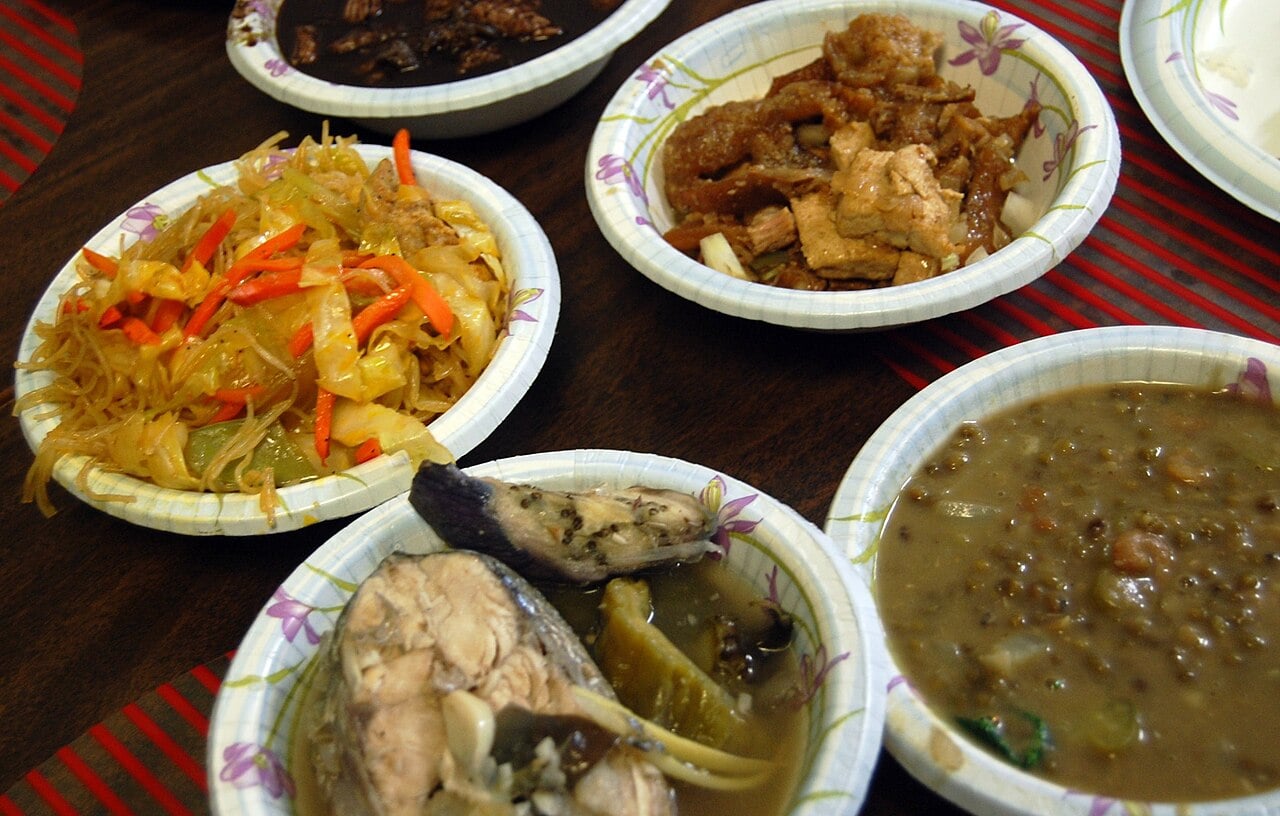
Filipino Ginisang Munggo (Mung Bean Stew)
A comforting Filipino mung bean stew simmered with garlic, tomato, and leafy greens — humble, protein-rich, and one of the most economical dinners you can make.
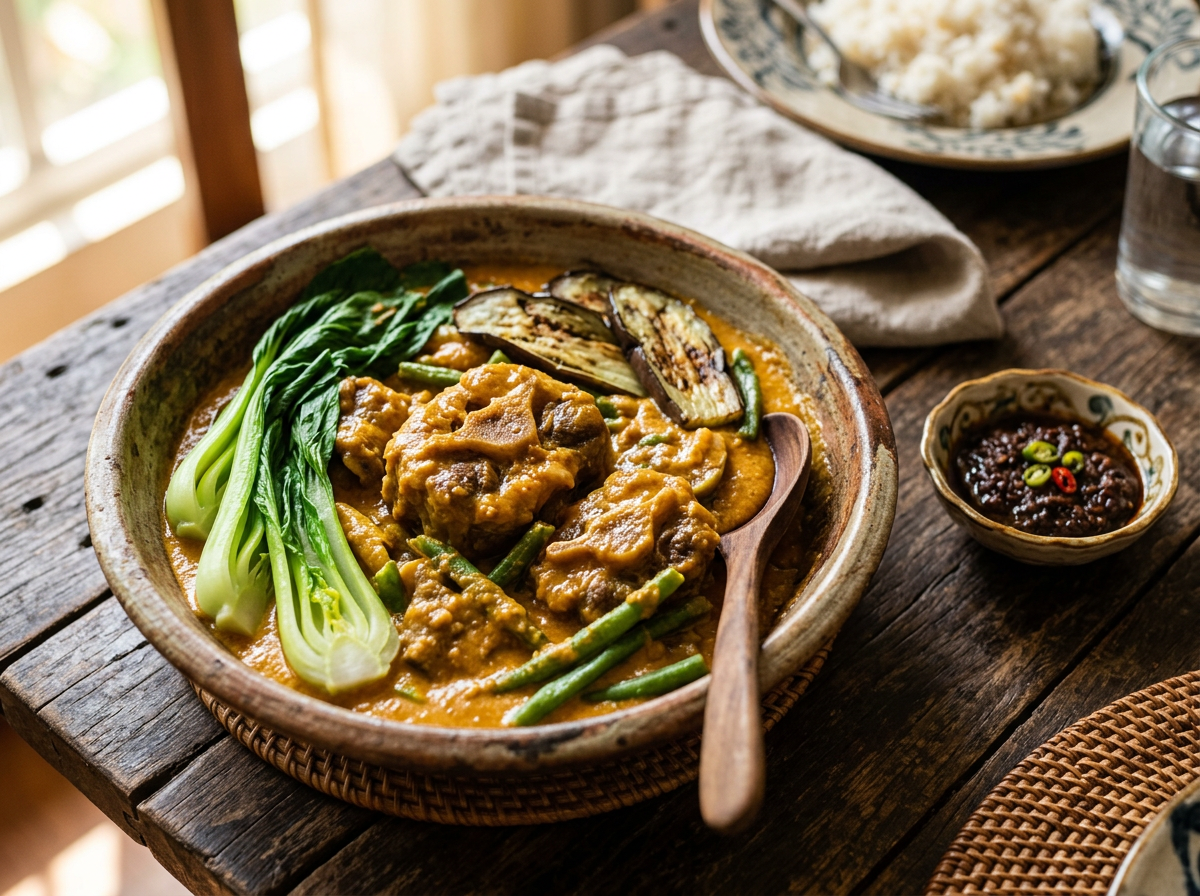
Filipino Kare-Kare (Oxtail Peanut Stew)
A festive Filipino stew of fall-apart oxtail and vegetables blanketed in a thick, nutty peanut sauce tinted golden with annatto. Always served with a side of salty bagoong shrimp paste to season each bite at the table.
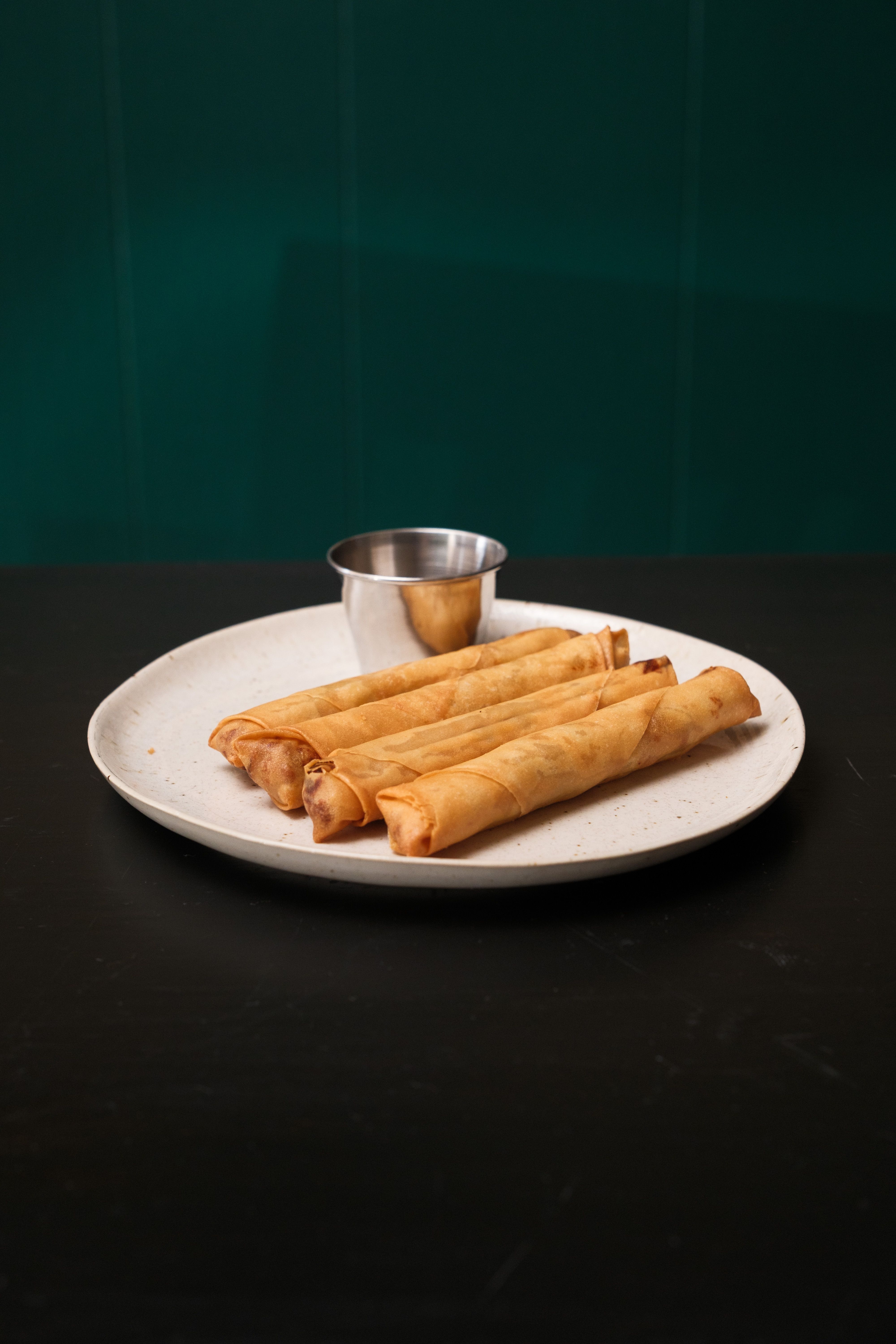
Filipino Lumpia Shanghai
Slender, crisp spring rolls filled with seasoned ground pork and vegetables, fried until golden and served with a sweet-sour dip.

Filipino Sinigang na Baboy
A beloved sour pork and vegetable soup soured with tamarind, bright and comforting with a clear, tangy broth.
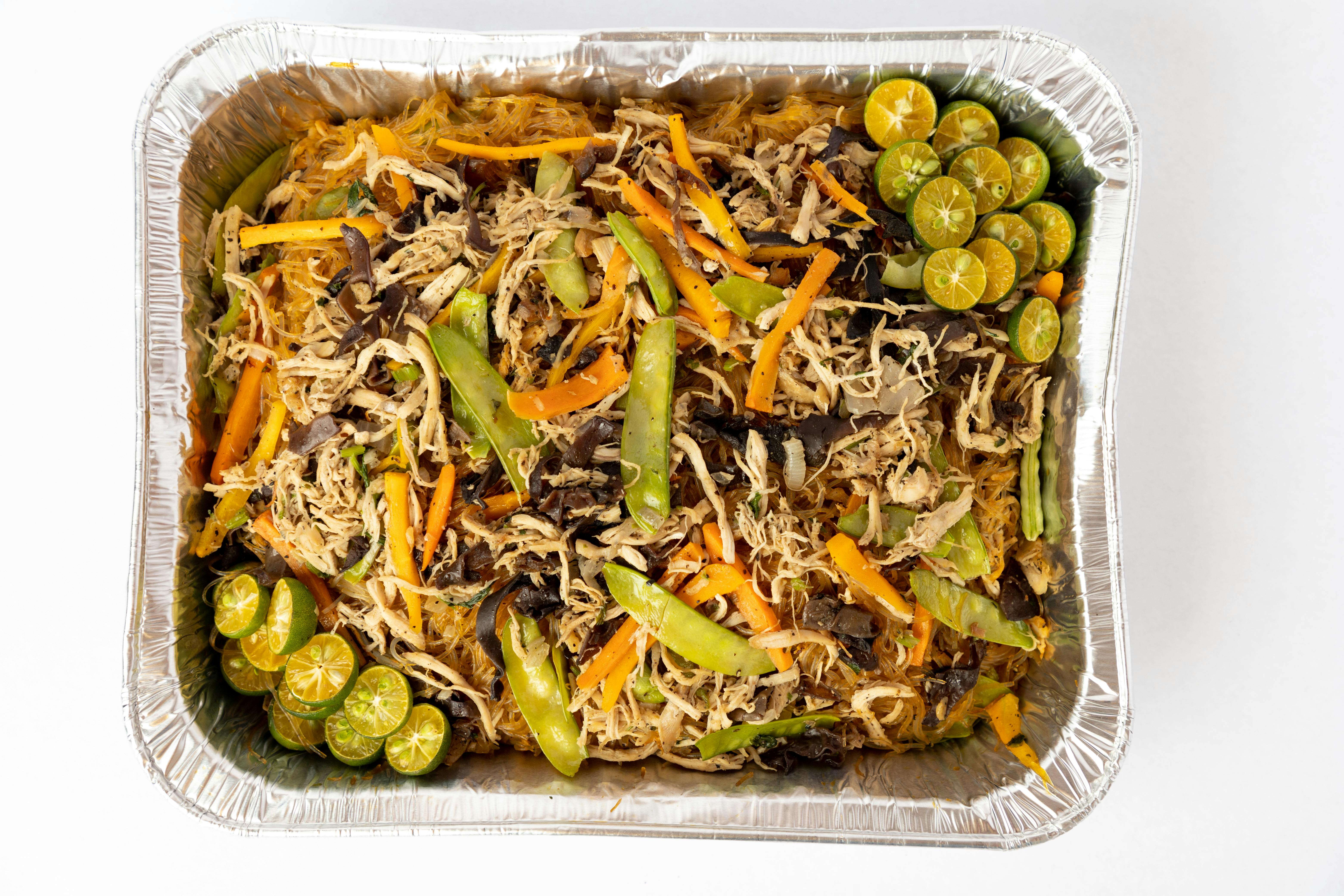
Filipino Pancit Bihon
Thin rice noodles stir-fried with chicken, shrimp, and crisp vegetables in a savoury soy-citrus sauce — a fixture at every Filipino celebration.
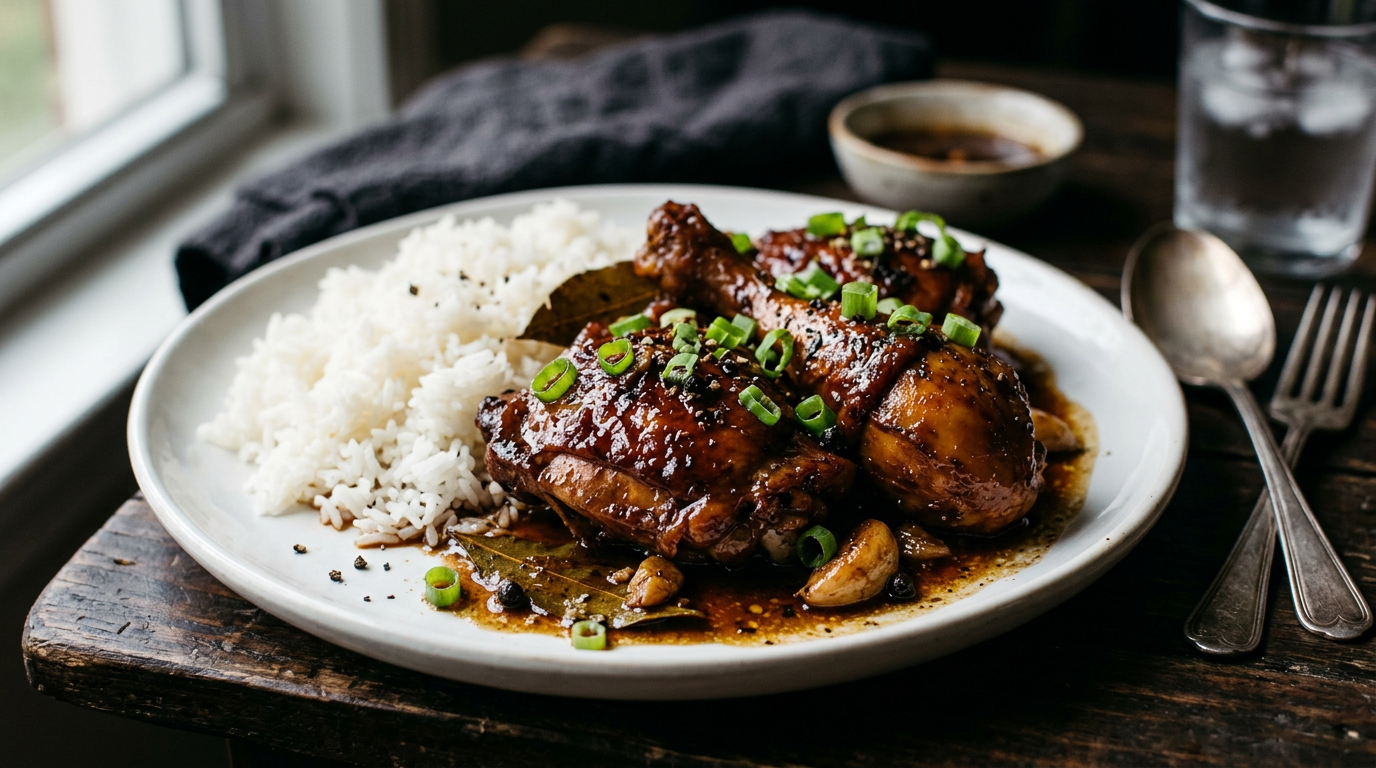
Filipino Chicken Adobo
Chicken braised in soy sauce, vinegar, garlic, and bay until glossy and deeply savoury — the unofficial national dish of the Philippines.
Key Ingredients to Explore
Cooking Guides You May Like
A Guide to Southeast Asian Flavors
Southeast Asian cooking thrives on balance — salty, sour, sweet, and hot in every bite. Here is how those flavors come together.
Understanding Cooking Methods: Dry Heat, Moist Heat, and More
Every cooking method changes texture and flavor in a specific way. Knowing which to choose is the key to cooking anything well.
Building Balanced Meals: A Simple Framework
You do not need to count anything to eat well. A simple visual framework does the work for you.