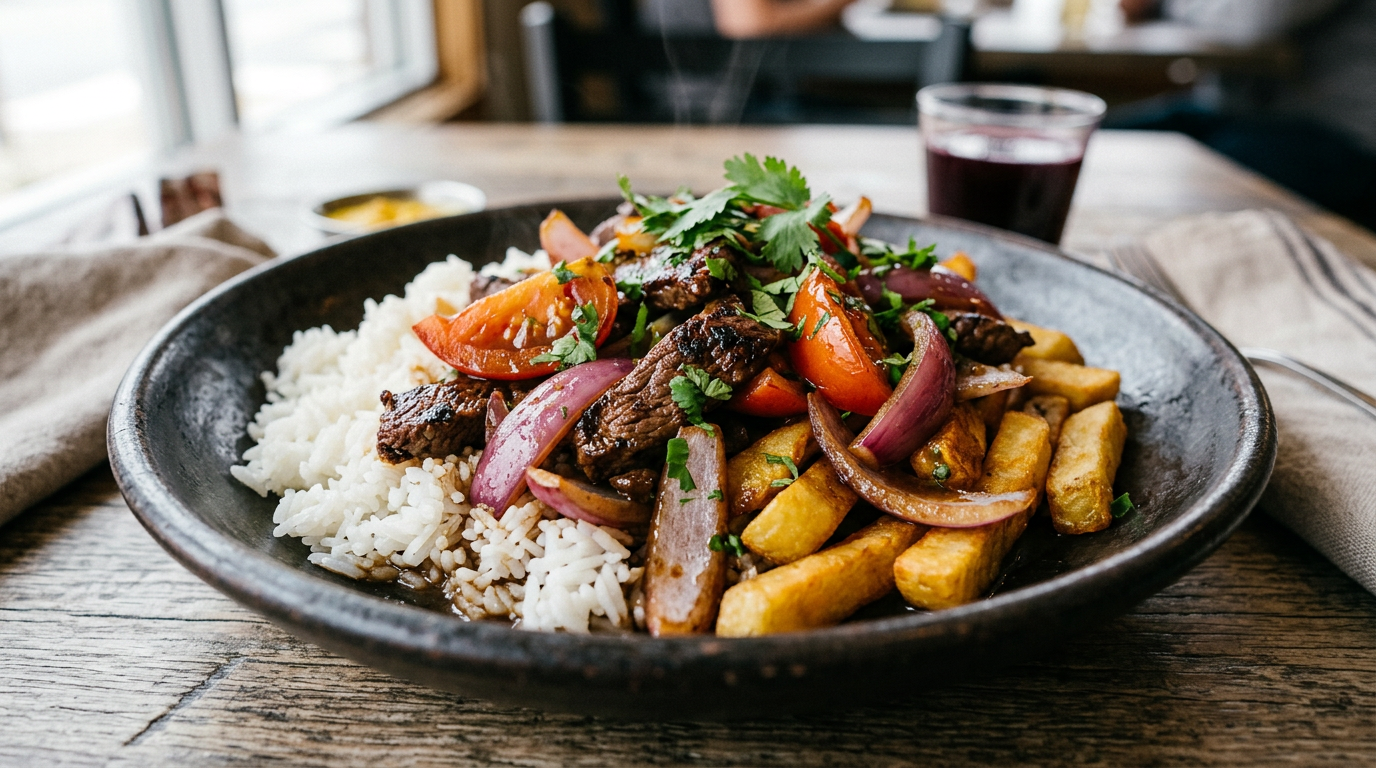
Peruvian Lomo Saltado
A Peruvian-Chinese stir-fry of seared beef, onion, and tomato deglazed with soy and vinegar, served over fries and rice at once.
By Palate Palace Kitchen
About This Recipe
Peruvian Lomo Saltado is a classic stir-fry that beautifully showcases the fusion of Chinese culinary techniques with traditional Peruvian ingredients. This dairy-free dinner dish brings together tender beef sirloin, bold red onion, and fresh tomatoes in a savory, tangy sauce. It is a hearty and comforting meal that effortlessly bridges the gap between a quick weeknight supper and a vibrant, crowd-pleasing feast.
The success of this medium-difficulty recipe relies on high-heat cooking to achieve the perfect sear on the sliced beef. Searing the sirloin in a screaming-hot wok locks in the juices before the meat is set aside. After briefly stir-frying the onions and tomatoes with the mildly spicy aji amarillo, returning the beef to the pan alongside soy sauce and red wine vinegar deglazes the wok, creating a deeply flavorful, savory glaze that coats every ingredient.
For the best results, ensure your wok or heavy skillet is fully heated before adding the beef to prevent the meat from steaming instead of searing. If you want to customize the dish, you can easily adjust the heat level by varying the amount of aji amarillo paste. To maintain the crisp texture of the fries, toss them into the wok at the very last second just before serving.
To complete this traditional presentation, serve the stir-fry immediately alongside a generous portion of warm steamed white rice. Because the dish features crispy fries folded directly into the sauce, it is best enjoyed fresh from the stove, as the textures are most vibrant right after cooking.
Ingredients
- 500 g Beef sirloin
- 1 large Red onion
- 2 medium Tomatoes
- 1 tbsp Aji amarillo
- 3 tbsp Soy sauce
- 2 tbsp Red wine vinegar
- 400 g Fries
- 1 handful Cilantro
Instructions
- 1
Sear the sliced beef in a screaming-hot wok until browned, then remove.
4 min
- 2
Stir-fry onion wedges and tomato with aji amarillo for a minute.
3 min
- 3
Return the beef, add soy and vinegar, and toss to deglaze.
3 min
- 4
Fold in the fries and cilantro and serve immediately with rice.
3 min
Nutrition Facts
520
kcal
Calories
34
g
Protein
42
g
Carbs
24
g
Fat
4
g
Fiber
820
mg
Sodium
Rate This Recipe
Beverage Pairings
Great pairings balance the weight and flavor of the dish: crisp, high-acid drinks refresh rich or fried food, a touch of sweetness tames spice, and light dishes suit light-bodied drinks. Both alcoholic and non-alcoholic options can shine.
Wine, Beer & Spirits
Dry rosé is remarkably versatile across savory dishes.
Serve well chilled (8–10°C).
Non-Alcoholic
A clean, neutral refresher that suits almost any dish.
Serve cold with a citrus twist.
Light and palate-cleansing — a safe, refreshing choice.
Steep at 75–80°C for 2 minutes.
You Might Also Like
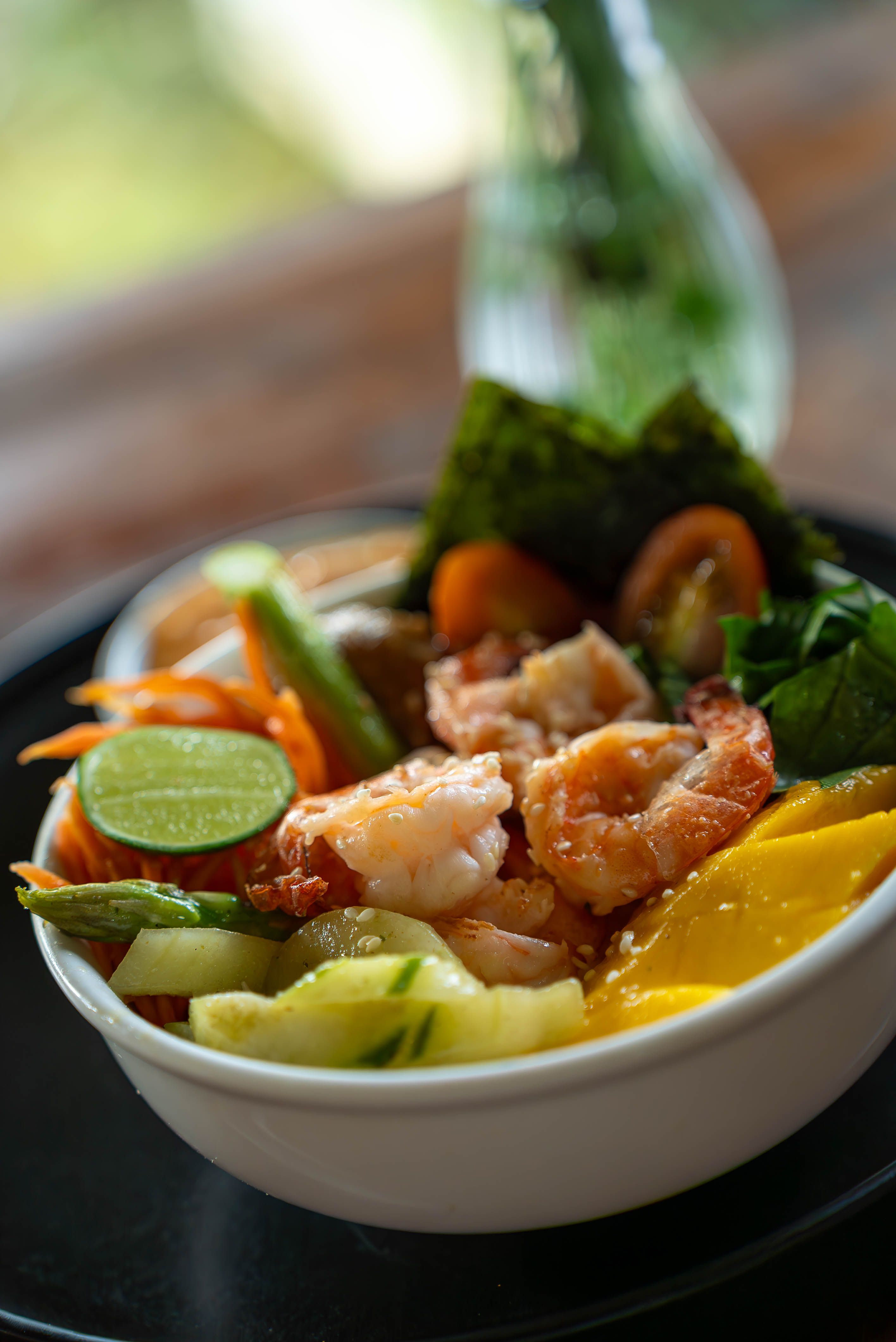
Peruvian Quinoa Vegetable Stew
A hearty Andean quinoa stew (guiso) with vegetables and aji amarillo warmth — protein-rich, vegan, and deeply comforting.

Peruvian Causa Limena
Chilled layers of lime-and-aji whipped yellow potato filled with seasoned chicken or tuna — an elegant Peruvian centrepiece.

Peruvian Aji de Gallina
Shredded chicken in a creamy, gently spicy sauce of aji amarillo, walnuts, and bread, served over potato and rice.
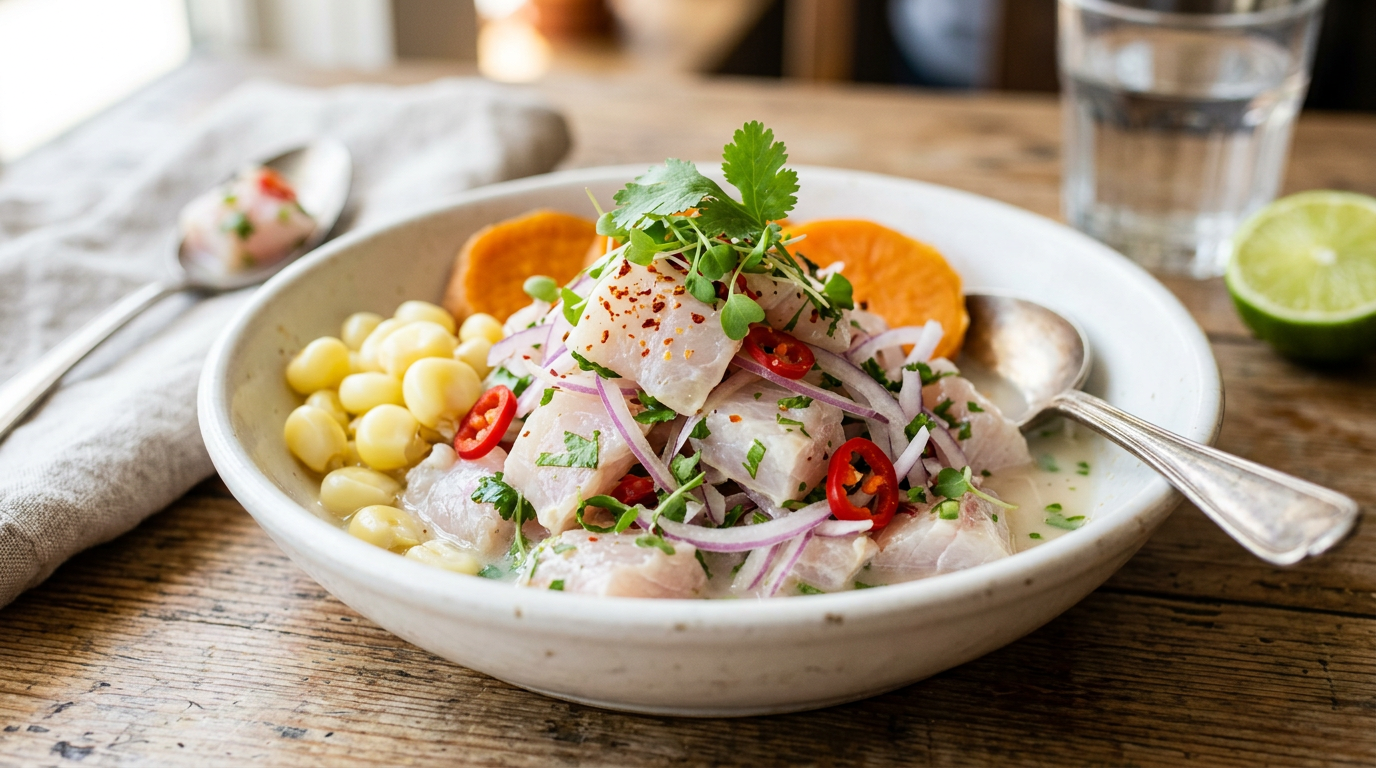
Peruvian Ceviche
Fresh white fish cured in bright lime juice with red onion, chili, and cilantro — clean, zingy, and served with sweet potato and corn.
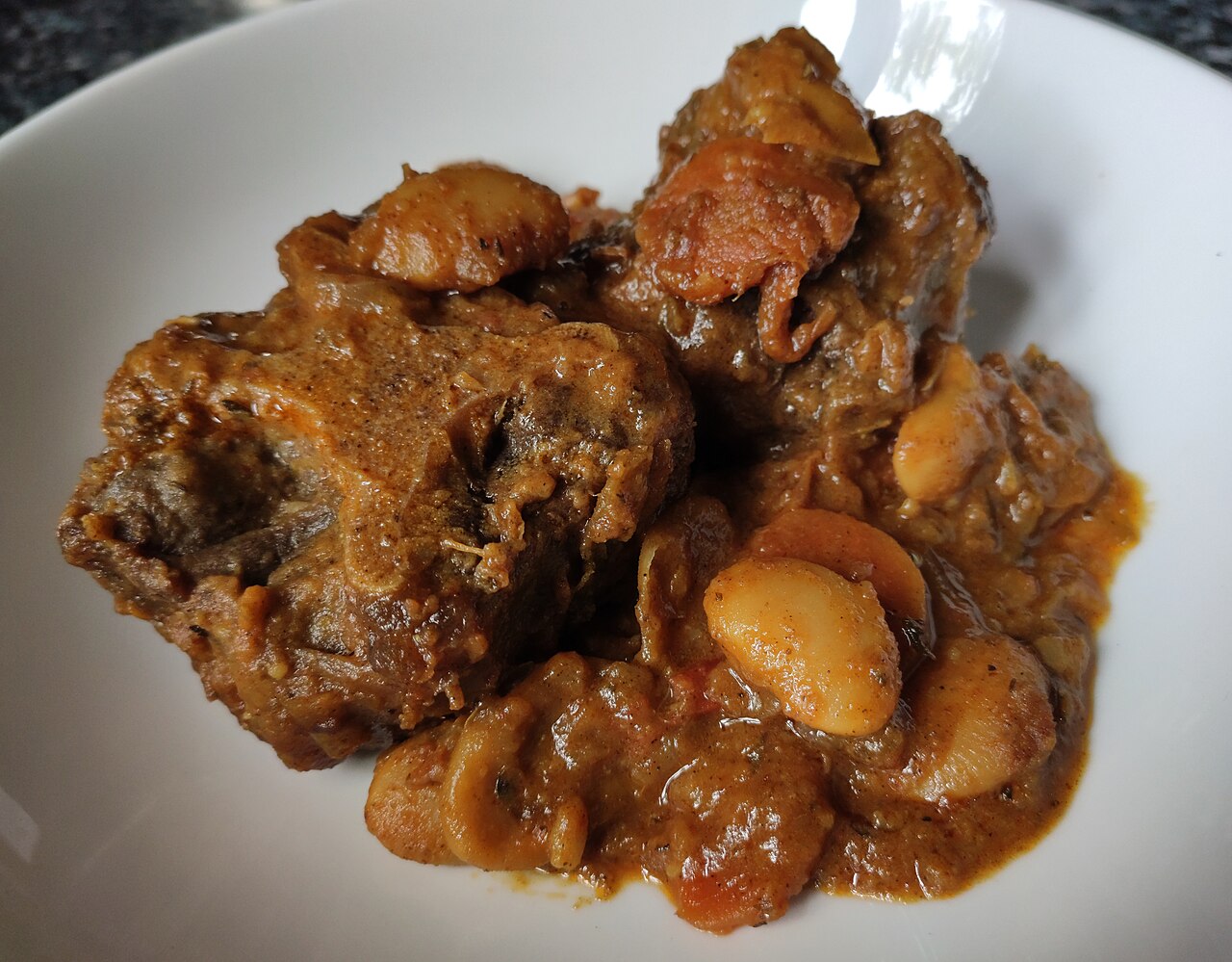
Jamaican Oxtail Stew
Meaty oxtail braised low and slow with butter beans, thyme, allspice, and scotch bonnet until the sauce is rich and the meat falls from the bone — the ultimate Jamaican comfort dish.
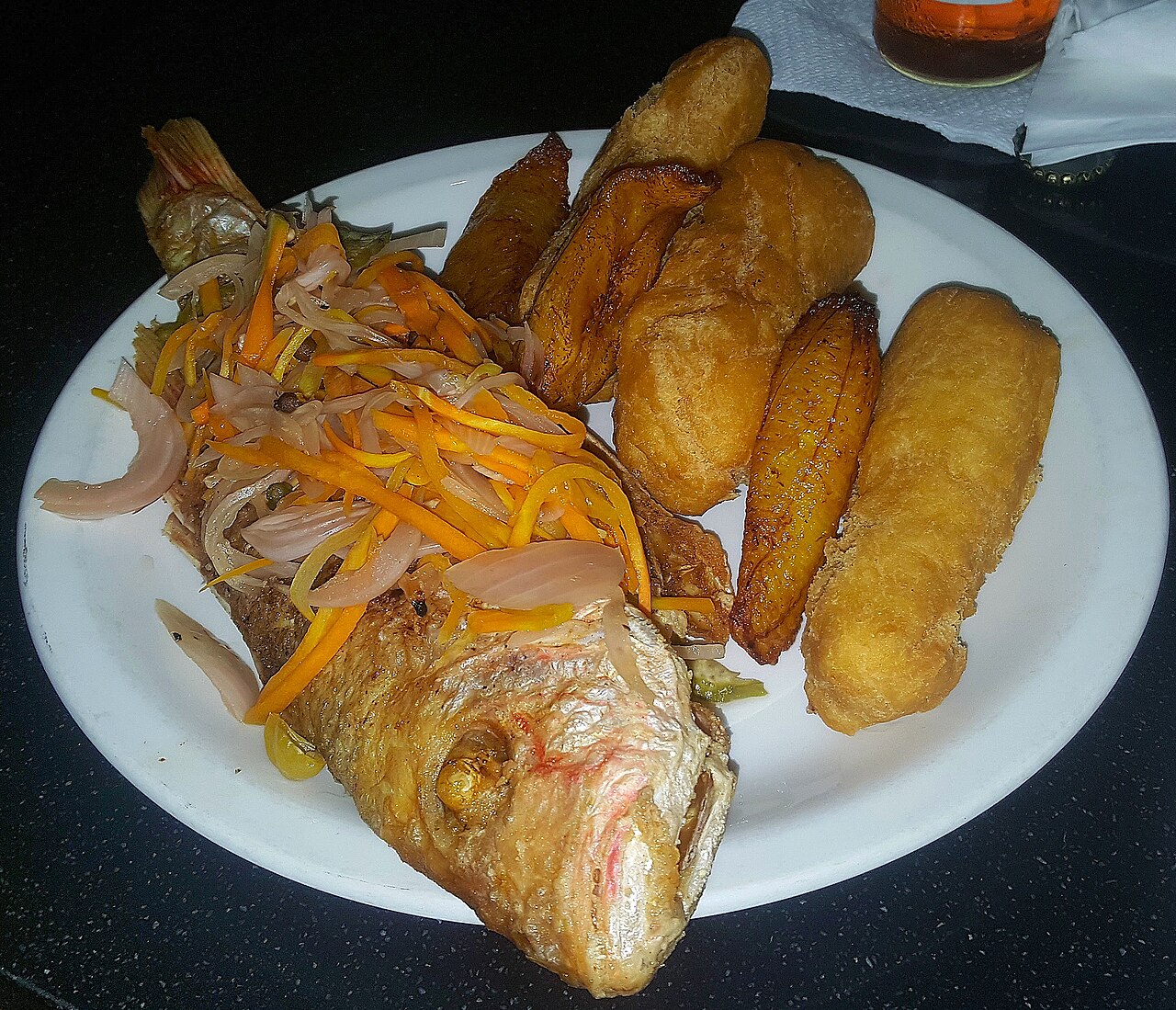
Jamaican Escovitch Fish
Crisp fried snapper topped with a bright, tangy pickle of vinegar-soused onion, carrot, bell pepper, and scotch bonnet — a festive Jamaican coastal favourite.
Explore Related Collections
Cooking Guides
Peruvian Cuisine: A Guide to One of the World’s Most Exciting Food Cultures
From citrus-cured ceviche to smoky stir-fried lomo saltado, Peruvian cooking has become one of the world’s most celebrated cuisines. Here is the full picture.
Read guideUnderstanding Cooking Methods: Dry Heat, Moist Heat, and More
Every cooking method changes texture and flavor in a specific way. Knowing which to choose is the key to cooking anything well.
Read guideBuilding Balanced Meals: A Simple Framework
You do not need to count anything to eat well. A simple visual framework does the work for you.
Read guide