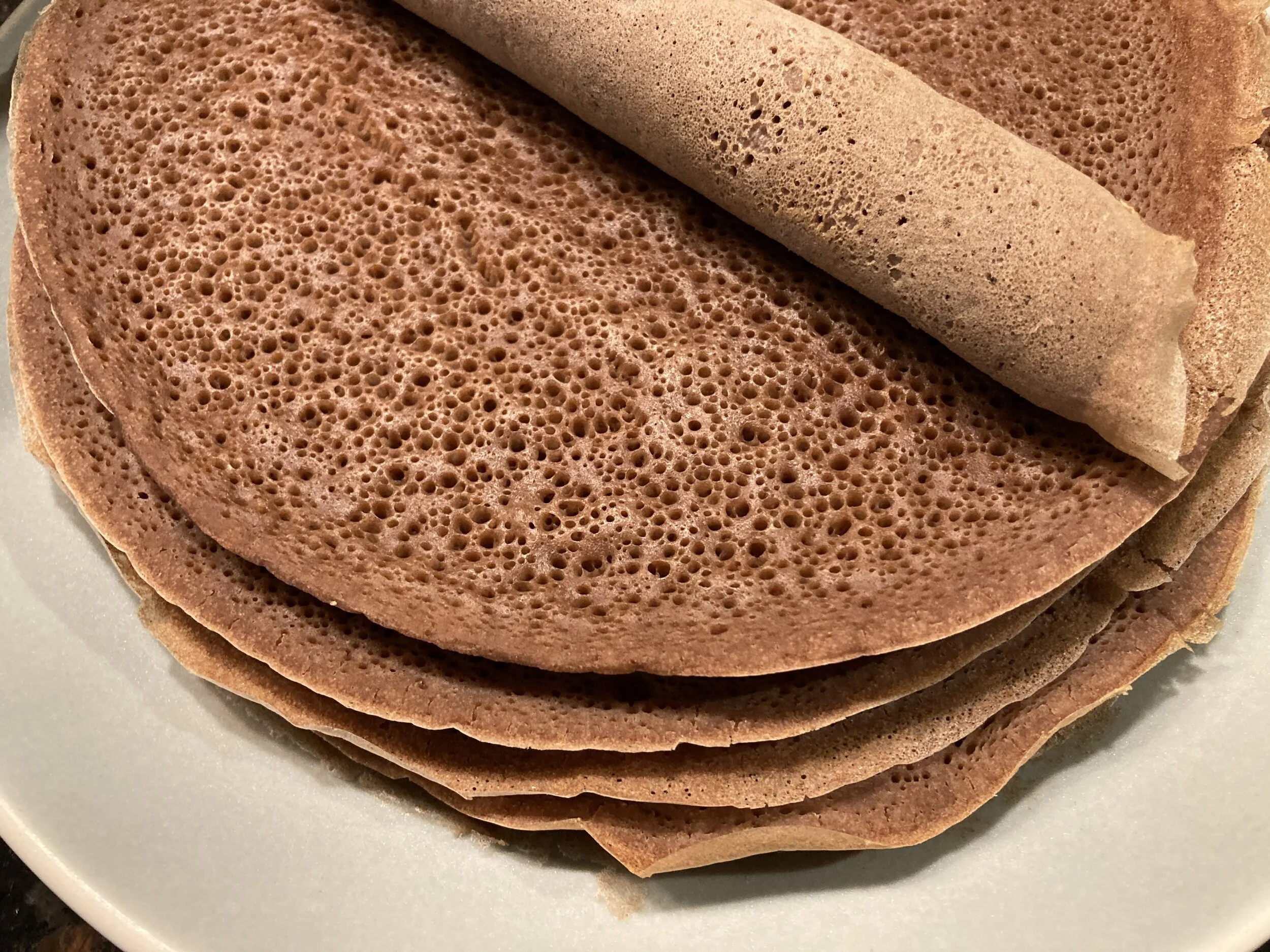
Injera Flatbread
The spongy, tangy Ethiopian sourdough flatbread that serves as both plate and utensil.
About This Recipe
Injera is a traditional Ethiopian flatbread characterized by its unique spongy texture, sour flavor profile, and distinctive bubbly surface. This vegan and dairy-free staple serves as both the platter and the utensil in East African dining. The character of this flatbread relies entirely on a simple, ancient combination of teff flour and water, which undergoes a natural fermentation process to develop its signature tangy taste and airy structure.
The success of this preparation lies in the patience of fermentation and the specific cooking technique. Allowing the batter to rest at room temperature for two to three days coaxes out natural yeasts, creating the essential bubbles that translate into tiny holes, or eyes, on the cooked bread. When cooking, pouring the thin batter in a swift, continuous spiral onto a hot nonstick pan ensures an even thickness. Covering the pan is crucial, as the trapped steam cooks the top of the flatbread, eliminating the need to flip it.
For the best results, ensure your pan is properly heated before pouring the batter to immediately activate the bubble formation. If your kitchen is particularly cool, you may need to find a warm spot for the fermentation process to fully activate within the three-day window. Once the flatbreads are cooked, let them cool completely on a clean cloth before stacking them to prevent them from sticking together.
To serve, present these flatbreads alongside a variety of rich, spiced Ethiopian stews. Diners can tear off pieces of the injera to easily scoop up the savory toppings, allowing the spongy bread to absorb the flavorful juices.
Ingredients
- 400 g Teff flour
- 700 ml Water
- 1 tsp Salt
Instructions
- 1
Whisk teff flour with water into a smooth batter.
5 min
- 2
Cover and ferment at room temperature for 2-3 days until bubbly and sour.
20 min
- 3
Pour thin batter in a spiral onto a hot nonstick pan.
3 min
- 4
Cover and cook until the surface is covered in tiny holes (no flipping).
3 min
- 5
Cool on a cloth and stack. Use to scoop stews.
2 min
Nutrition Facts
220
kcal
Calories
8
g
Protein
44
g
Carbs
2
g
Fat
6
g
Fiber
320
mg
Sodium
Rate This Recipe
Beverage Pairings
Ethiopian meals are shared from a communal platter of injera, and drinks are grounded in the famous coffee ceremony — rich, freshly roasted coffee served in rounds. Honey wine (tej) accompanies feasts, while spiced tea and light lagers cool the berbere heat.
Wine, Beer & Spirits
Off-dry fruit tempers the heat of berbere and rich stews. A little sweetness tempers the chilli heat.
Serve well chilled (8°C).
A light, cold lager refreshes against spice and injera.
Serve ice-cold.
Dry rosé is remarkably versatile across savory dishes.
Serve well chilled (8–10°C).
Non-Alcoholic
Ethiopia is coffee’s birthplace — a strong, sweet cup is the traditional close to the meal. A little sweetness tempers the chilli heat.
Serve hot in a small cup.
A cooling yogurt drink to soothe fiery berbere heat. A little sweetness tempers the chilli heat.
Serve cold.
Tangy and fizzy — a refreshing, alcohol-free cooler. A little sweetness tempers the chilli heat.
Serve over ice.
Spiced black tea complements the warm spices in wot stews.
Steep at 95°C for 3–4 minutes.
A neutral refresher for a spicy, communal spread.
Serve cold with a citrus twist.
You Might Also Like
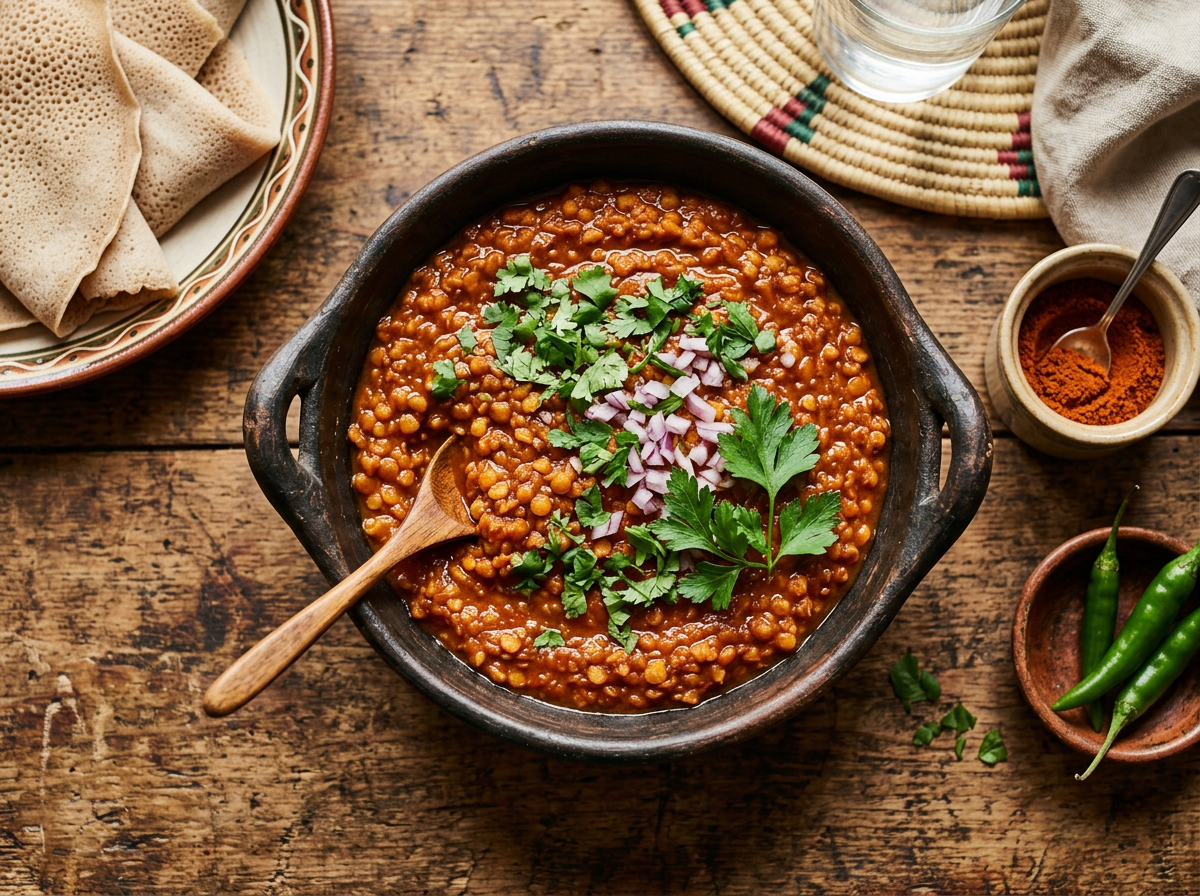
Ethiopian Misir Wot
A deeply spiced Ethiopian red lentil stew simmered with berbere, onions, and garlic until velvety — naturally vegan, wonderfully budget-friendly, and perfect for batch cooking.
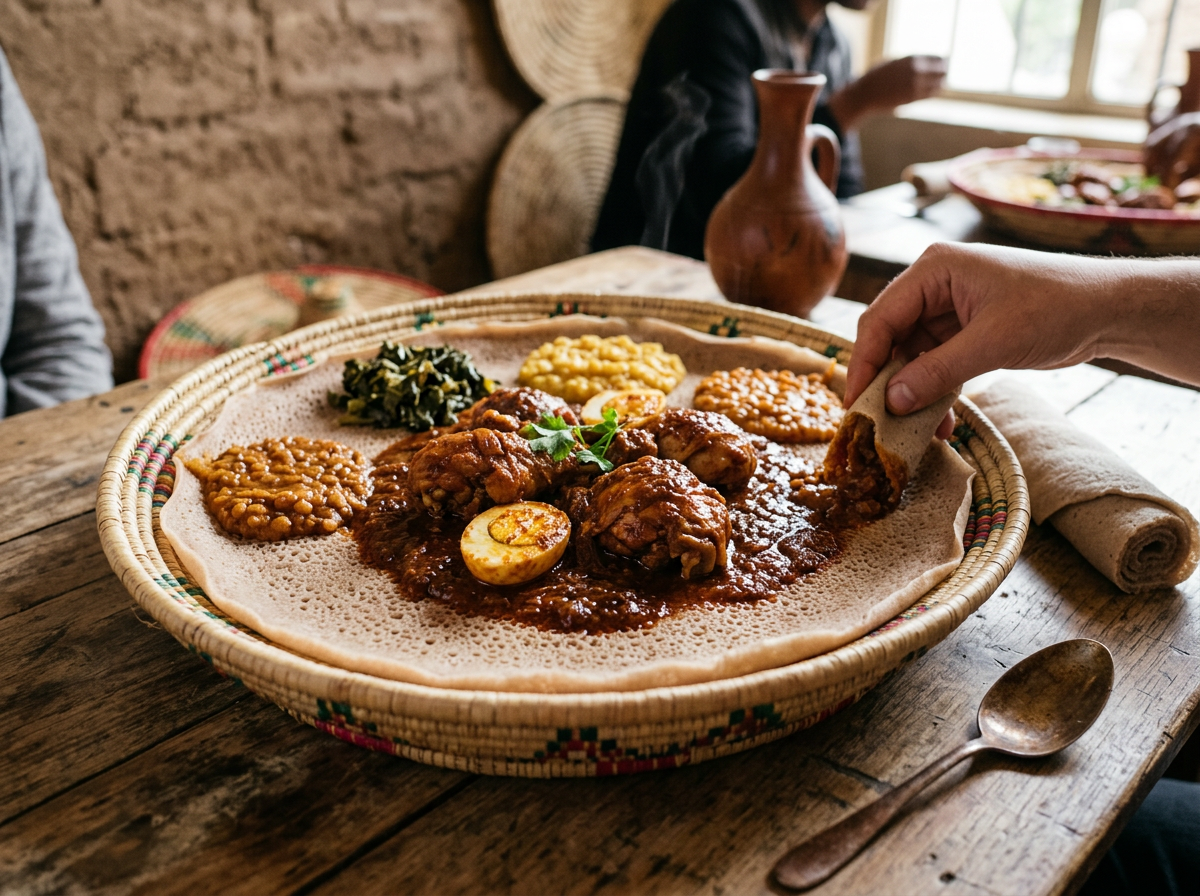
Berbere Lentil Stew
Red lentils simmered with onion, garlic, and aromatic berbere spice into a warming, naturally vegan stew inspired by the flavors of the Horn of Africa.
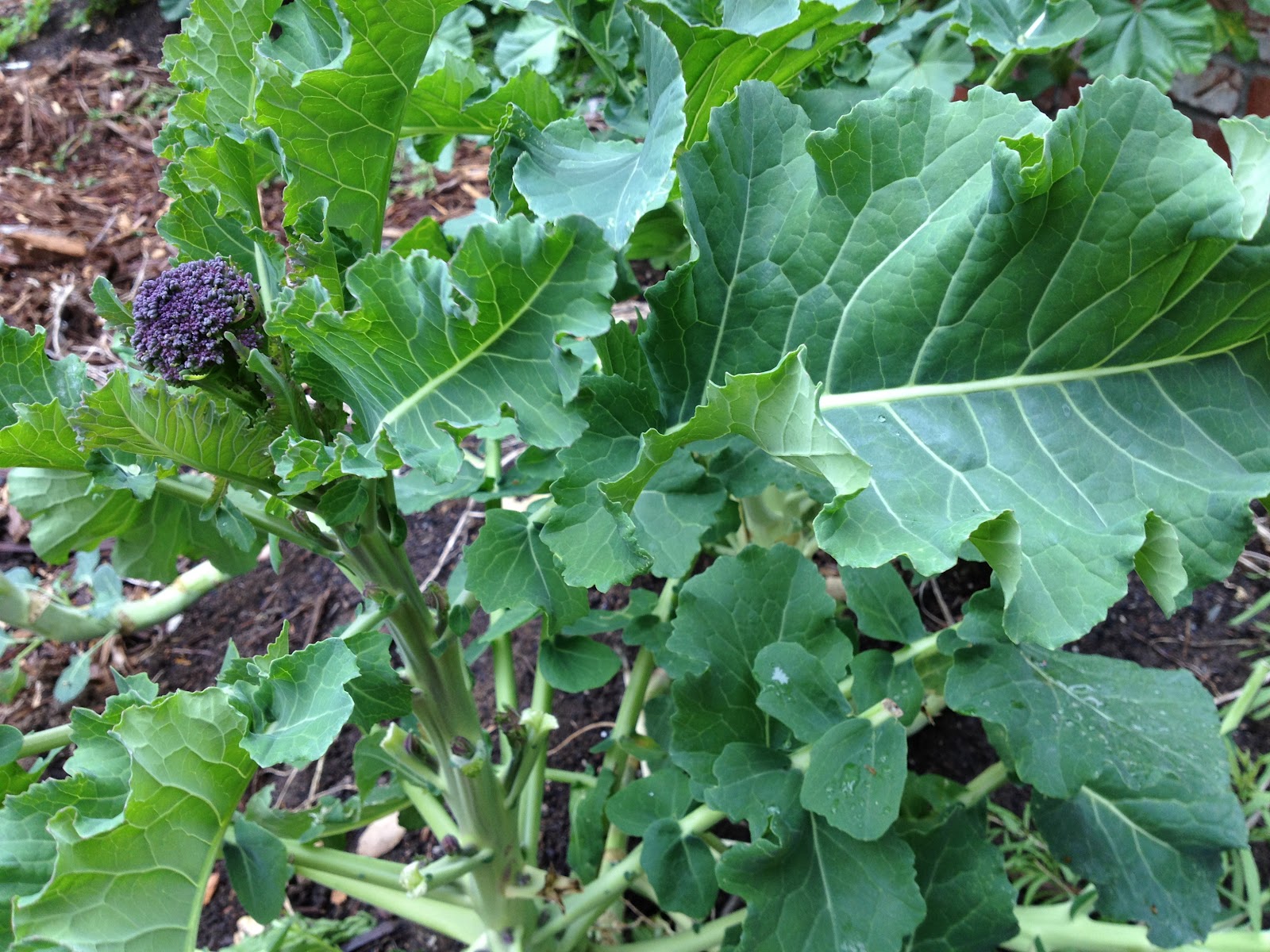
Gomen (Ethiopian Collard Greens)
Tender collard greens sautéed with garlic, ginger, and warm spices — a fresh, savory side.
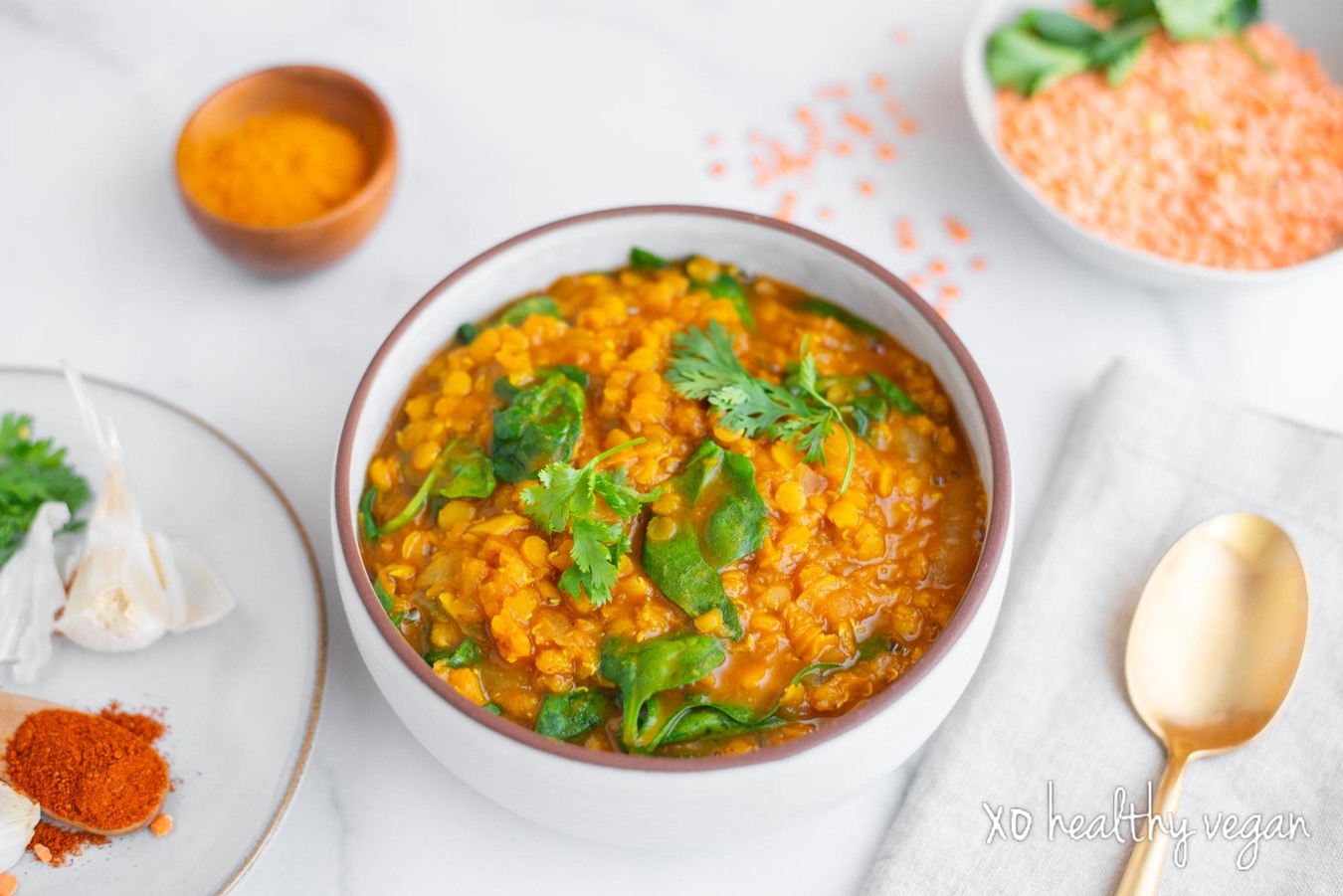
Misir Wot (Spiced Red Lentils)
Silky red lentils simmered with berbere and caramelized onion into a warming, fully plant-based stew.
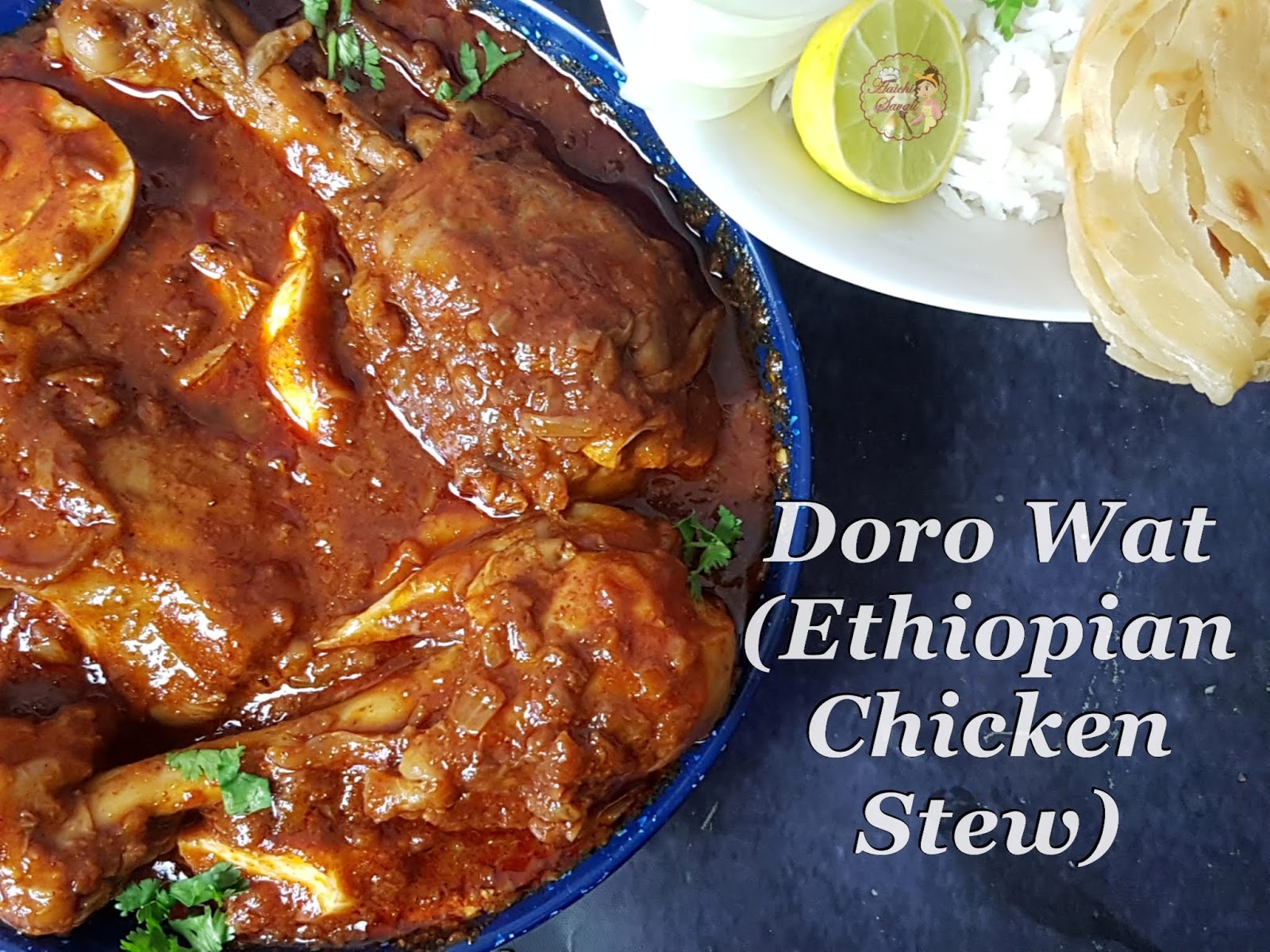
Doro Wat
A rich, deeply spiced Ethiopian chicken stew built on berbere and slow-cooked onions, served with injera.
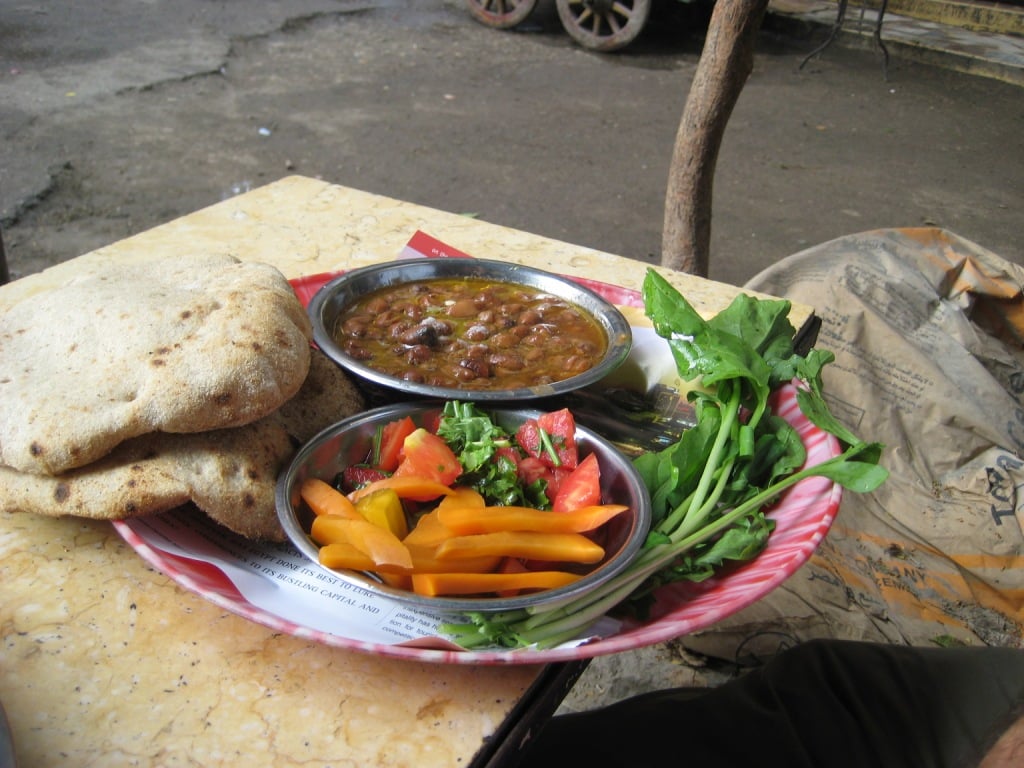
Egyptian Ful Medames
Egypt's national breakfast of slow-simmered fava beans mashed with olive oil, lemon, garlic, and cumin, hearty and protein-rich, traditionally scooped up with warm flatbread.
Explore Related Collections
Cooking Guides
Understanding Cooking Methods: Dry Heat, Moist Heat, and More
Every cooking method changes texture and flavor in a specific way. Knowing which to choose is the key to cooking anything well.
Read guideBuilding Balanced Meals: A Simple Framework
You do not need to count anything to eat well. A simple visual framework does the work for you.
Read guideEssential Kitchen Skills Every Home Cook Should Know
A short list of fundamental skills will do more for your cooking than any gadget. Here are the ones that matter most.
Read guide