Persian Cuisine
Fragrant rice, herb-laden stews, and the elegant balance of sweet, sour, and savory.
Introduction
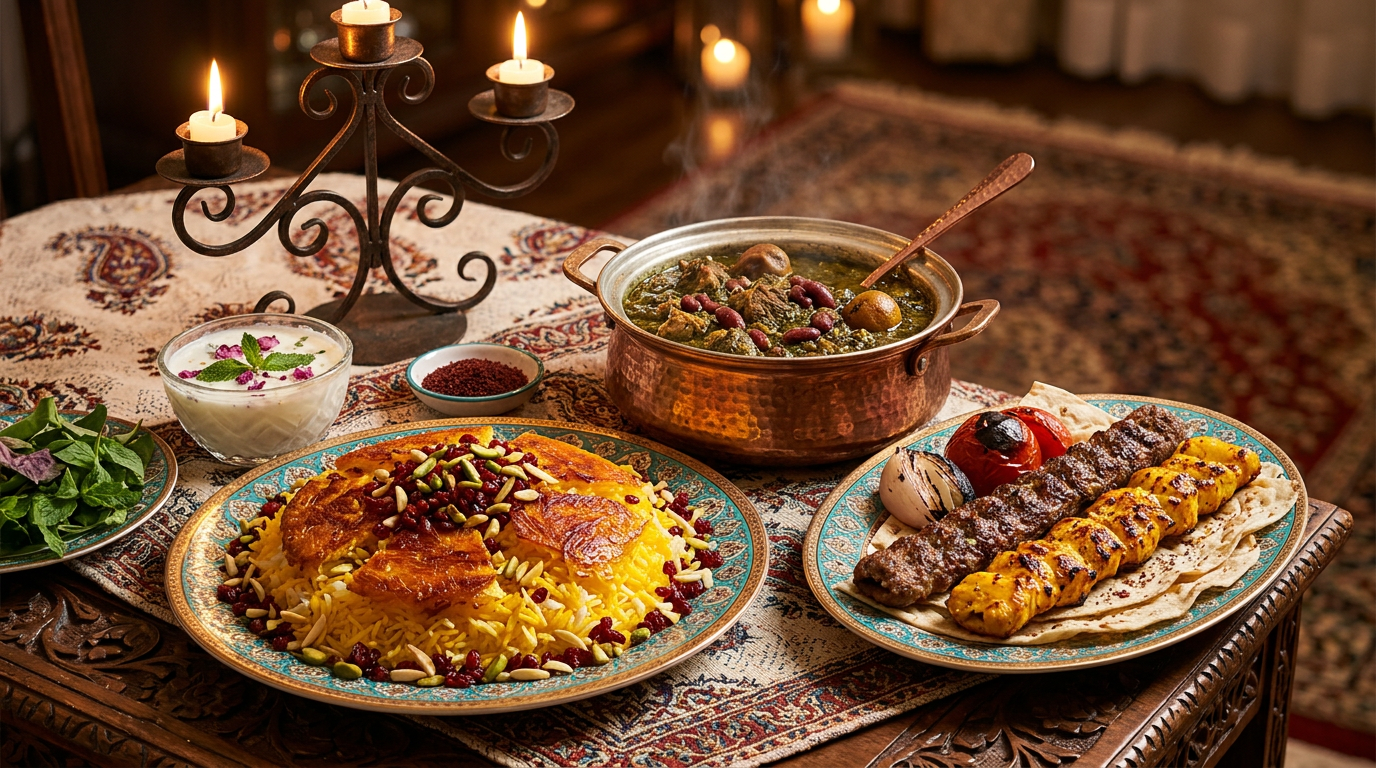
Persian cuisine is one of the most refined and ancient food traditions in the world, prized for its elegance, subtlety, and masterful balance of flavors. Fragrant saffron rice, slow-simmered herb stews, and the interplay of sweet, sour, and savory define its character.
Fresh herbs are used by the handful, dried limes and pomegranate add sourness, and delicate spicing lets the natural flavors of each ingredient shine. The crisp golden rice crust known as tahdig is a source of national pride.
History
Persian cooking traces back thousands of years to one of the world's earliest civilizations. The Silk Road placed Persia at the center of global spice and ingredient exchange, and Persian court cuisine influenced cooking from India to Turkey and the Arab world.
Techniques such as combining fruit with meat, layering rice with butter and saffron, and building stews on a foundation of herbs are ancient and have spread far beyond Iran's borders, shaping Mughal, Ottoman, and Levantine food.
Cultural Context
Food is central to Persian celebration and poetry alike. Nowruz, the Persian New Year, is marked by symbolic dishes such as sabzi polo (herbed rice) with fish, and the table is arranged with meaning and care.
Sharing a beautifully presented meal, offering the crunchy tahdig to a guest, and the ritual of tea drinking are all expressions of the deep hospitality (mehman-navazi) at the heart of Persian culture.
Regional Variations
Herb-heavy cooking, garlic, sour flavors, and abundant fresh fish and rice.
Classic polo (rice) dishes, khoresh stews, and refined saffron cooking.
Spicier, seafood-forward dishes with tamarind and warm spice reflecting trade links.
Core Ingredients
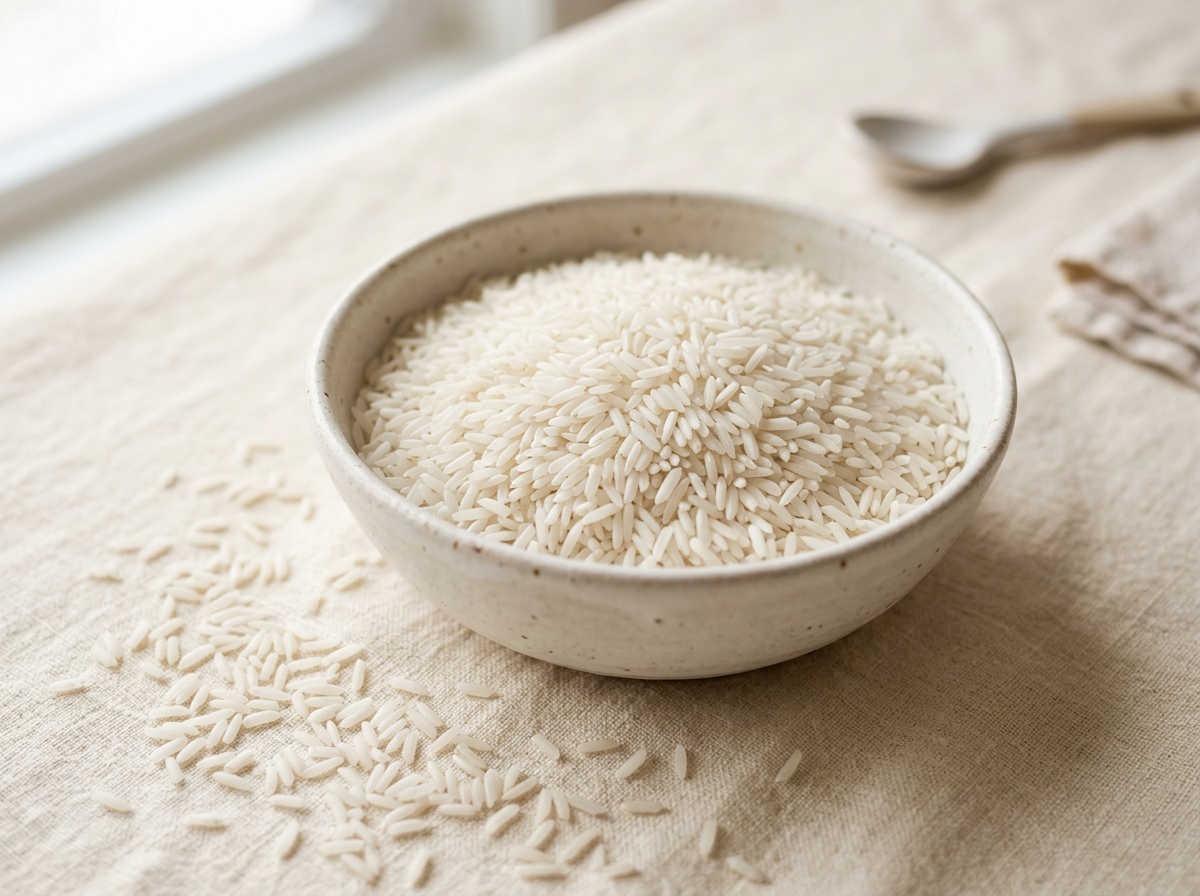
The foundation of polo and chelo, cooked to fluffy perfection with a crisp tahdig.
Bloomed and drizzled for color, aroma, and luxury in rice and stews.
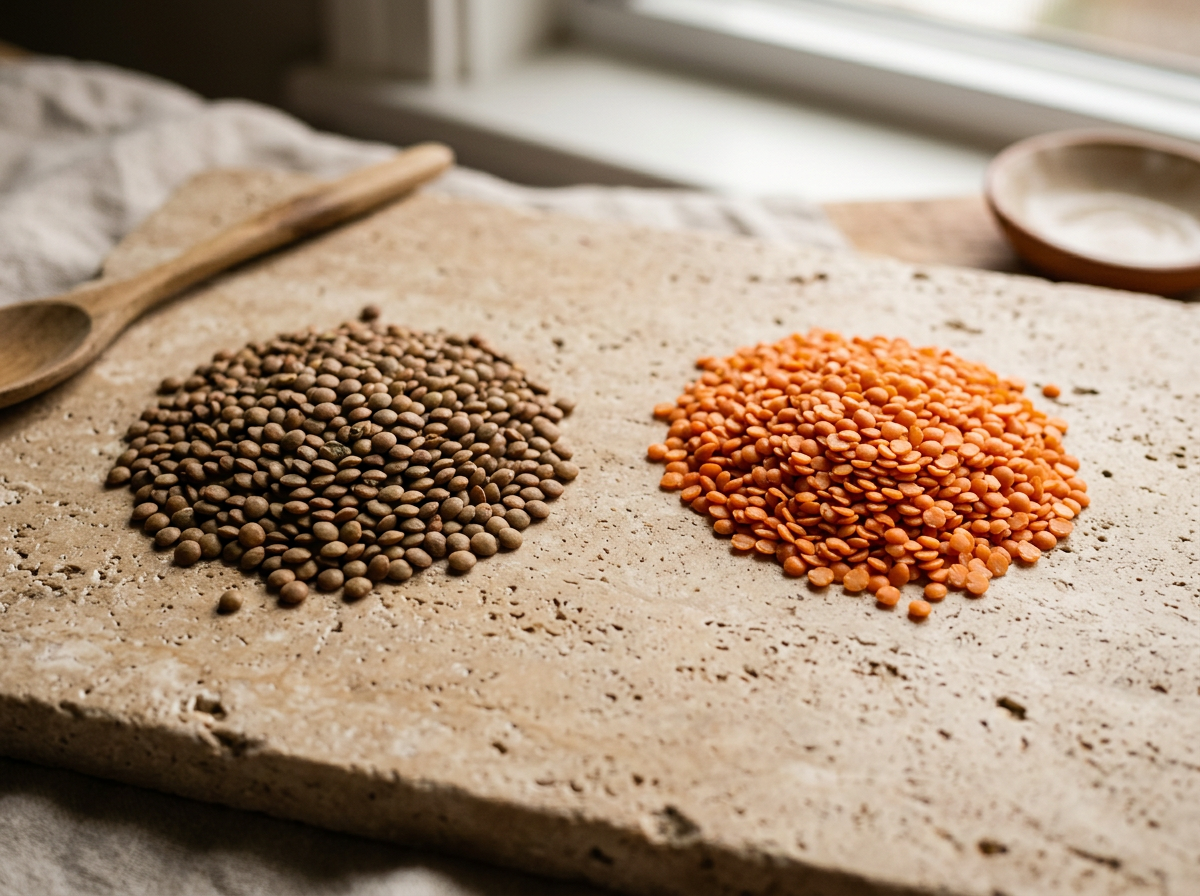
Used in adas polo and hearty stews.
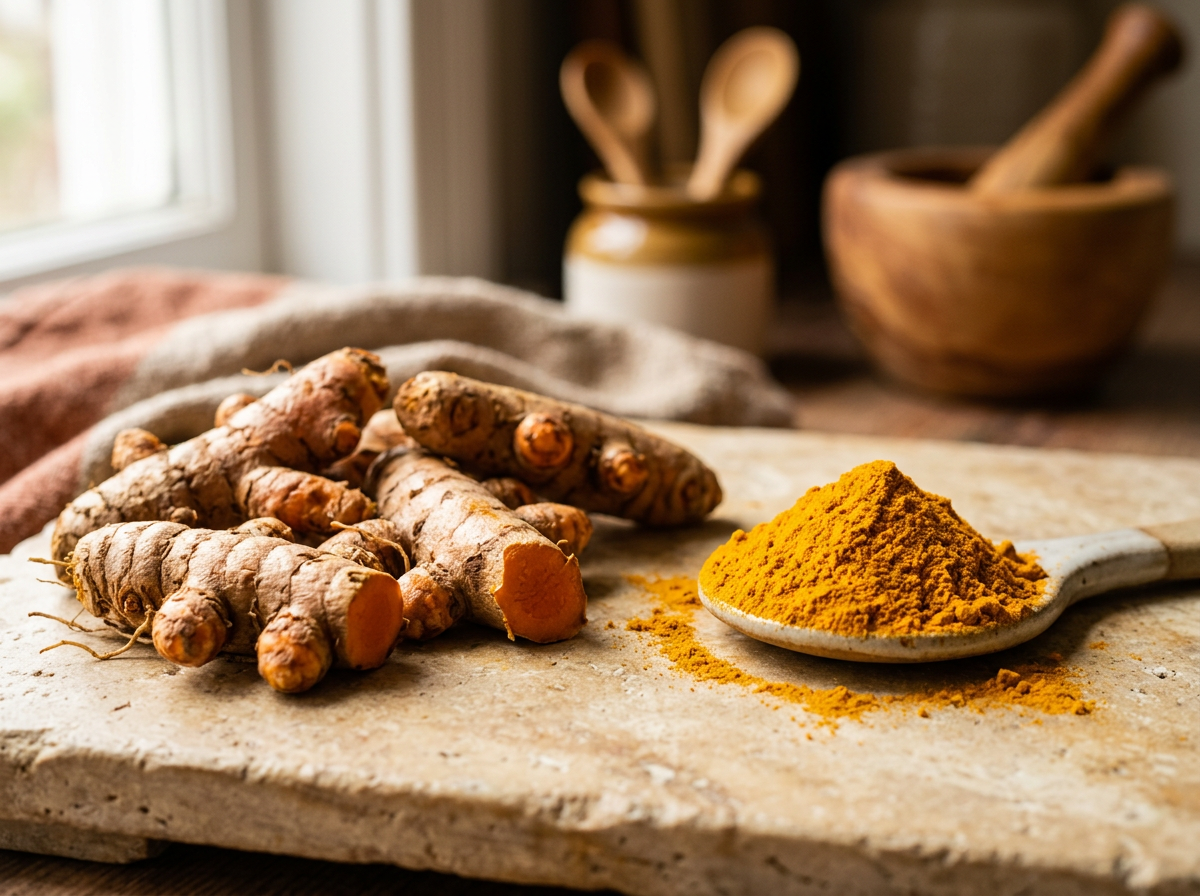
A base spice that underpins most khoresh stews.
Provide the characteristic Persian sourness and jeweled tartness.
Parsley, cilantro, fenugreek, and dill used in enormous quantity, especially in ghormeh sabzi.
Signature Techniques
Creating a crisp, golden crust of rice (or bread/potato) at the bottom of the pot — a coveted delicacy.
Parboiling then steaming rice with butter and saffron for separate, fluffy grains.
Long-simmered stews built on sautéed herbs, meat, and souring agents.
Ground saffron steeped in hot water to release maximum color and aroma.
Signature Dishes
A deeply savory herb stew with kidney beans and dried lime — often called Iran's national dish.
Saffron rice served with grilled kebab, the classic Persian restaurant meal.
The prized crispy rice crust served alongside every polo.
A rich stew of poultry in a pomegranate-walnut sauce, sweet and tart.
Herbed green rice, traditionally served with fish for Nowruz.
Persian Recipes to Cook
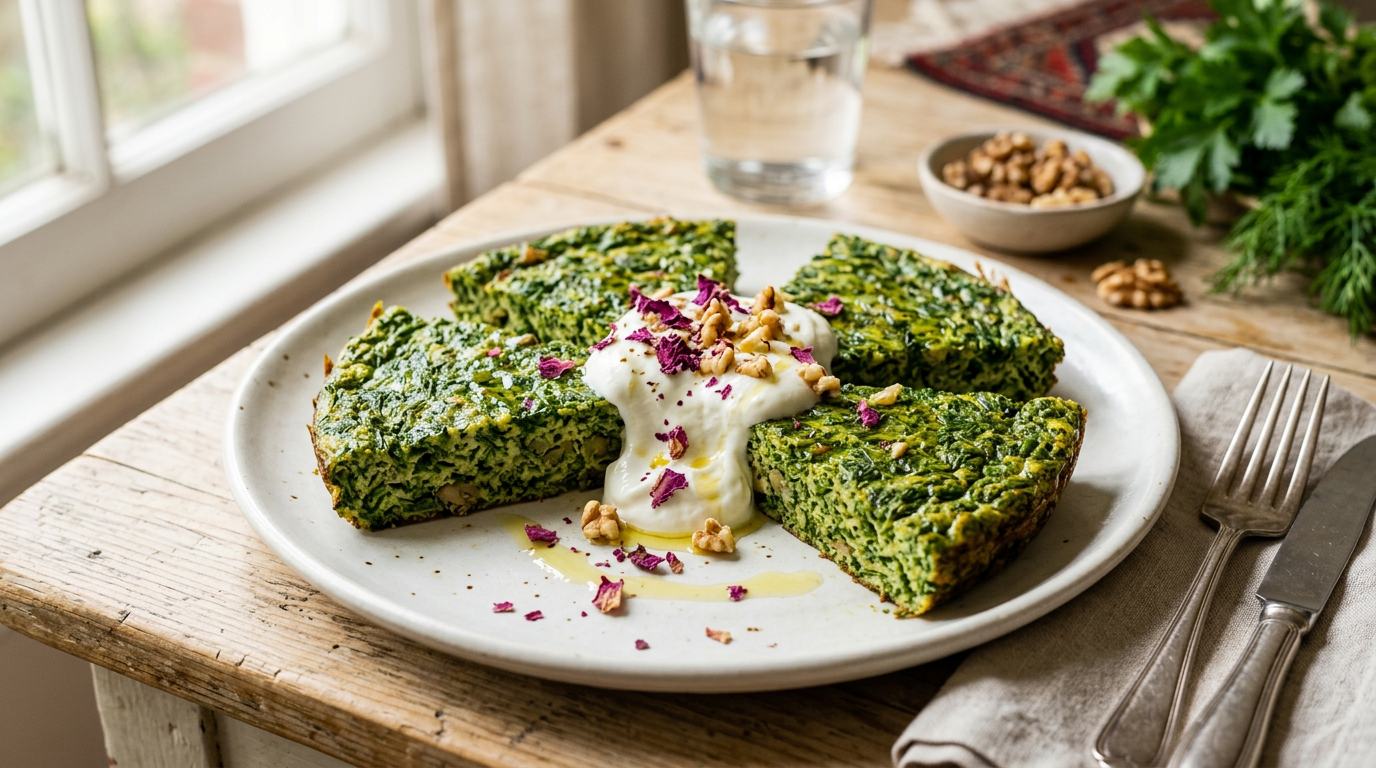
Persian Kuku Sabzi (Herb Frittata)
A vivid green Persian herb frittata packed with parsley, cilantro, dill, and chives, bound with just enough egg — served warm or cold for Nowruz, picnics, or a light vegetarian supper.
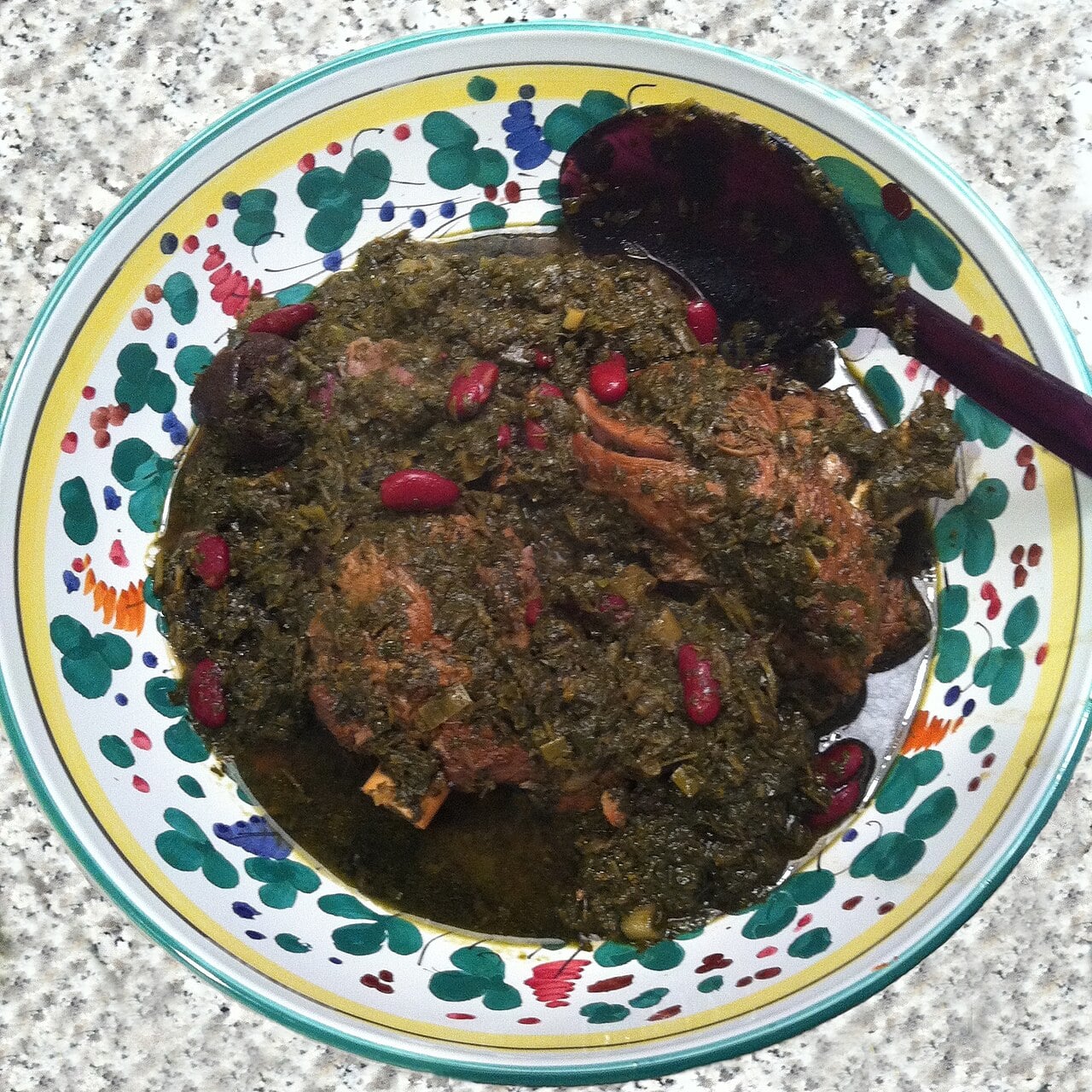
Persian Herb & Bean Stew (Vegetarian Ghormeh Sabzi)
A vegetarian take on Iran's iconic herb stew — mountains of parsley, cilantro, and fenugreek slow-cooked with kidney beans and dried lime for a tangy, deeply green stew.
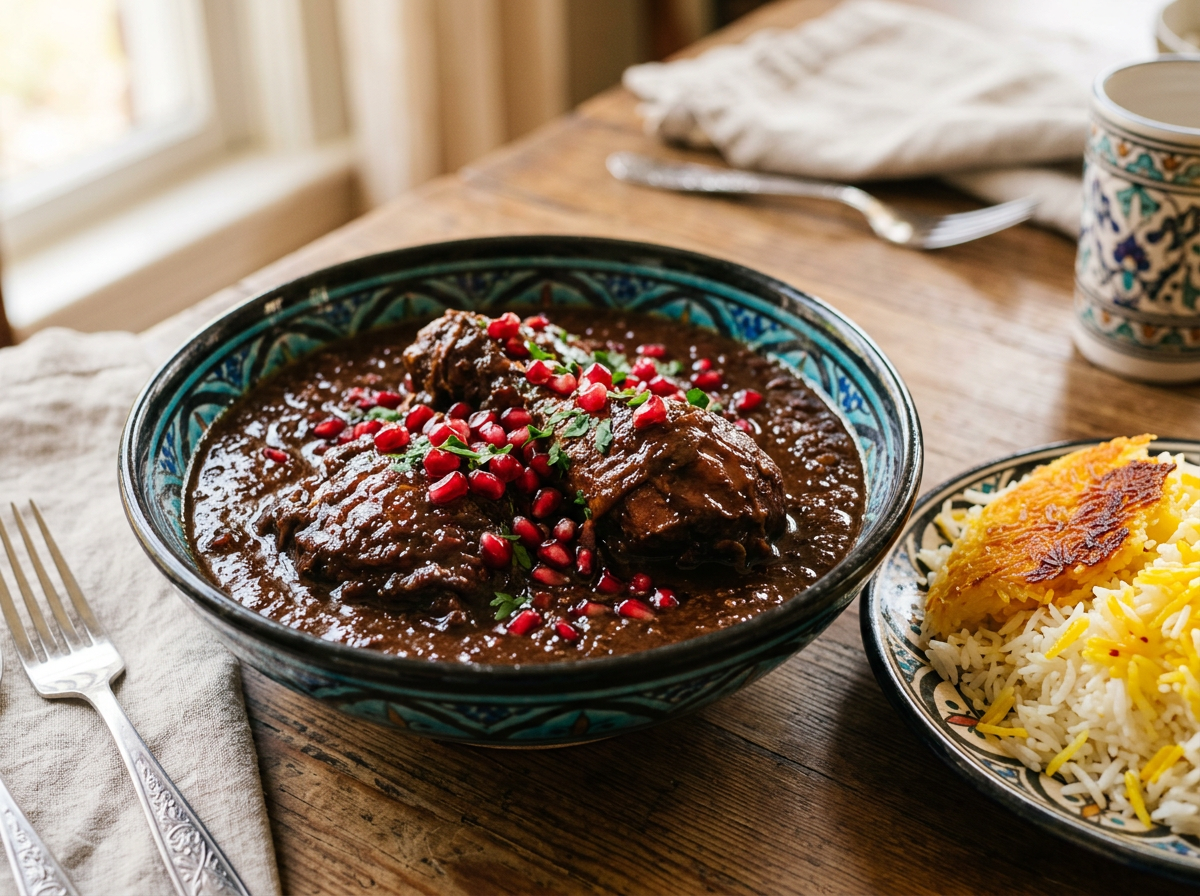
Persian Fesenjan (Walnut & Pomegranate Chicken)
A jewel of the Persian table: chicken gently braised in a velvety sauce of ground toasted walnuts and tart-sweet pomegranate molasses until deep mahogany and luxuriously rich. Served with saffron rice for a special-occasion meal.
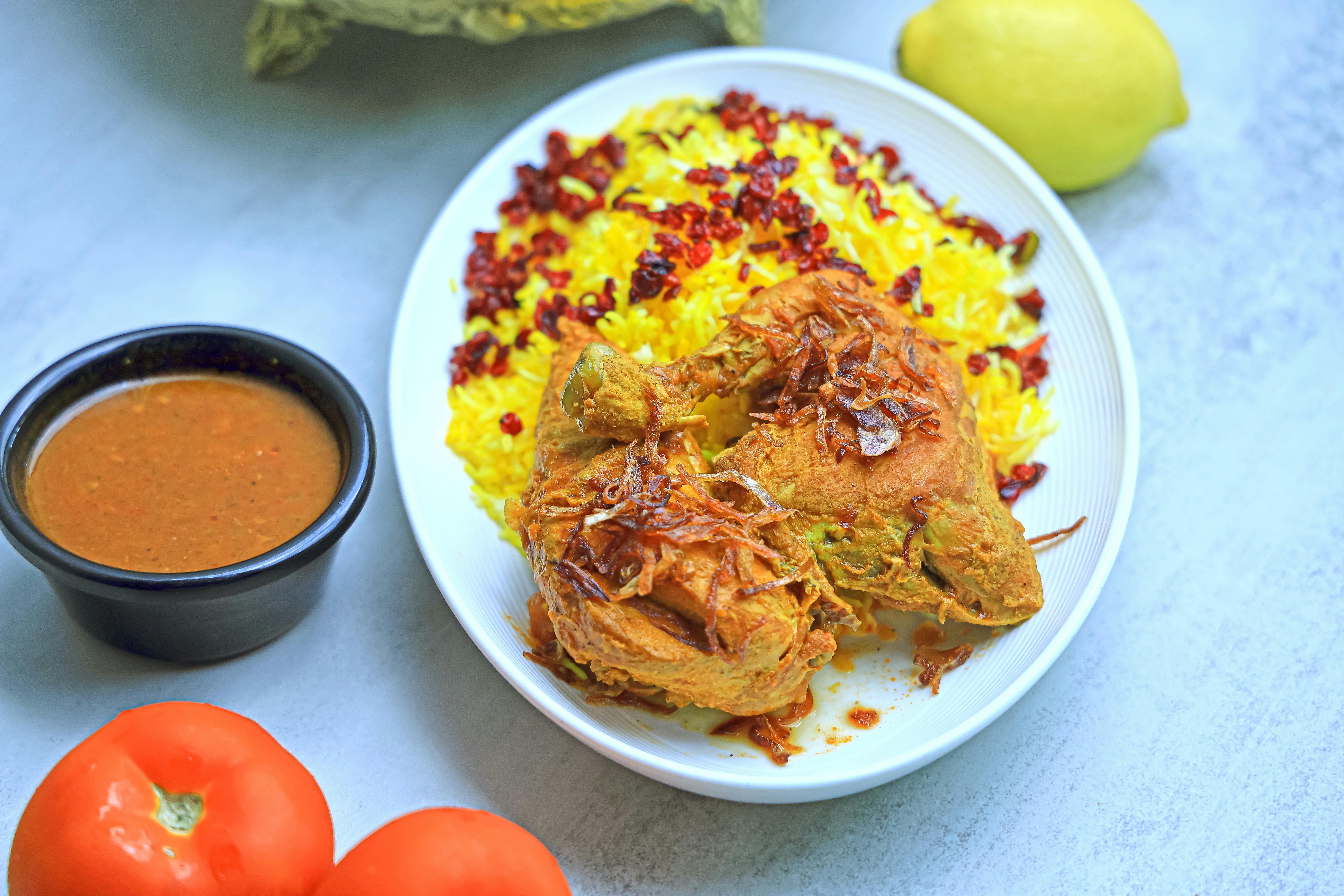
Persian Zereshk Polo (Barberry Saffron Rice)
Fluffy saffron basmati studded with jewel-like tart barberries and a crisp golden tahdig crust — a festive Persian centerpiece.
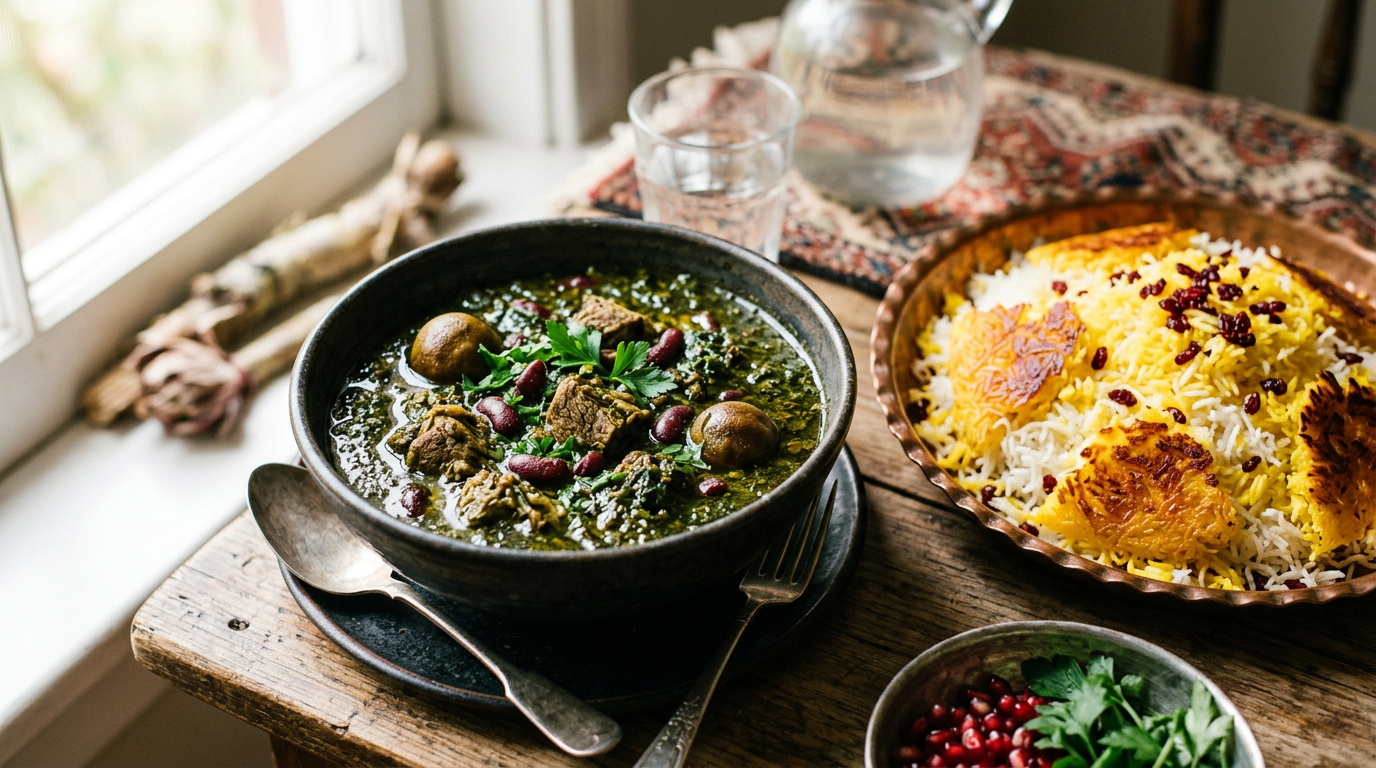
Persian Ghormeh Sabzi
Iran’s beloved herb stew — lamb slow-cooked with a deep tangle of sauteed herbs, kidney beans, and dried lime for a signature tangy, savory depth.
Key Ingredients to Explore
Cooking Guides You May Like
Persian Cuisine: A Guide to Rice, Herbs & the Art of Balance
Elegant and aromatic, Persian cooking pairs fragrant rice with herb-laden stews, dried fruit, and delicate spice. Here is the full picture.
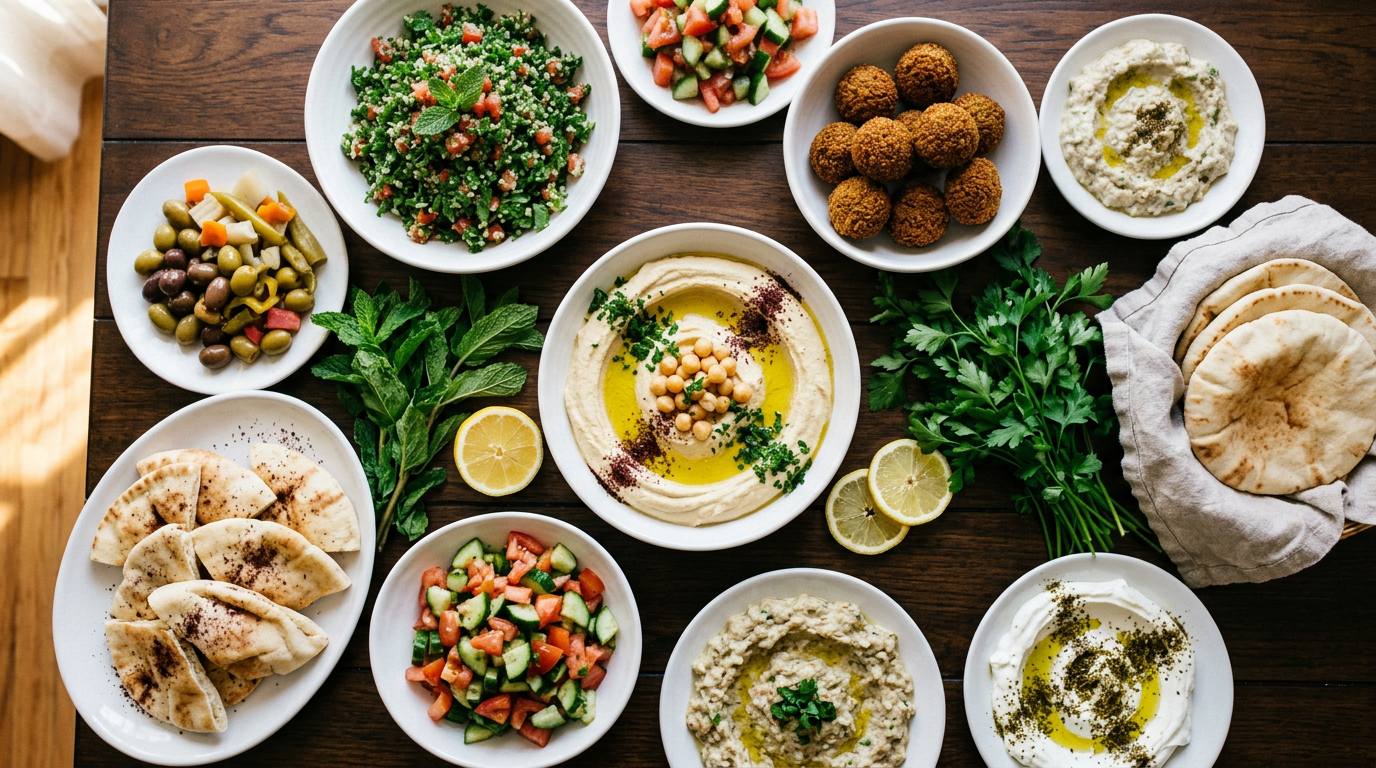
An Introduction to Middle Eastern Mezze
Mezze is the Middle Eastern art of the shared table — an array of small, vibrant dishes meant to be lingered over. Here is how it works.
Understanding Cooking Methods: Dry Heat, Moist Heat, and More
Every cooking method changes texture and flavor in a specific way. Knowing which to choose is the key to cooking anything well.