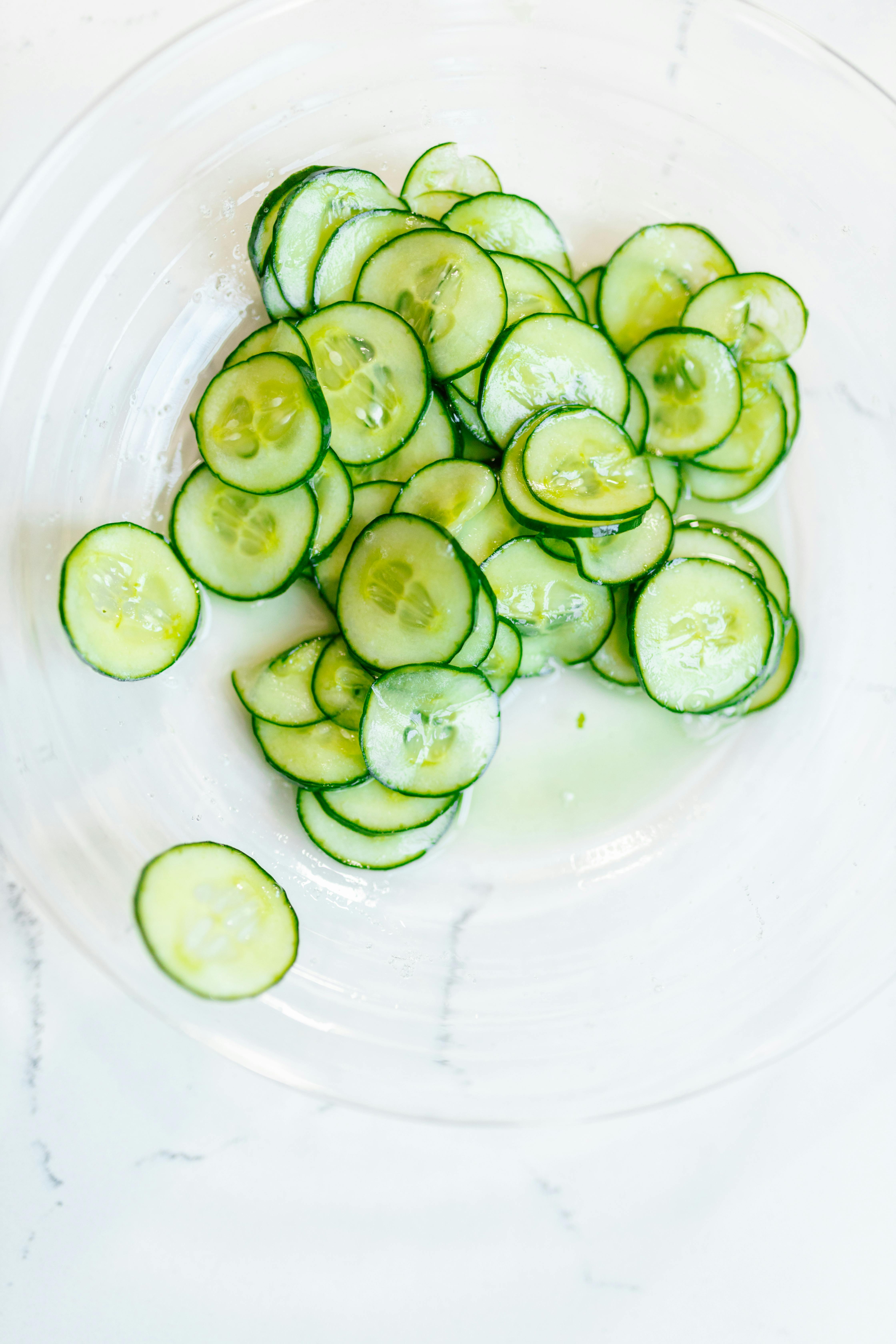
Cucumber
A cool, crisp, hydrating vegetable for salads, pickles, and refreshing sides.
Also known as: Cucumis sativus, cucumbers, English cucumber, Persian cucumber
Overview
Cucumbers are prized for their crisp texture and cooling, refreshing taste. Botanically a fruit but used as a vegetable, they are more than ninety percent water, which makes them wonderfully hydrating and light.
From thin-skinned English and Persian types to bumpy pickling varieties, cucumbers add crunch and freshness to salads, dips, and cold soups, and they are the foundation of pickles the world over.
Culinary Uses
- Sliced into salads such as Greek salad, fattoush, and cucumber-tomato.
- Grated into yogurt sauces like tzatziki and raita.
- Pickled quickly or fermented into classic dills.
- Blended into chilled soups and infused into water and drinks.
Flavor Profile
- Mild, fresh, and faintly sweet with a signature cooling quality.
- The skin adds a slightly grassy note; seeds are watery and can be removed.
- A clean backdrop for herbs, acid, and salt.
Storage
- Refrigerate in the crisper drawer and use within a week.
- Keep away from ethylene-producing fruit, which hastens softening.
- Wrap cut cucumber and use quickly, as it dries out.
Preparation
- Peel or leave the skin on depending on thickness and preference.
- Seed watery varieties by halving lengthwise and scraping with a spoon.
- Salt slices briefly and drain to firm them up and season them.
- Slice thinly for salads or thickly for dipping.
Nutrition
Cucumbers are extremely low in calories and very hydrating.
They provide small amounts of vitamin K and potassium.
Over ninety percent water, making cucumbers very hydrating.
Supports blood clotting and bone health.
An electrolyte for fluid balance and blood pressure.
Dietary Considerations
- Naturally vegan, vegetarian, gluten-free, and dairy-free.
- Very low in calories — a great choice for light, hydrating dishes.
- Generally easy to digest and widely tolerated.
Nutrition information is educational and approximate; it varies by variety, portion, and preparation, and is not a substitute for professional dietary advice.
Common Pairings
Recipes with Cucumber
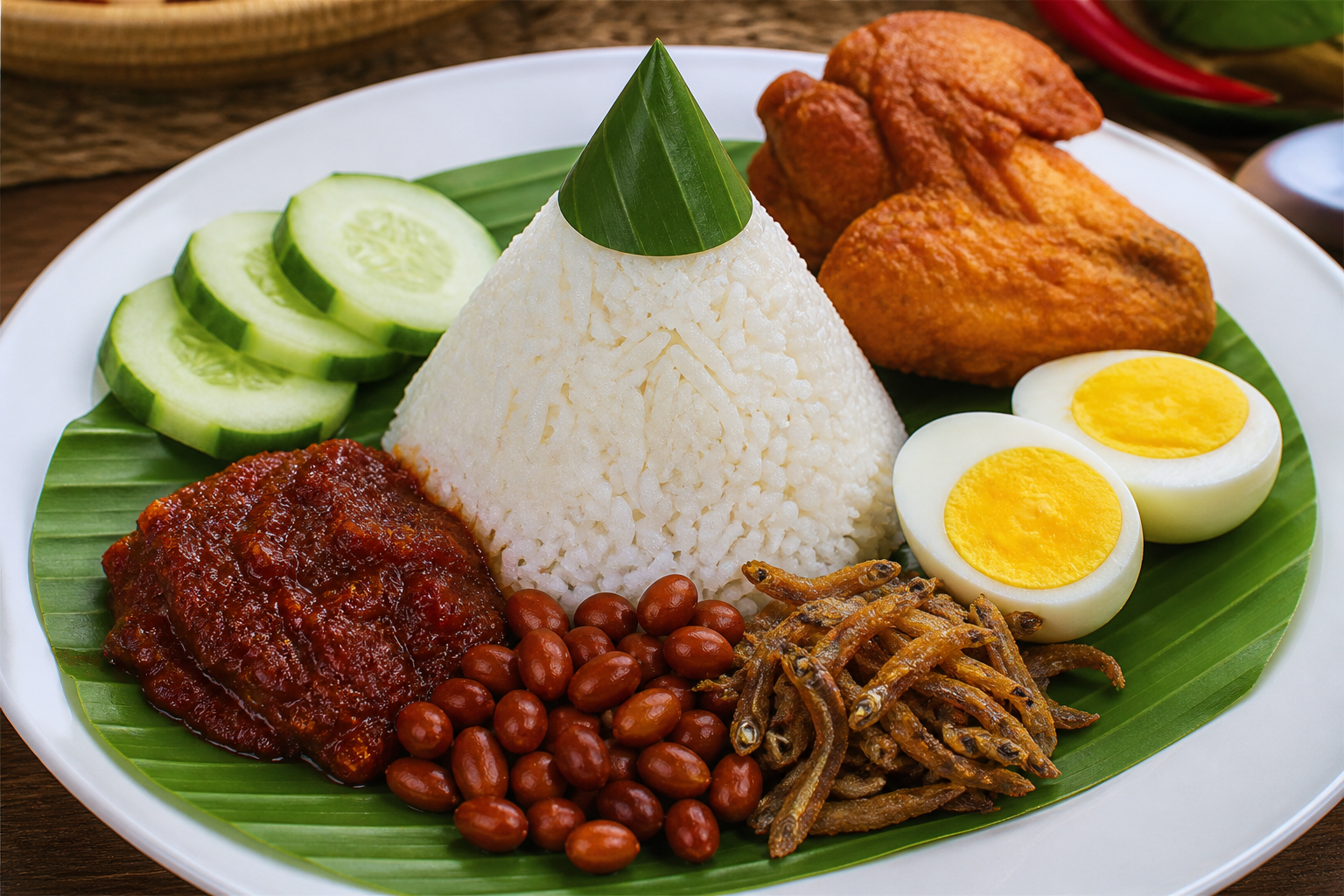
Malaysian Nasi Lemak
Malaysia's beloved national dish of fragrant coconut rice served with spicy sambal, crispy anchovies, roasted peanuts, cucumber, and boiled egg for a balanced, aromatic plate.
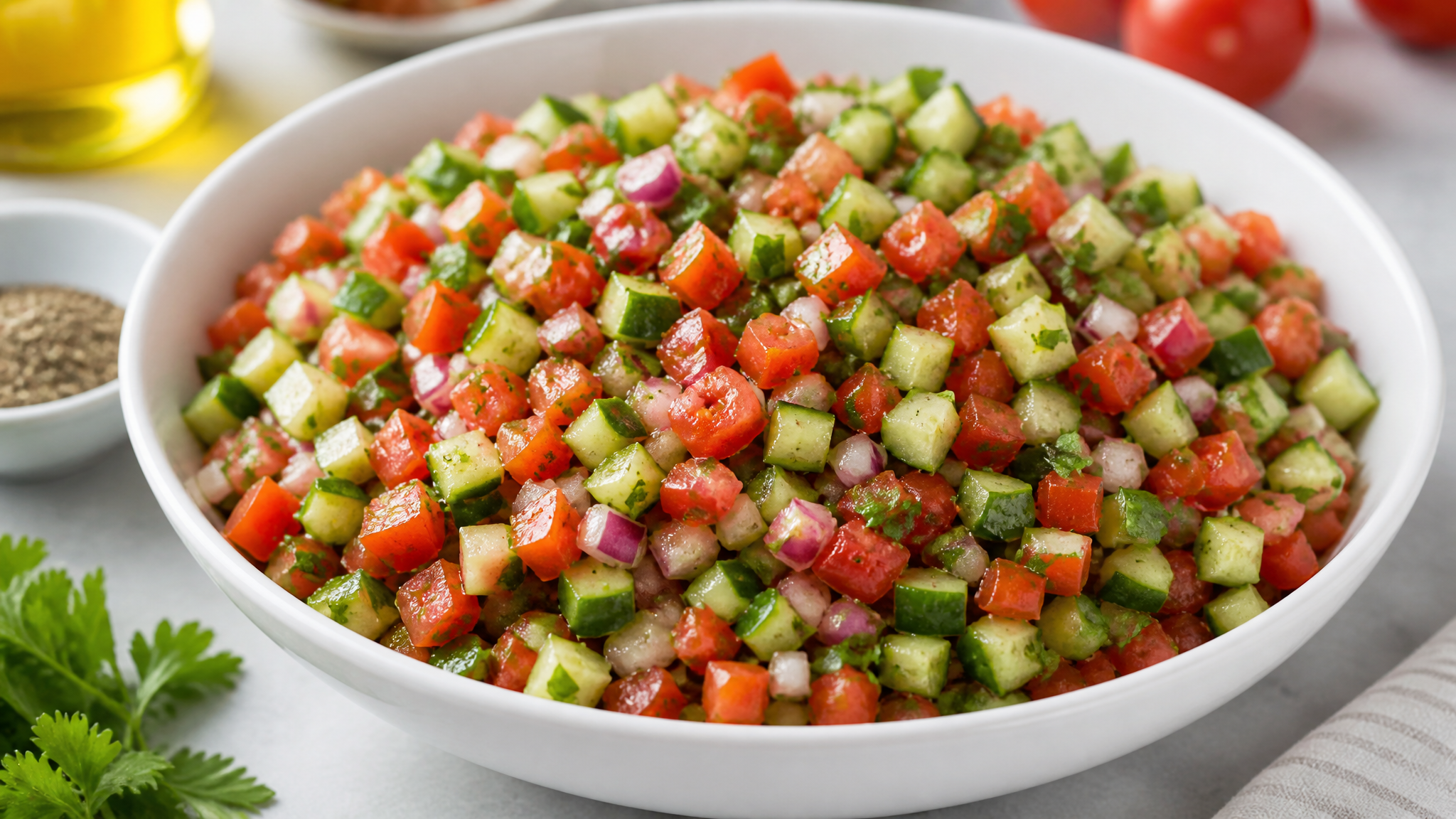
Israeli Chopped Salad
The fresh, finely diced salad found on nearly every Israeli table — cucumbers and tomatoes with herbs, lemon, and olive oil, crisp and bright enough to serve with any meal or at breakfast.

Sabich
A beloved Israeli pita sandwich layering fried eggplant, hard-boiled egg, hummus, Israeli salad, and tahini with a bright hit of amba — a satisfying vegetarian street-food favorite.

Lebanese Fattoush Salad
A crisp, tangy Lebanese bread salad of cucumbers, tomatoes, radishes, and herbs tossed with crunchy toasted pita and a bright sumac-lemon dressing — fresh, vegan, and full of texture.
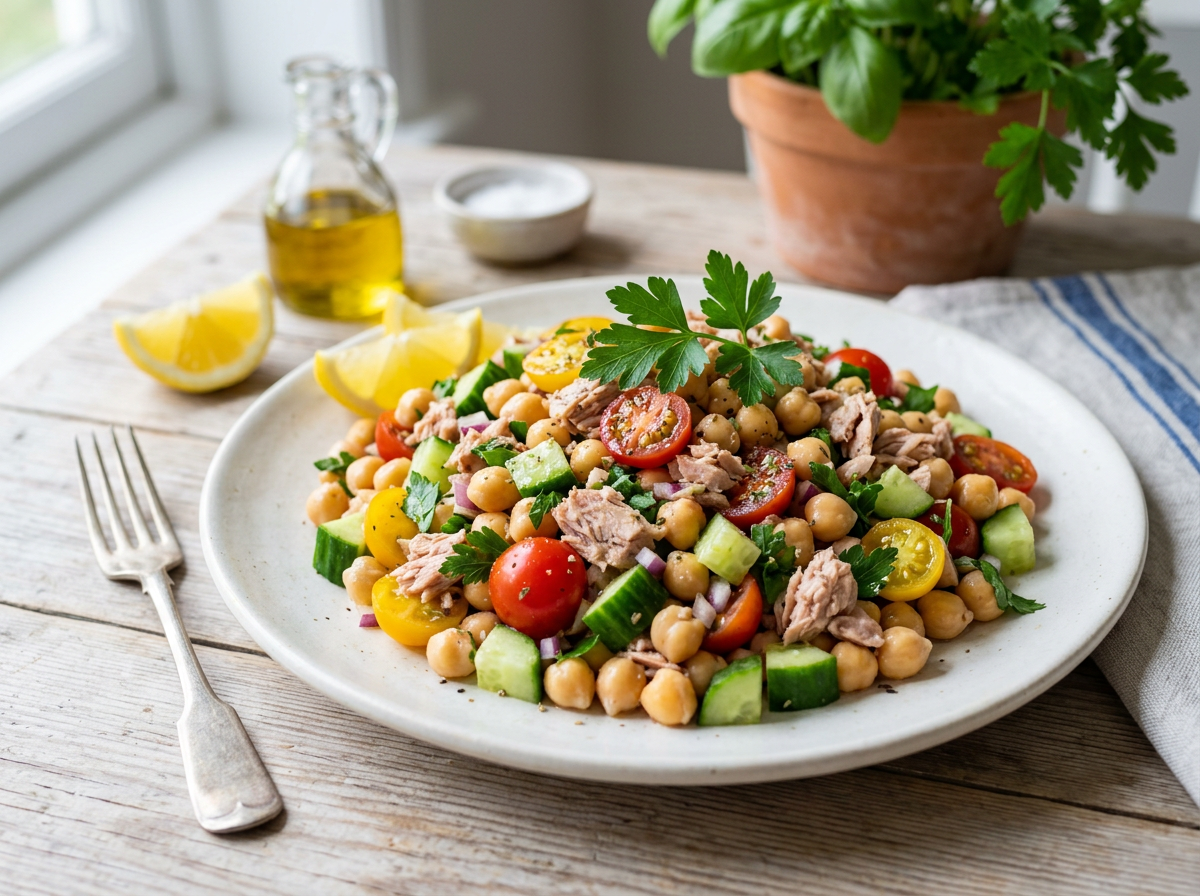
High-Protein Chickpea Tuna Salad
A no-cook Mediterranean salad of chickpeas, tuna, and crunchy vegetables in a lemon-olive oil dressing — ready in ten minutes and packed with protein and fiber.

Indonesian Gado-Gado Salad
A composed salad of blanched vegetables, potato, tofu, and egg dressed generously in a warm peanut sauce — a vibrant vegetarian classic.
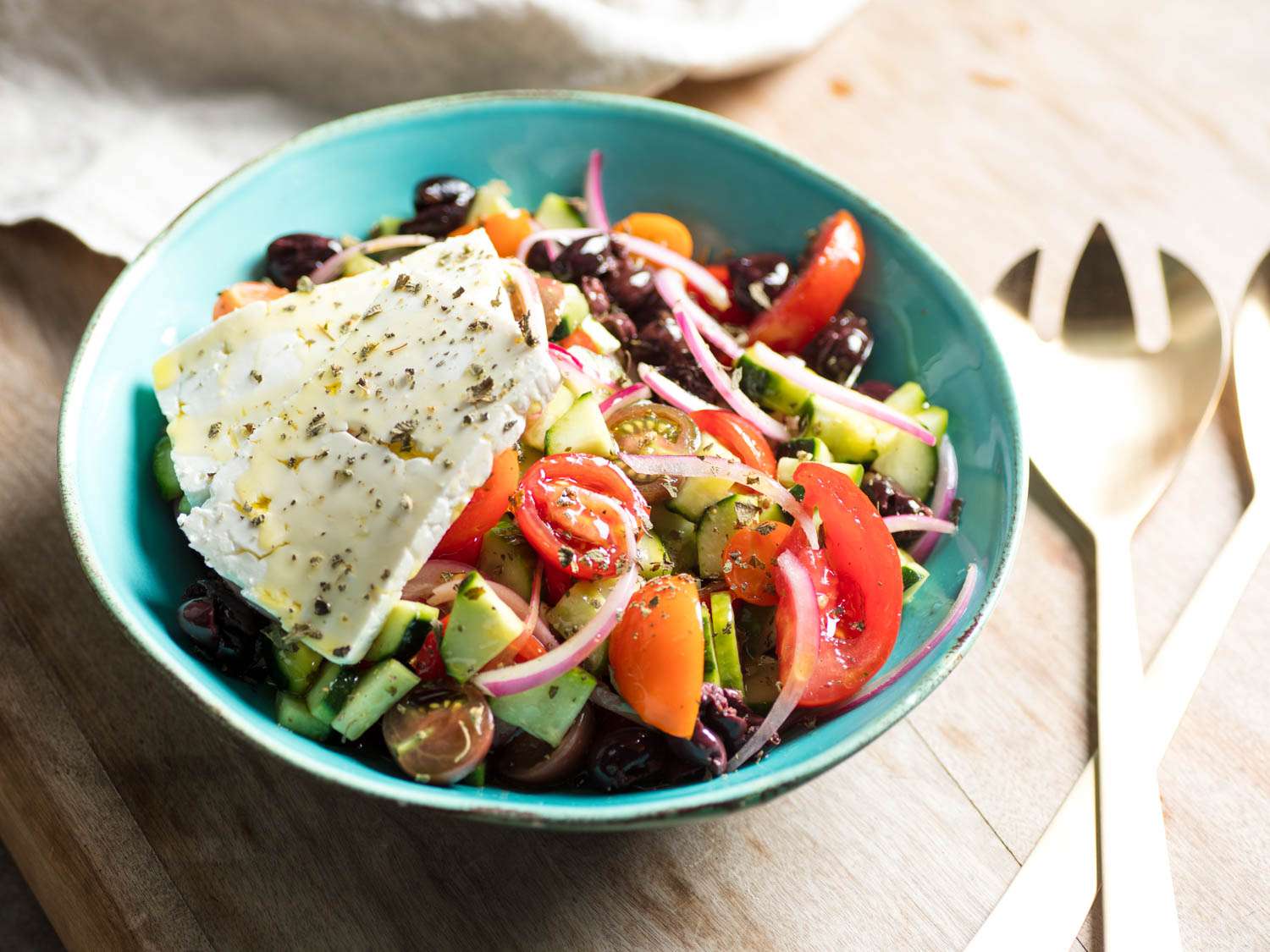
Traditional Greek Salad
Ripe tomatoes, cucumber, peppers, olives, and a generous slab of feta with oregano and olive oil.
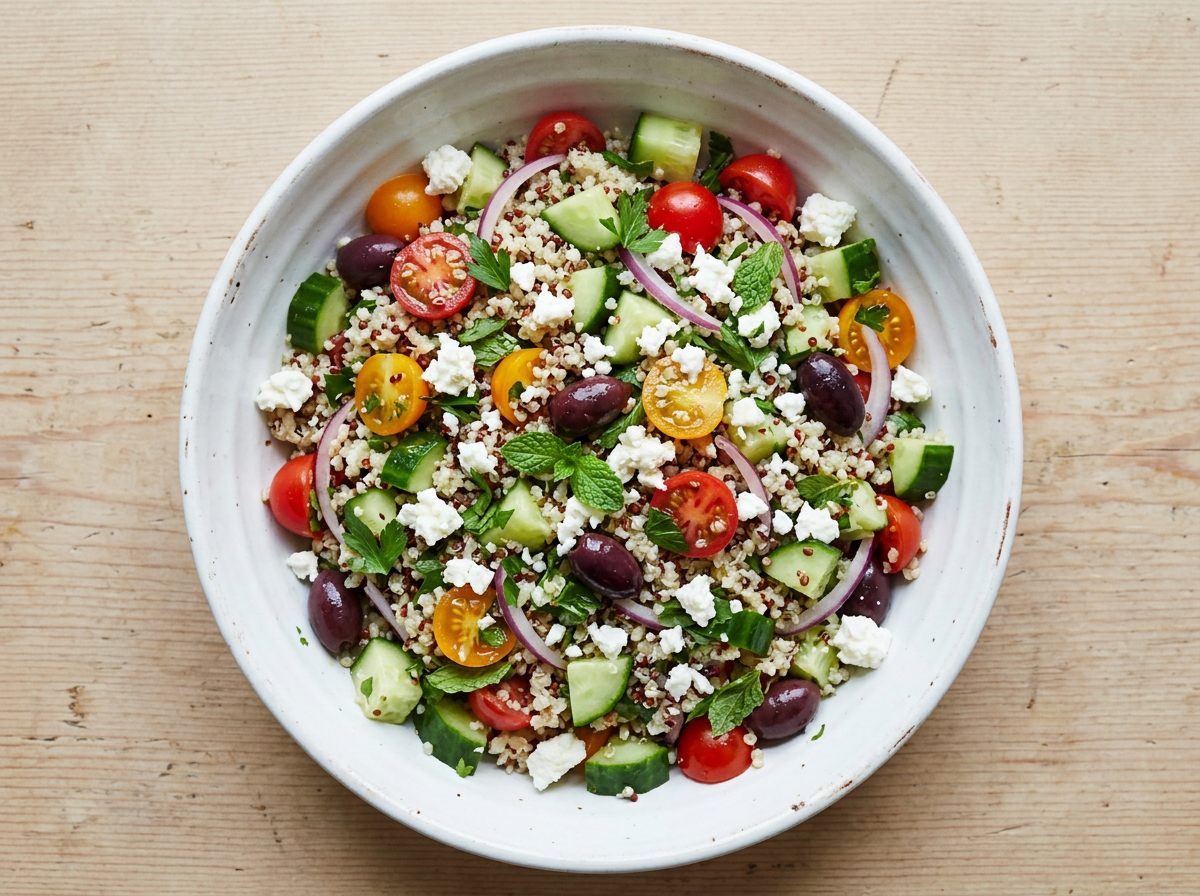
Mediterranean Quinoa Salad
A vibrant, protein-packed salad with fluffy quinoa, crisp vegetables, kalamata olives, and tangy lemon-herb vinaigrette.
Explore Related Cuisines
Related Ingredients
Cooking Guides You May Like
Keeping Produce Fresh Longer: A Storage Guide
Half of home food waste is produce that spoils before we get to it. The right storage buys you days or even weeks.
Building Balanced Meals: A Simple Framework
You do not need to count anything to eat well. A simple visual framework does the work for you.