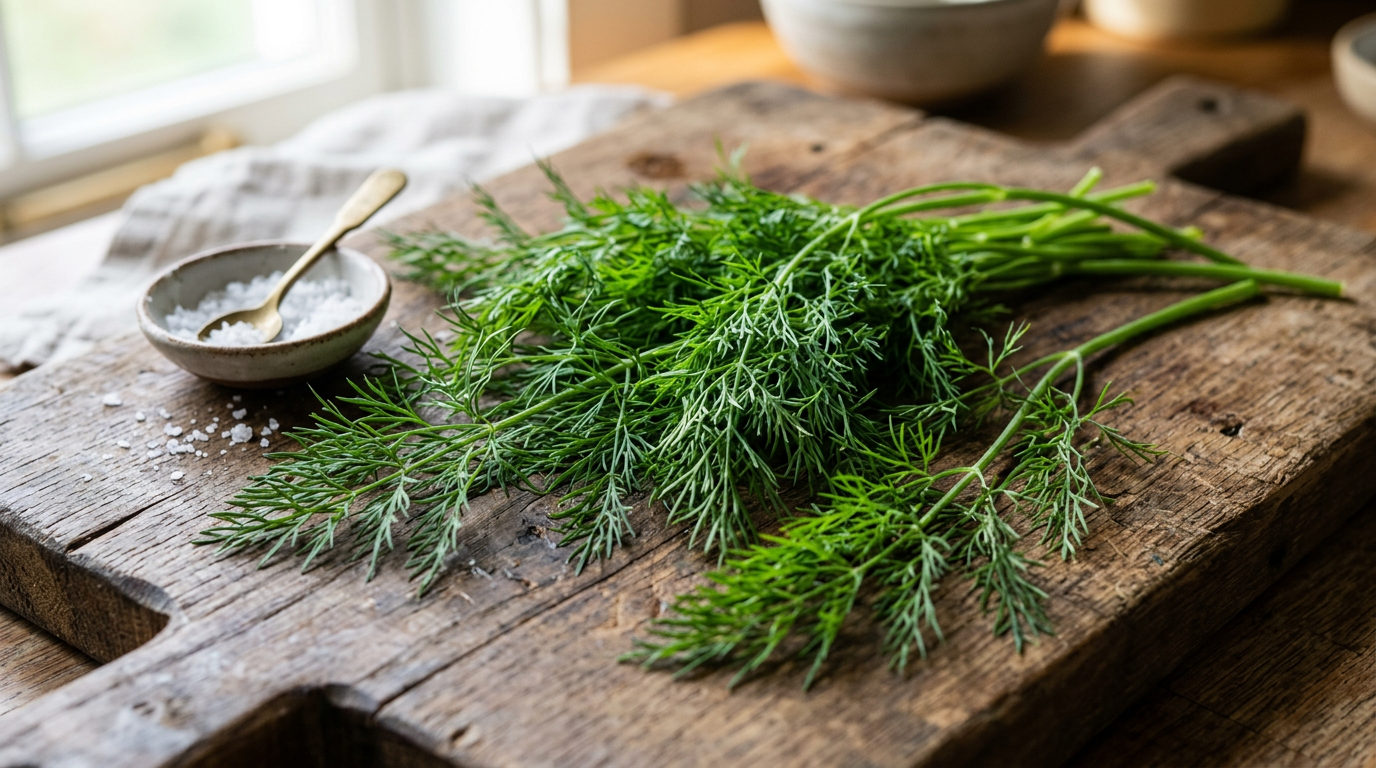
Dill
Feathery fronds with a fresh, grassy tang beloved from the Baltic to the Levant.
Also known as: Anethum graveolens, dill weed, fresh dill
Overview
Dill is a delicate annual herb with wispy, feathery leaves and a clean, grassy flavor carrying notes of anise and citrus. Both the fronds and the seeds are used in cooking, though the tender green fronds are what most home cooks reach for.
It is a signature herb of Northern and Eastern European, Scandinavian, and Levantine kitchens, brightening everything from cured fish and pickles to yogurt sauces, rice, and cucumber salads. Because it is delicate, dill is usually added near the end of cooking or raw.
Culinary Uses
- Stirred raw into yogurt sauces, dips, and dressings such as tzatziki.
- Folded through potato and cucumber salads, egg dishes, and rice.
- Paired with salmon and other fish, from gravlax to simple roasts.
- Used with its seeds to flavor pickles and brines.
Flavor Profile
- Fresh and grassy with gentle anise and lemon notes.
- Delicate and volatile, so its aroma fades with prolonged heat.
- Dill seed is warmer and more caraway-like than the fronds.
Storage
- Stand stems in a glass of water, cover loosely, and refrigerate for up to a week.
- Alternatively wrap in a damp towel in an open bag in the crisper.
- Dill freezes better than it dries; chop and freeze in oil or water for later use.
Preparation
- Pinch or snip the soft fronds from the tougher stems.
- Add toward the end of cooking, or raw, to preserve its fresh aroma.
- Chop just before using, as cut dill loses fragrance quickly.
Nutrition
Dill is eaten in small amounts and adds little in the way of calories or macronutrients.
It contributes aromatic oils and a modest amount of vitamins and minerals.
Present in the fresh fronds.
Supplied as carotenoids.
Found in modest amounts, more concentrated in the seed.
Dietary Considerations
- Naturally vegan, vegetarian, gluten-free, and dairy-free.
- Very low in sodium and widely tolerated.
Nutrition information is educational and approximate; it varies by variety, portion, and preparation, and is not a substitute for professional dietary advice.
Common Pairings
Recipes with Dill
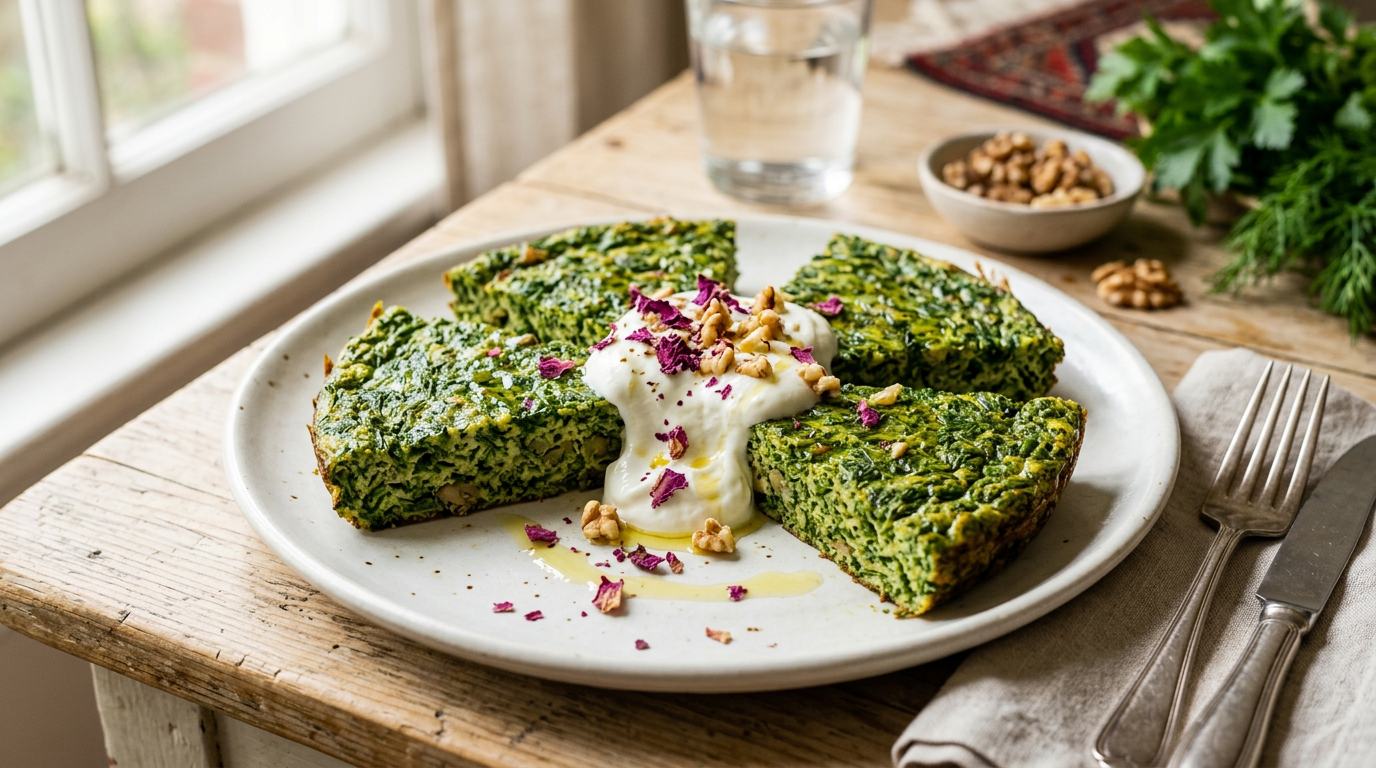
Persian Kuku Sabzi (Herb Frittata)
A vivid green Persian herb frittata packed with parsley, cilantro, dill, and chives, bound with just enough egg — served warm or cold for Nowruz, picnics, or a light vegetarian supper.
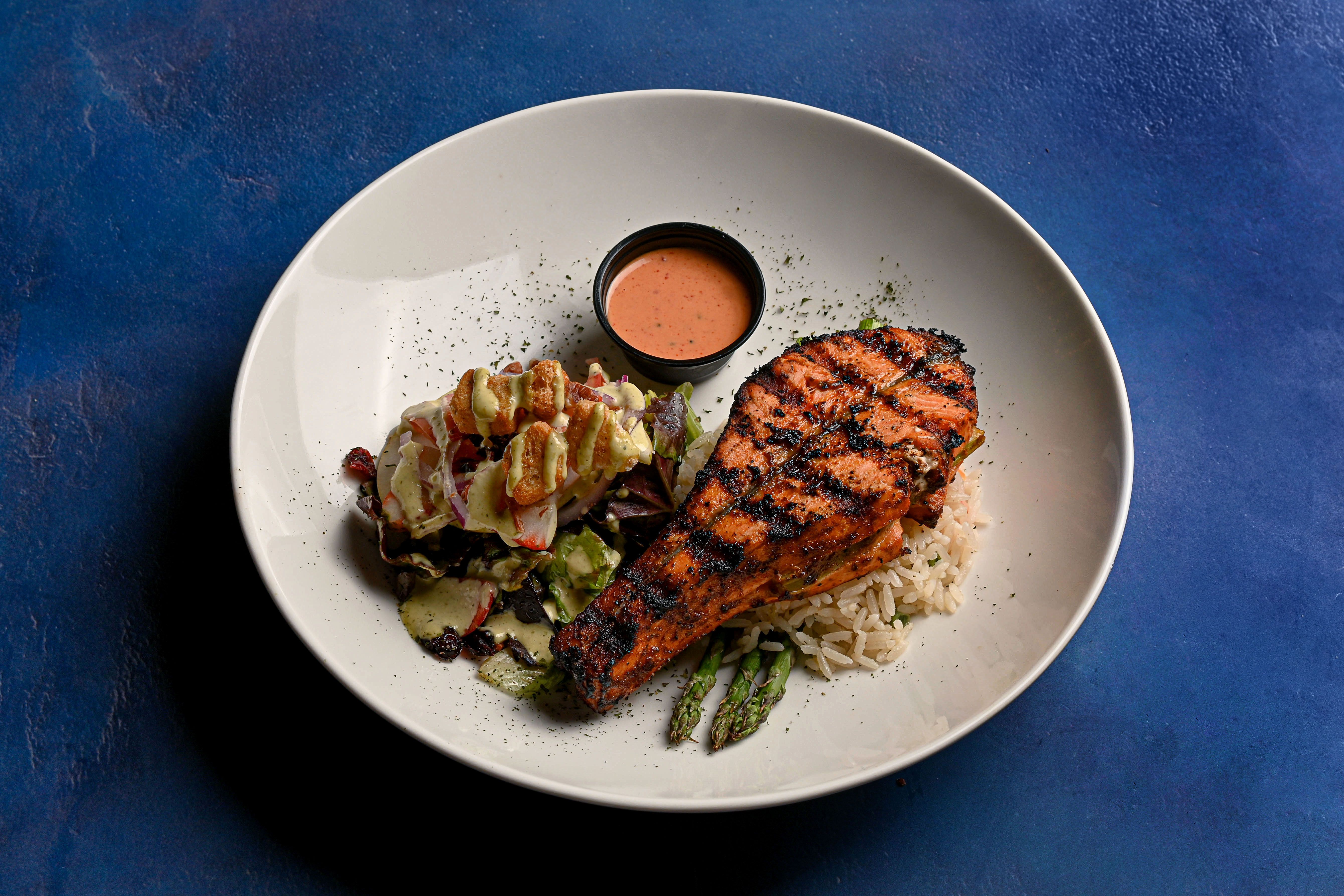
EoE-Friendly Baked Salmon & Rice
A gentle, few-ingredient baked salmon with rice and steamed carrots — built around simple, single-ingredient foods for those managing food sensitivities. Educational only, not medical advice; always follow your own care plan.
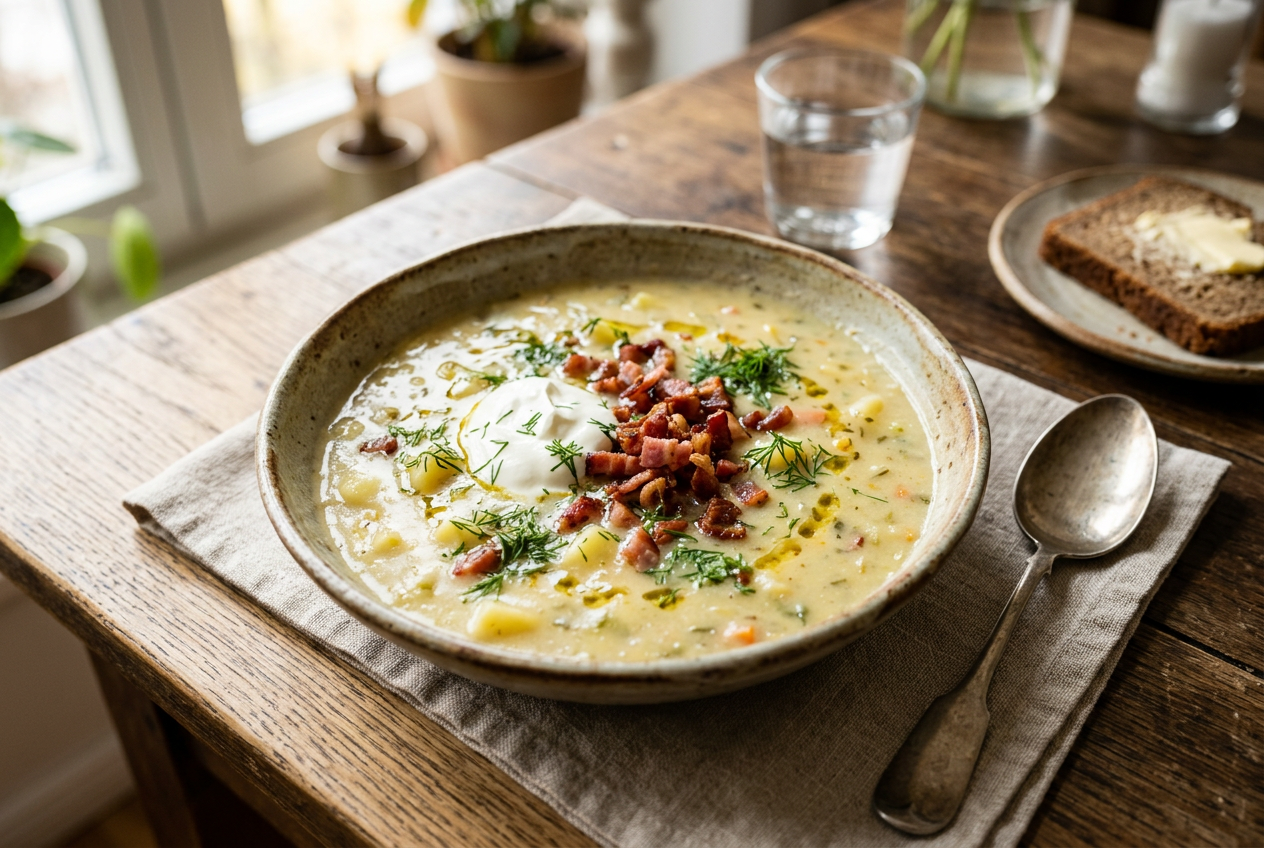
German Kartoffelsuppe
A thick, creamy German potato soup studded with bacon, leek, and a swirl of sour cream — deeply comforting, economical, and perfect for batch-cooking.
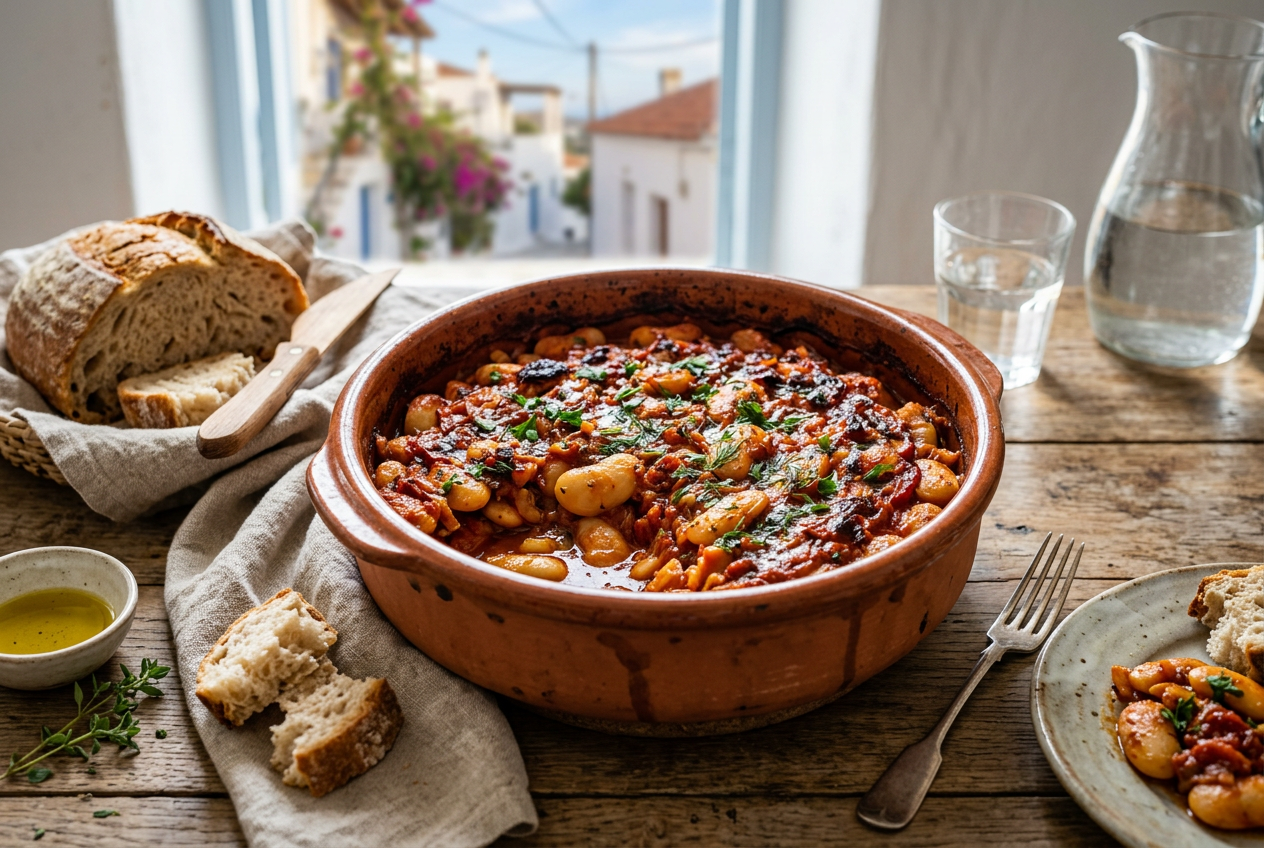
Greek Gigantes Plaki
Giant white beans baked slowly in a rich tomato sauce with olive oil, dill, and a touch of sweetness — a hearty Greek taverna classic that makes an economical, satisfying meal.
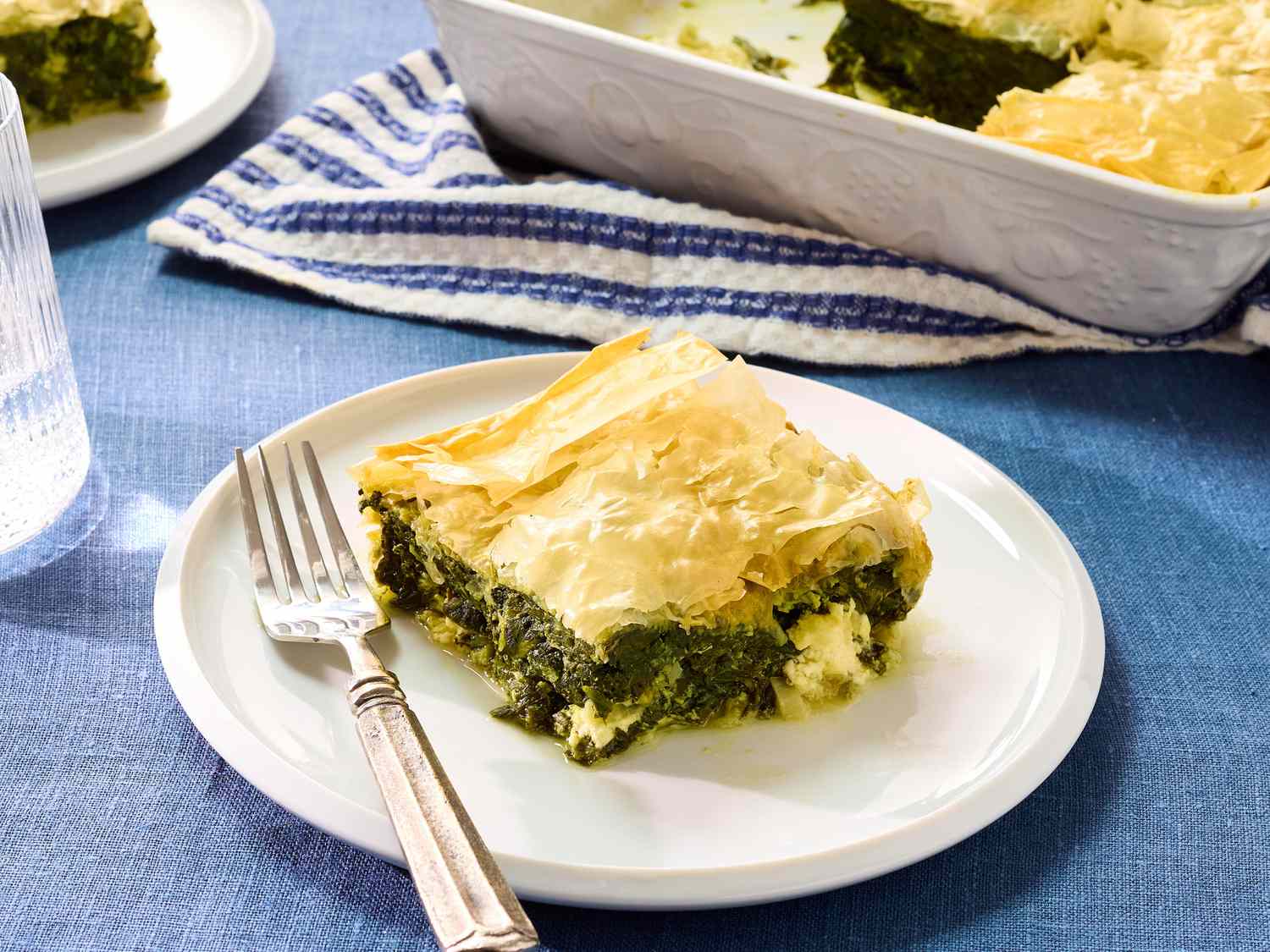
Spanakopita
Flaky phyllo pie filled with spinach, feta, and herbs — crisp outside, savory and soft within.
Explore Related Cuisines
Related Ingredients
Cooking Guides You May Like
How to Store Fresh Herbs
Fresh herbs are one of the most-wasted grocery buys. A few simple storage habits change that entirely.
An Introduction to Middle Eastern Mezze
Mezze is the Middle Eastern art of the shared table — an array of small, vibrant dishes meant to be lingered over. Here is how it works.