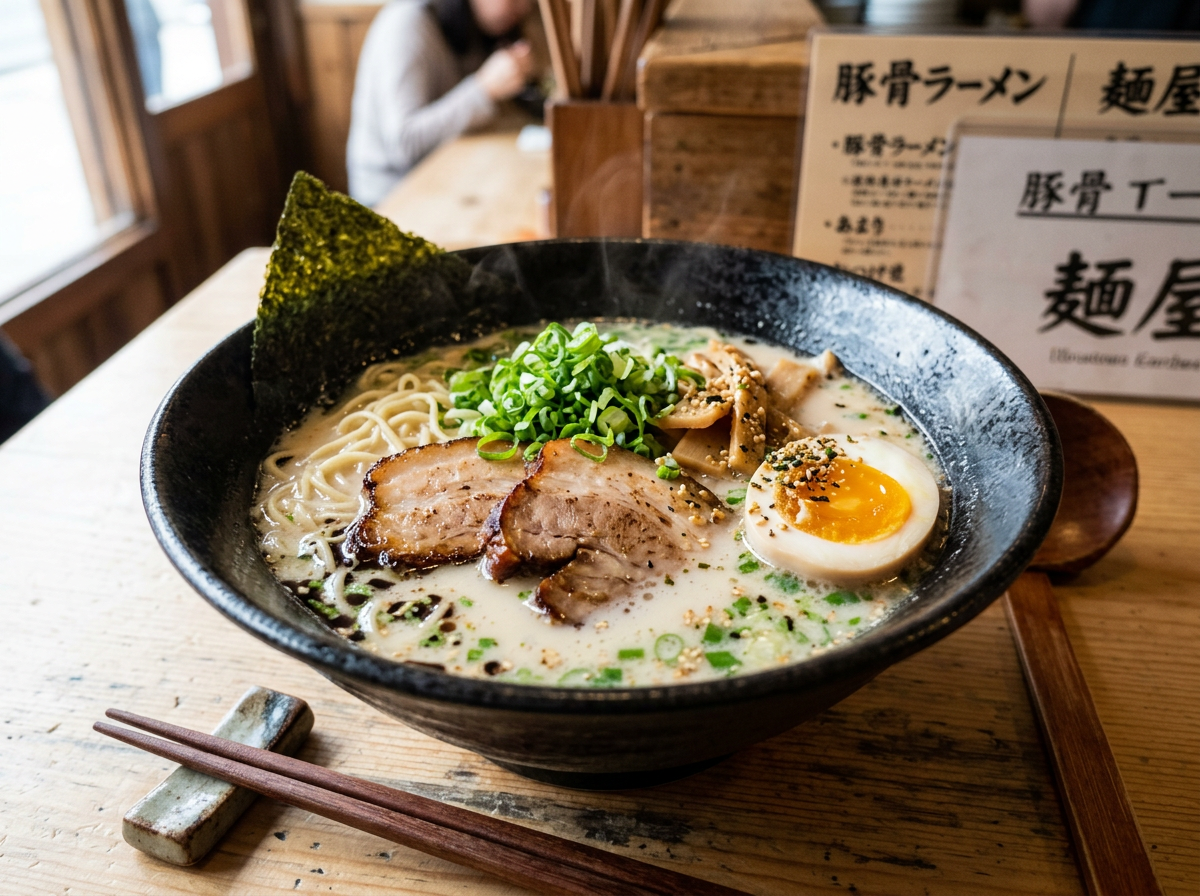
Tonkotsu Ramen
A rich, silky pork-bone broth with springy noodles, tender chashu, jammy egg, and scallions.
About This Recipe
Tonkotsu ramen is a classic Japanese noodle soup celebrated for its rich, deeply comforting character. This hearty dish centers on a profoundly savory broth and tender slices of chashu pork belly, offering a restaurant-quality experience right at home. It is a labor of love that rewards patience with layers of complex, satisfying flavor.
The magic of this particular preparation lies in the vigorous, four-hour simmering of the pork bones. This sustained, high-heat boiling emulsifies the fats and collagen from the bones into a signature creamy, opaque broth. This luscious base is perfectly balanced by a savory soy tare and the aromatic punch of garlic and ginger, while soft-boiled eggs marinated in soy add a rich, jammy element to the bowl.
To ensure success with this challenging recipe, keep a close eye on the broth as it boils, replenishing the water as needed to keep the bones submerged. For a sensible variation, you can adjust the noodle cooking time slightly to achieve your preferred level of firmness, making sure to drain them thoroughly so they do not dilute the precious soup.
Assemble each portion fresh by layering the hot broth and noodles before topping with the sliced pork belly, halved eggs, and fresh scallions. If you have leftovers, store the components separately in the refrigerator, then reheat the broth and pork thoroughly before combining them with freshly cooked noodles for the best texture.
Ingredients
- 1.5 kg Pork bones
- 400 g Ramen noodles
- 400 g Pork belly (chashu)
- 4 large Eggs
- 4 tbsp Soy tare
- 4 stalks Scallions
- 3 tbsp Garlic and ginger
Instructions
- 1
Simmer pork bones vigorously for about 4 hours to emulsify into a creamy broth.
240 min
- 2
Braise pork belly, then slice into chashu.
60 min
- 3
Soft-boil eggs for 6.5 minutes and marinate in soy.
8 min
- 4
Cook the noodles to package directions and drain well.
3 min
- 5
Add tare to bowls, top with broth, noodles, chashu, halved egg, and scallions.
3 min
Nutrition Facts
620
kcal
Calories
38
g
Protein
58
g
Carbs
26
g
Fat
3
g
Fiber
1650
mg
Sodium
Rate This Recipe
Beverage Pairings
Japanese dining prizes clarity and umami. Sake — chilled ginjo or warm junmai — is built to complement rice, seafood and dashi, while green teas such as sencha and genmaicha refresh between courses. Crisp lagers and dry sparkling wines suit tempura and sushi alike.
Wine, Beer & Spirits
Delicate, floral and low in tannin — it flatters raw fish and umami without overwhelming it. Light-bodied and refreshing to match a delicate dish.
Serve chilled (10°C).
Fine bubbles and high acidity are a superb foil for tempura and sashimi. Light-bodied and refreshing to match a delicate dish.
Serve cold (7–9°C).
Full and savory, it echoes the umami of grilled and simmered dishes.
Serve warm or at room temperature.
A crisp, dry lager refreshes against fried and salty dishes. Light-bodied and refreshing to match a delicate dish.
Serve ice-cold.
Dry rosé is remarkably versatile across savory dishes. Light-bodied and refreshing to match a delicate dish.
Serve well chilled (8–10°C).
Non-Alcoholic
Clean and slightly bitter, it cleanses the palate between pieces of sushi. Light-bodied and refreshing to match a delicate dish.
Steep at 75–80°C for 2 minutes.
Toasted-rice notes complement grilled fish and rice dishes.
Steep at 80°C for 2 minutes.
A pure, alcohol-free palate cleanser that respects delicate flavors. Light-bodied and refreshing to match a delicate dish.
Serve cold with a citrus twist.
Tips & Guidance
- 1The secret to a milky-white tonkotsu broth is a hard, rolling boil — not a gentle simmer. The aggressive agitation emulsifies the collagen and fat from the pork bones into the liquid, creating the signature opaque texture.
- 2Blanch the pork bones in boiling water for 10 minutes before starting the broth, then rinse under cold water and scrub off any scum. This purging step removes impurities and produces a cleaner-tasting broth.
- 3Prepare the tare (seasoning concentrate) separately from the broth. Adding soy sauce, mirin, and salt directly to a pot of broth makes it impossible to adjust seasoning per bowl. Ladle tare into each bowl first, then add broth.
Roll and tie boneless skin-on thighs, then braise in the same soy-mirin mixture. Lighter but still rich and tender.
Boil dried spaghettini in water with 1 tbsp baking soda per quart — the alkaline environment mimics the texture of kansui noodles.
Combine 2:1 for a 30-minute "cheater" tonkotsu base. Season with white pepper and garlic oil.
- Simmering the broth too gently — you will end up with a clear, thin consommé instead of the rich, milky tonkotsu. Keep it at a vigorous boil for the full 8–12 hours.
- Overcooking the soft-boiled eggs (ajitama). For a jammy center, boil for exactly 6 minutes 30 seconds from a rolling boil, then transfer immediately to an ice bath.
- Serving in a cold bowl. Ramen cools rapidly; preheat your serving bowls with hot water for 2 minutes before assembling. The difference in eating experience is significant.
Store broth and toppings separately. Broth refrigerates for up to 5 days (it will set into a gel — this is the collagen and is a sign of quality). Freeze broth in portions for up to 3 months. Chashu keeps 4 days refrigerated. Marinated eggs (ajitama) keep 3 days in their marinade. Cook noodles fresh for each serving.
- Tonkotsu Risotto — use leftover broth in place of stock for an umami-rich risotto. Finish with grated Parmesan and a drizzle of black garlic oil.
- Ramen Broth Congee — simmer leftover broth with cooked rice until creamy. Top with sliced chashu, a soft egg, and crispy shallots.
- Chashu Fried Rice — dice leftover chashu pork, stir-fry with cold rice, egg, scallions, and a splash of soy-mirin tare.
Key Ingredients
Explore the ingredient encyclopediaYou Might Also Like
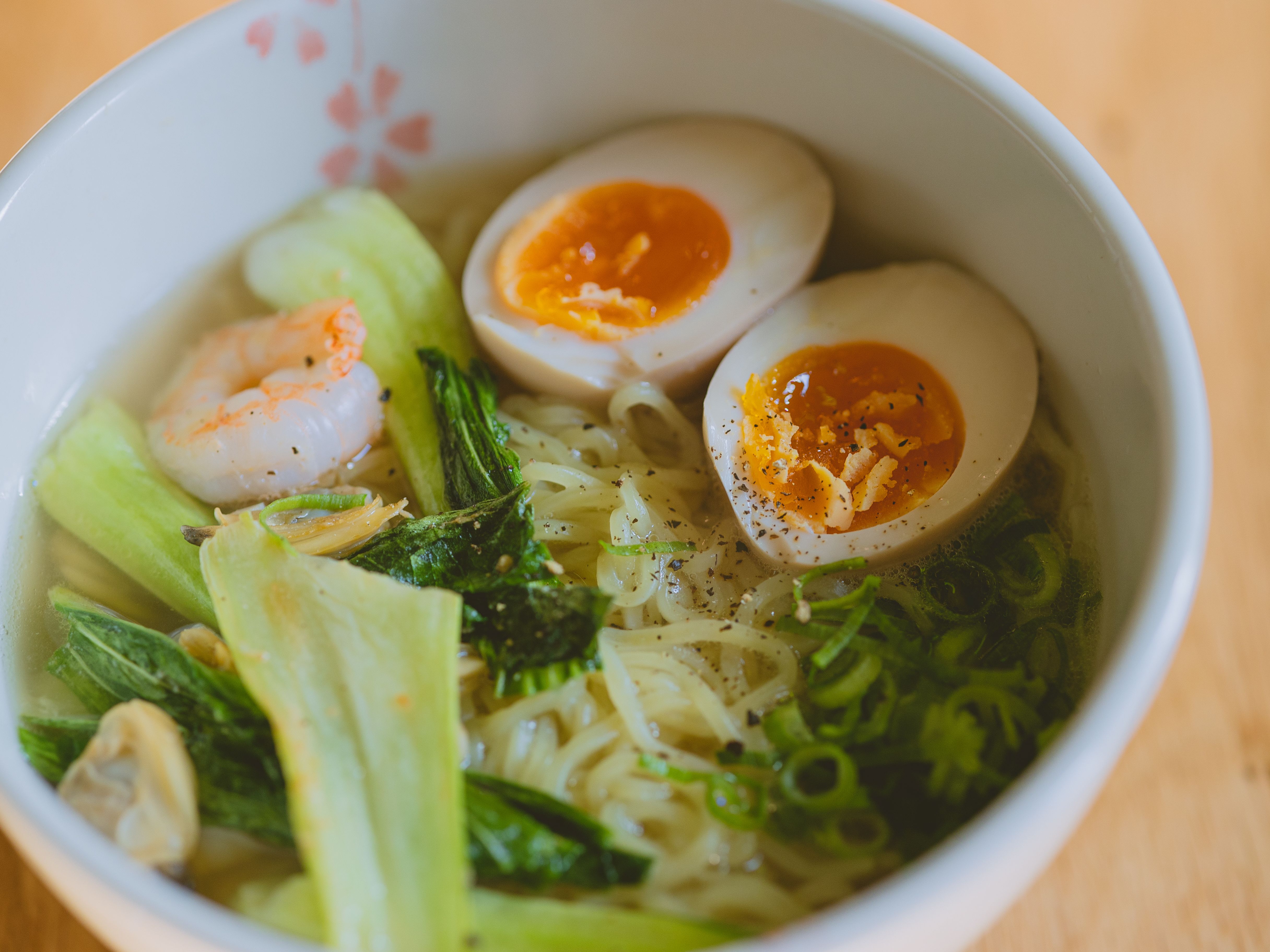
Student Ramen Upgrade with Egg & Greens
Turn a humble packet of instant noodles into a real meal with a jammy egg, fresh greens, and a savory garlic-ginger broth — the ultimate five-minute student dinner.
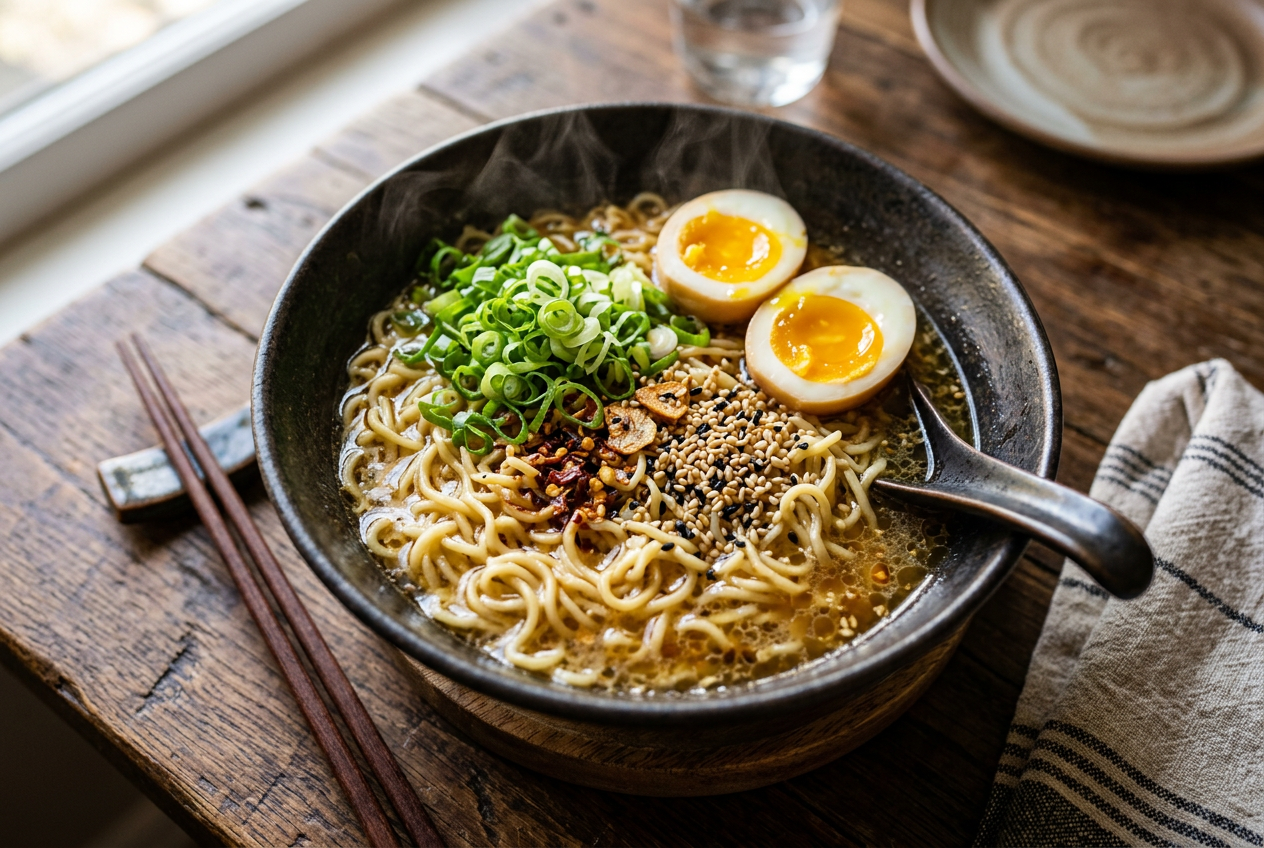
Garlic Butter Ramen Upgrade
Everything a packet of instant noodles wants to be: springy ramen tossed in garlicky butter with a soft egg, scallions, and a savory splash of sauce. A five-minute, few-dollar dinner that tastes far better than it costs — a student-kitchen hero.
Miso Soup
A soothing everyday soup of dashi, silky tofu, and wakame finished with fragrant miso.
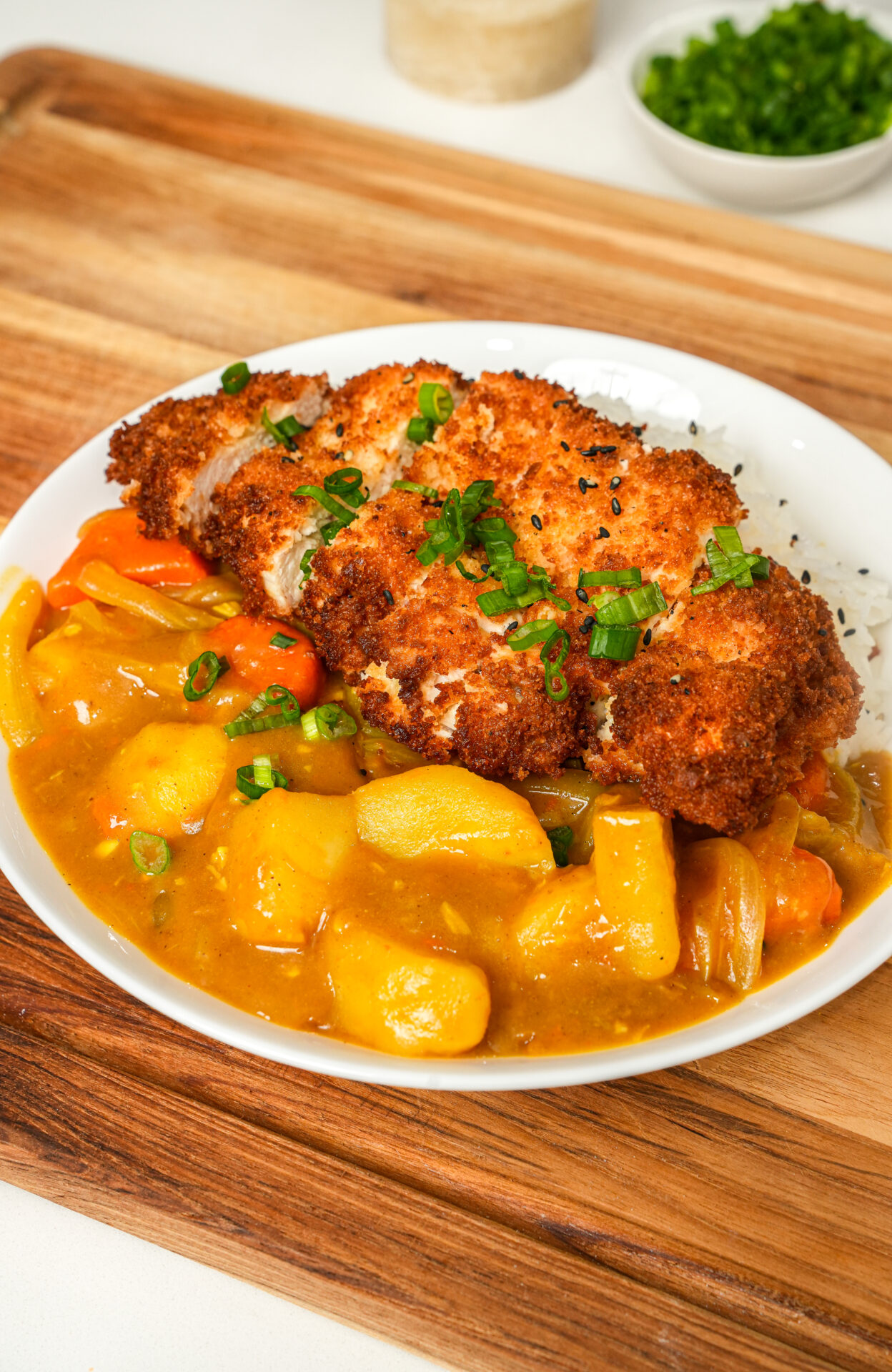
Chicken Katsu Curry
Crunchy panko chicken cutlet over rice with a mildly sweet, comforting Japanese curry sauce.
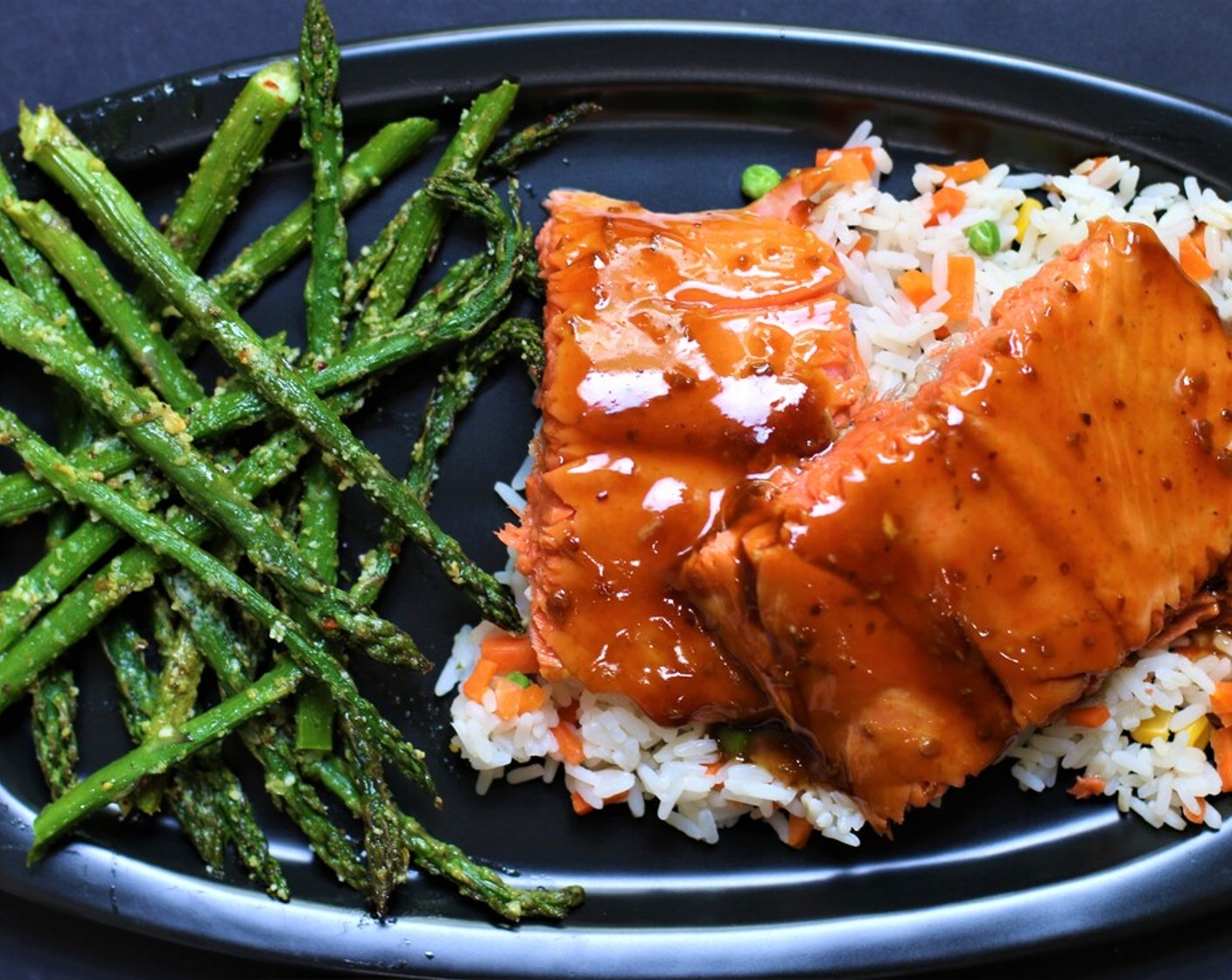
Salmon Teriyaki
Pan-seared salmon glazed in a glossy homemade teriyaki, served over rice with steamed greens.
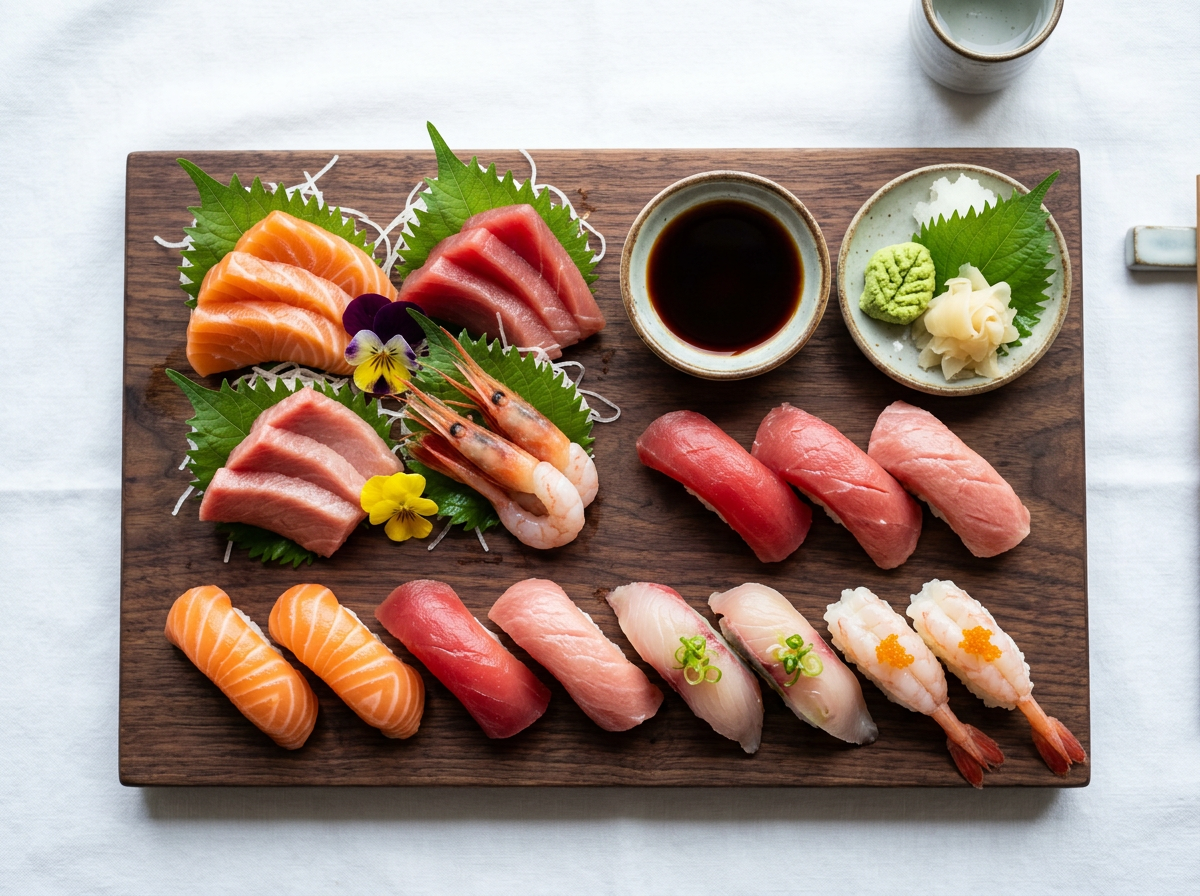
Sashimi & Nigiri Platter
An elegant assortment of fresh sashimi and nigiri featuring salmon, tuna, and yellowtail. Served with wasabi and pickled ginger.
Explore Related Collections
Cooking Guides
Understanding Cooking Methods: Dry Heat, Moist Heat, and More
Every cooking method changes texture and flavor in a specific way. Knowing which to choose is the key to cooking anything well.
Read guideBuilding Balanced Meals: A Simple Framework
You do not need to count anything to eat well. A simple visual framework does the work for you.
Read guideEssential Kitchen Skills Every Home Cook Should Know
A short list of fundamental skills will do more for your cooking than any gadget. Here are the ones that matter most.
Read guide