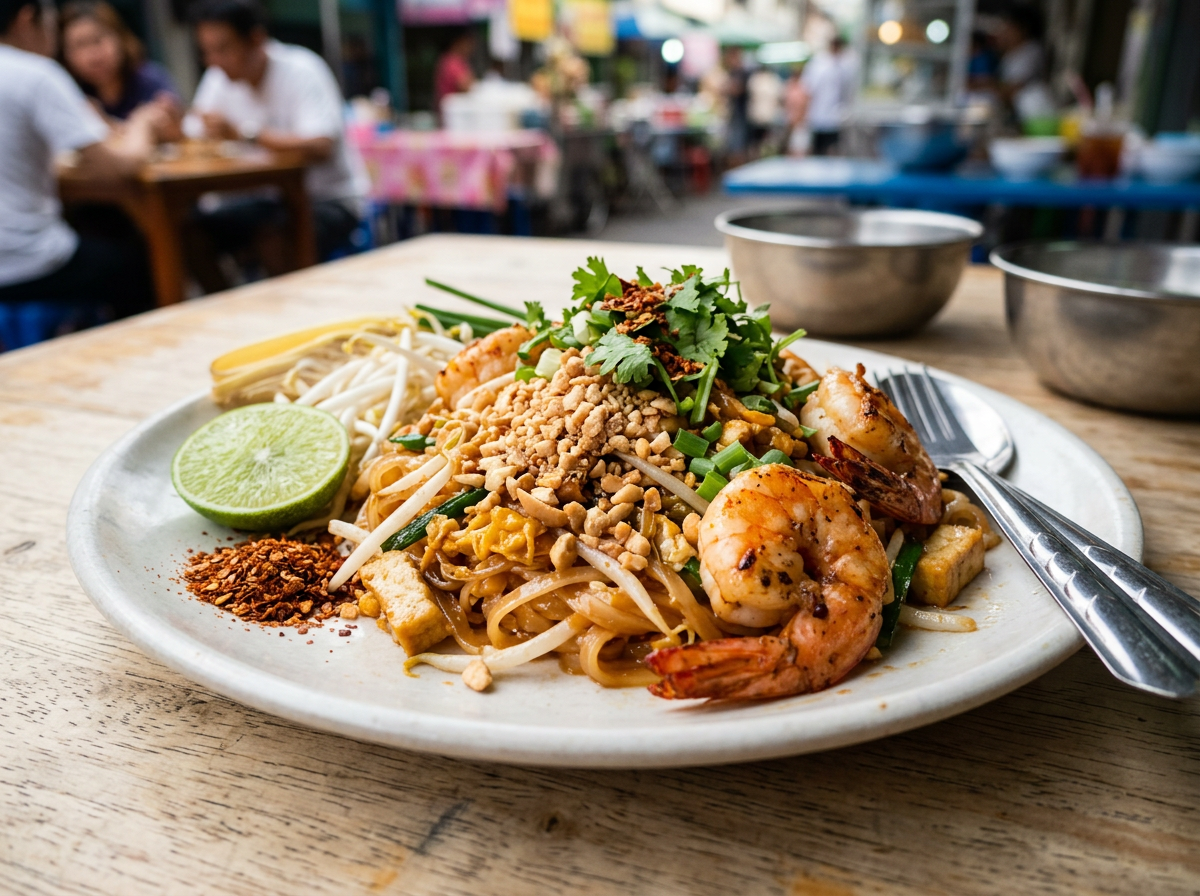
Pad Thai
Stir-fried rice noodles with shrimp, egg, and crushed peanuts in a balanced sweet-sour-salty tamarind sauce.
About This Recipe
This classic Pad Thai captures the vibrant spirit of Thai street food, delivering a beloved noodle dish that balances sweet, sour, and savory elements in every bite. Naturally dairy-free, this medium-difficulty recipe brings the complex, bright flavors of Southeast Asian cooking straight to the home kitchen. It yields four satisfying servings and is perfect for anyone looking to recreate a takeout favorite in about thirty minutes.
The success of this preparation lies in the careful balance of its signature sauce and the texture of the noodles. Combining tangy tamarind paste, savory fish sauce, and rich palm sugar creates the quintessential flavor profile that coats each ingredient. Soaking the rice noodles until they are just pliable before they hit the pan ensures they absorb the savory sauce and cook to a perfect, chewy consistency without becoming mushy or sticking together.
For the best results, have all ingredients prepared and within arm's reach before starting, as the stir-fry process moves very quickly once the shrimp and eggs are in the pan. Cooks can easily customize this versatile dish by swapping the shrimp for tofu or chicken, or by adjusting the amount of palm sugar and tamarind to suit personal taste preferences.
Serve this dish immediately while steaming hot, piled high on a platter. Top each portion with a generous handful of crushed peanuts for a crunchy contrast, and accompany with fresh lime wedges to squeeze over the noodles just before eating to elevate the bright, tangy notes.
Ingredients
- 300 g Rice noodles
- 300 g Shrimp
- 2 large Eggs
- 3 tbsp Tamarind paste
- 3 tbsp Fish sauce
- 2 tbsp Palm sugar
- 60 g Crushed peanuts
Instructions
- 1
Soak rice noodles until pliable, then drain.
15 min
- 2
Stir-fry shrimp, push aside, and scramble the eggs.
3 min
- 3
Add noodles and a sauce of tamarind, fish sauce, and palm sugar.
3 min
- 4
Toss with bean sprouts and scallions until glossy.
2 min
- 5
Serve topped with crushed peanuts and lime wedges.
1 min
Nutrition Facts
520
kcal
Calories
26
g
Protein
68
g
Carbs
16
g
Fat
3
g
Fiber
1220
mg
Sodium
Rate This Recipe
Beverage Pairings
Thai food balances sweet, sour, salty, spicy and bitter, so drinks lean cool and fragrant. Sweet, creamy Thai iced tea and off-dry Riesling tame chilli, while an aromatic wheat beer or crisp lager refreshes against lemongrass, lime and fish sauce.
Wine, Beer & Spirits
Its gentle sweetness balances chilli, lime and fish-sauce funk. A little sweetness tempers the chilli heat.
Serve well chilled (8°C).
Soft, aromatic and lightly sweet — it calms heat and flatters lemongrass and basil. A little sweetness tempers the chilli heat.
Serve cool (5°C) in a tall weizen glass.
A saline, citrus white built for seafood. A crisp, mineral profile is a natural match for seafood.
Serve well chilled (8–10°C).
Aromatic and off-dry — a fragrant match for green and red curries. A little sweetness tempers the chilli heat.
Serve chilled (8–10°C).
Zesty acidity lifts delicate fish. A crisp, mineral profile is a natural match for seafood.
Serve well chilled (8–10°C).
Non-Alcoholic
Sweet and creamy, it soothes chilli heat — the classic Thai table drink. A little sweetness tempers the chilli heat.
Serve over ice.
Light and faintly sweet, it echoes coconut curries and cools the palate. A little sweetness tempers the chilli heat.
Serve cold, ideally over ice.
A cooling yogurt drink to soothe the spice. A little sweetness tempers the chilli heat.
Serve cold.
Tangy and fizzy — a refreshing, alcohol-free cooler. A little sweetness tempers the chilli heat.
Serve over ice.
Light and palate-cleansing — a safe, refreshing choice.
Steep at 75–80°C for 2 minutes.
Tips & Guidance
- 1Soak rice noodles in room-temperature water for 30 minutes rather than boiling them. They should be pliable but still firm — the wok will finish cooking them. Boiled noodles turn mushy in the stir-fry.
- 2The "wok hei" (breath of the wok) is essential. Cook in small batches over the highest heat your stove can produce. Overcrowding the wok drops the temperature and steams the noodles instead of charring them.
- 3Build the sauce with a proper balance: tamarind paste for sourness, palm sugar for sweetness, fish sauce for salt and umami. Taste and adjust before adding to the wok — this is where most Pad Thai goes wrong.
Approximates the sweet-sour complexity. Nothing perfectly replaces tamarind, but this comes close.
For a vegan version. The seaweed adds the oceanic umami note that soy sauce alone lacks.
Low-carb alternative. Add the vegetable noodles at the very end and toss briefly — they cook in under a minute and release water if overdone.
- Using ketchup or excessive sriracha as a shortcut for the tamarind-based sauce. These produce an entirely different (and inauthentic) flavor profile.
- Adding all ingredients to the wok simultaneously. Pad Thai is built in stages: protein first, then pushed aside; eggs next; then noodles and sauce; finally bean sprouts and peanuts at the end.
- Forgetting to press and drain the tofu (if using). Waterlogged tofu will not crisp and will steam the other ingredients.
Pad Thai is best served immediately — the noodles continue to absorb sauce and soften as they sit. If you must store leftovers, refrigerate for up to 2 days. Reheat in a hot wok or skillet (not the microwave, which makes noodles rubbery) with a splash of water and a squeeze of lime to refresh the flavors.
- Pad Thai Spring Rolls — wrap cold leftover Pad Thai in rice paper with fresh herbs and cucumber. Serve with peanut dipping sauce.
- Pad Thai Omelette — fold leftover noodles into a beaten egg and cook as a flat omelette. Top with sriracha and fresh cilantro.
- Pad Thai Lettuce Wraps — spoon reheated Pad Thai into butter lettuce cups for a light, crunchy lunch.
Key Ingredients
Explore the ingredient encyclopediaYou Might Also Like
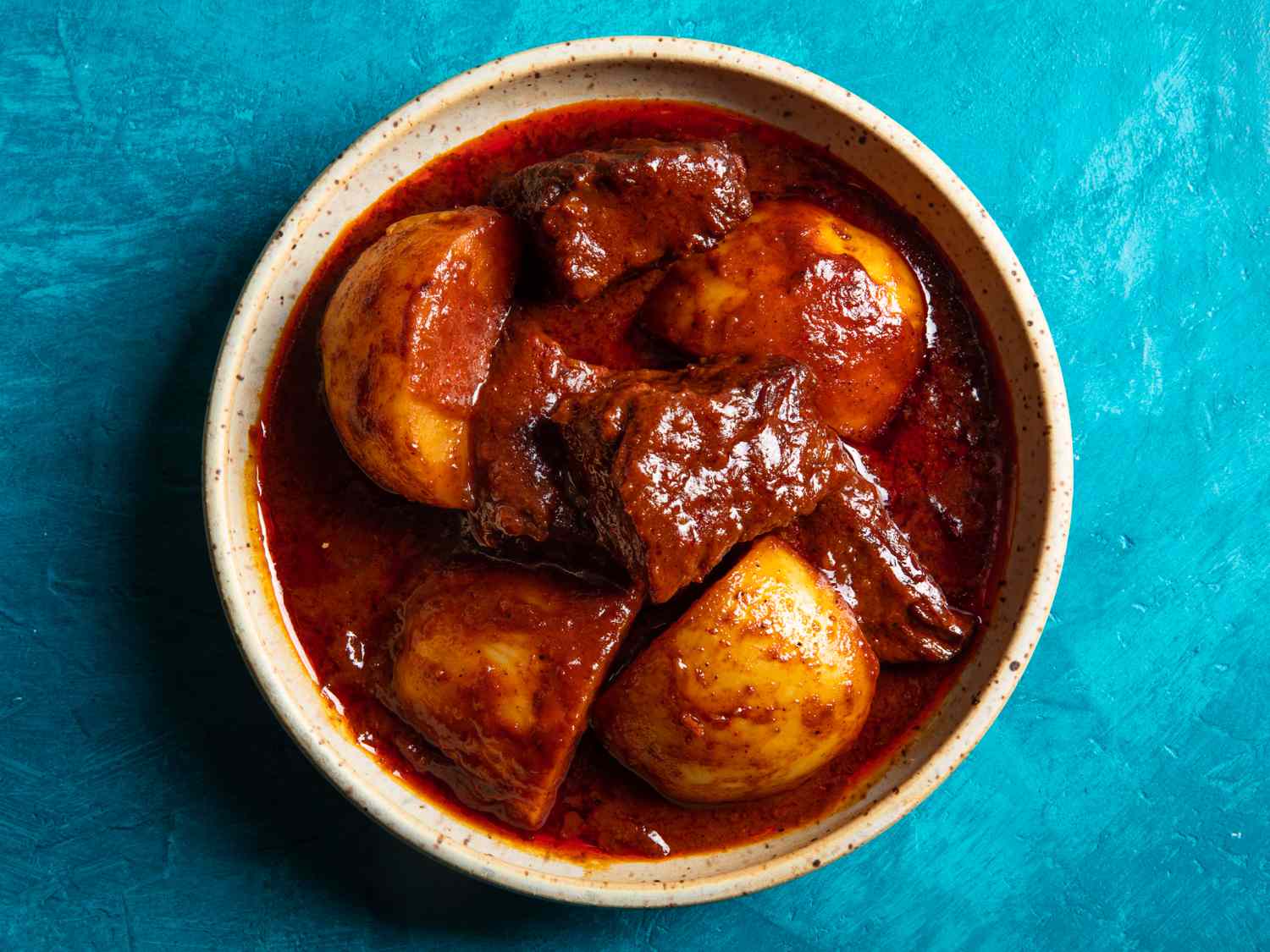
Massaman Beef Curry
A mild, aromatic curry with tender beef, potatoes, and peanuts in rich coconut and warm spices.
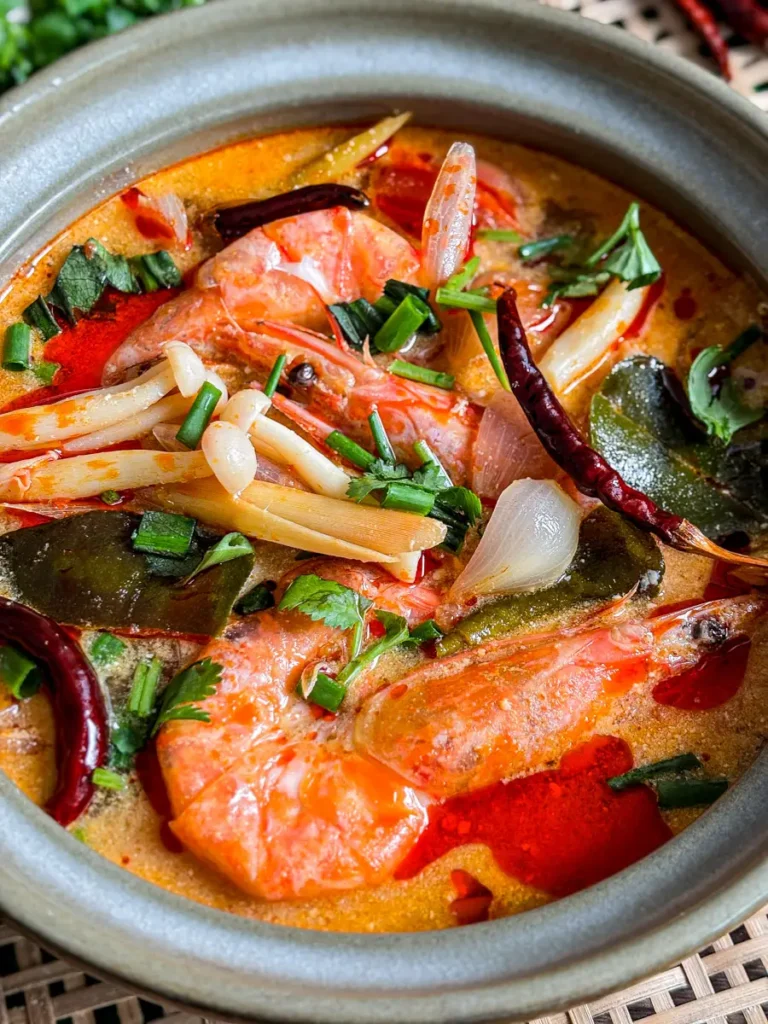
Tom Yum Soup
A hot-and-sour lemongrass broth with shrimp, mushrooms, and lime — bright, bracing, and restorative.
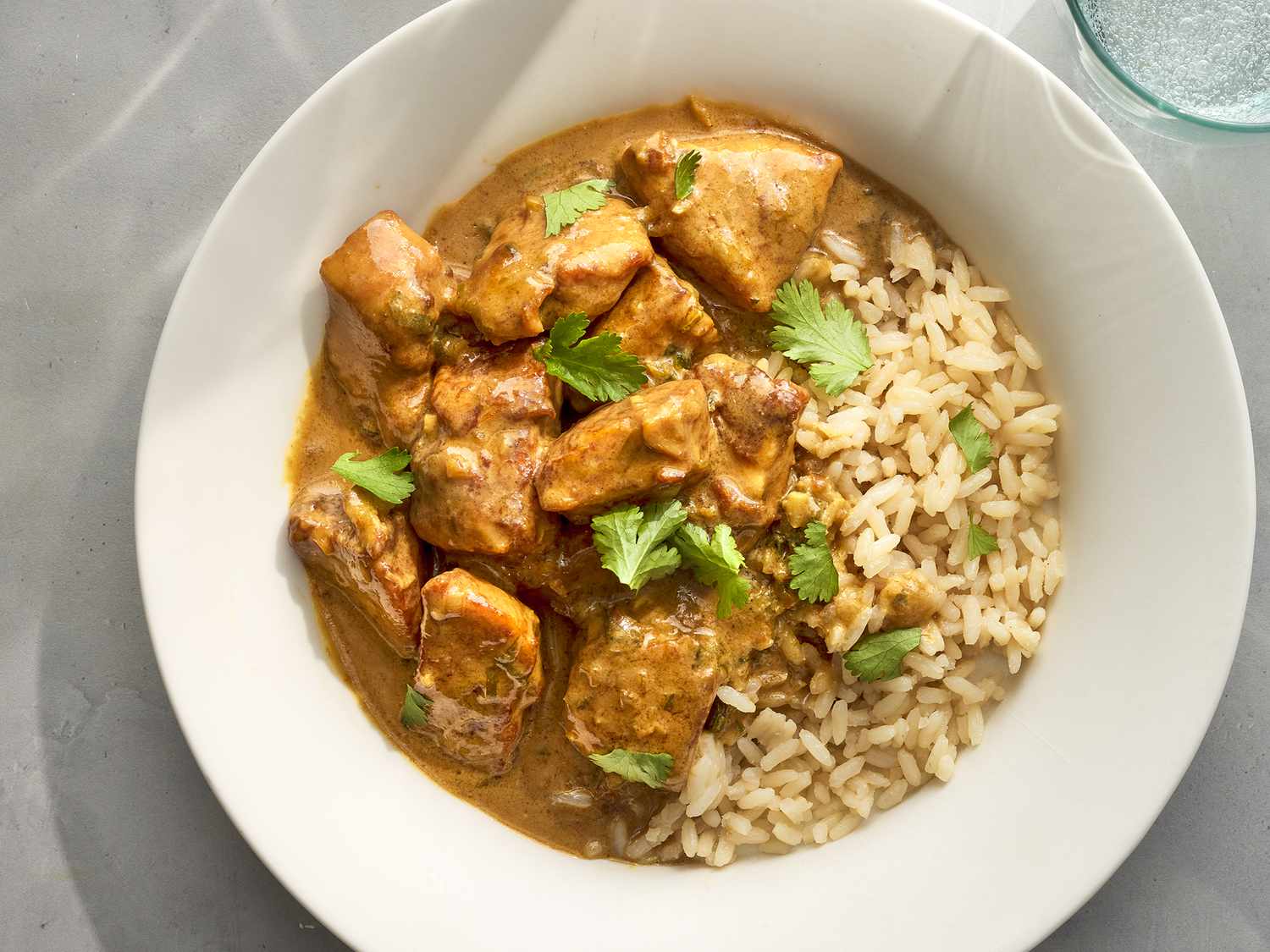
Green Curry Chicken
Creamy coconut green curry with chicken, Thai eggplant, and basil — aromatic and gently fiery.
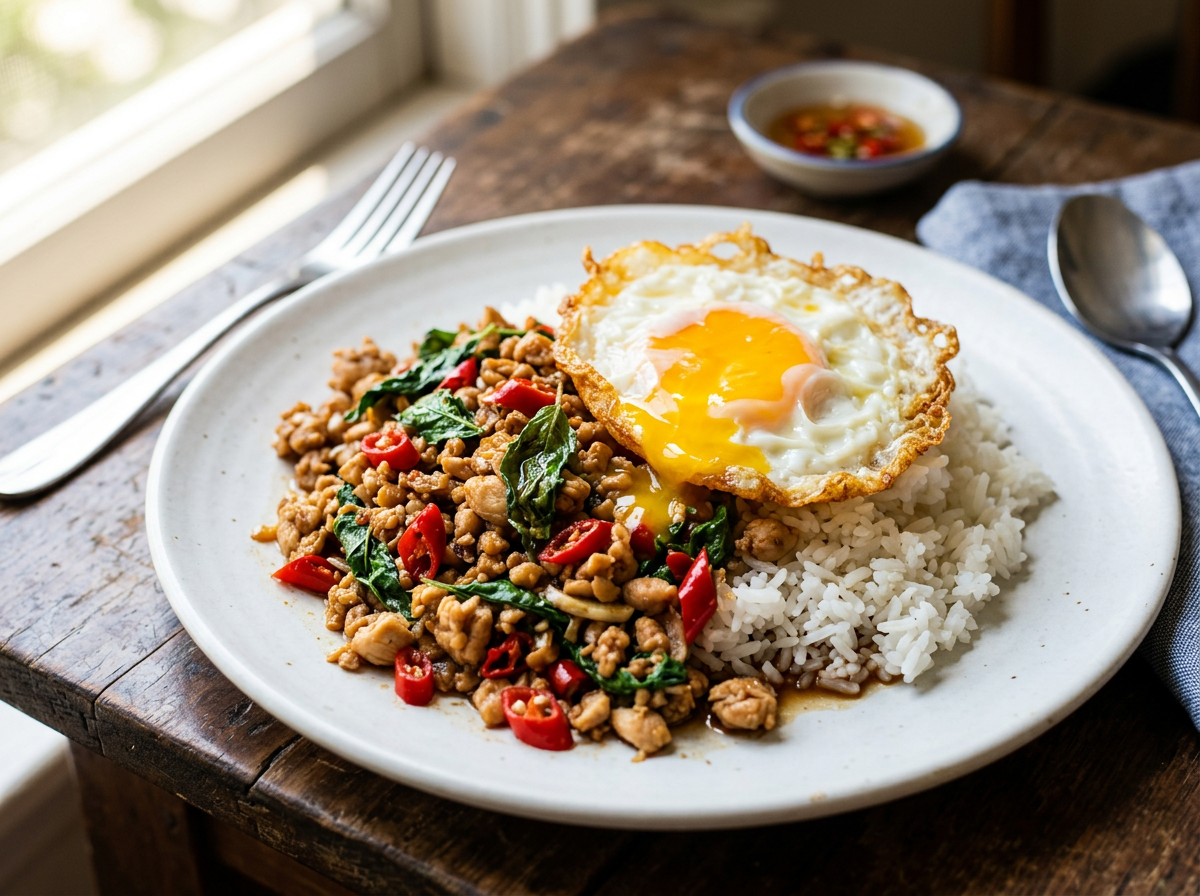
Thai Basil Chicken Stir-Fry
Aromatic and spicy Thai basil chicken (Pad Krapow Gai) served over jasmine rice with a fried egg. Ready in under 20 minutes.
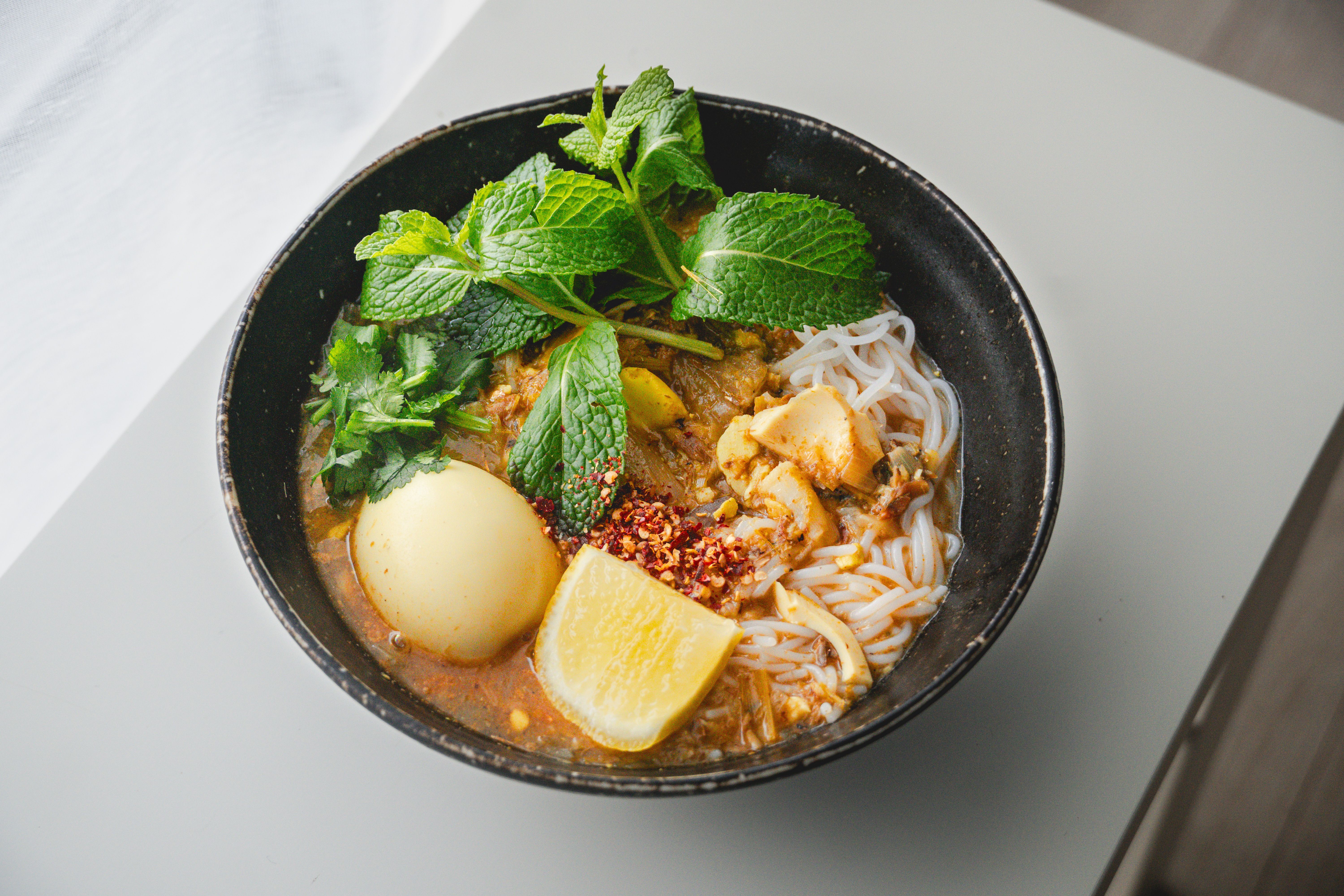
Malaysian Chicken Curry Laksa
A comforting bowl of noodles in a rich, spicy coconut curry broth topped with poached chicken, tofu puffs, bean sprouts, and fresh herbs, a Malaysian hawker favourite.
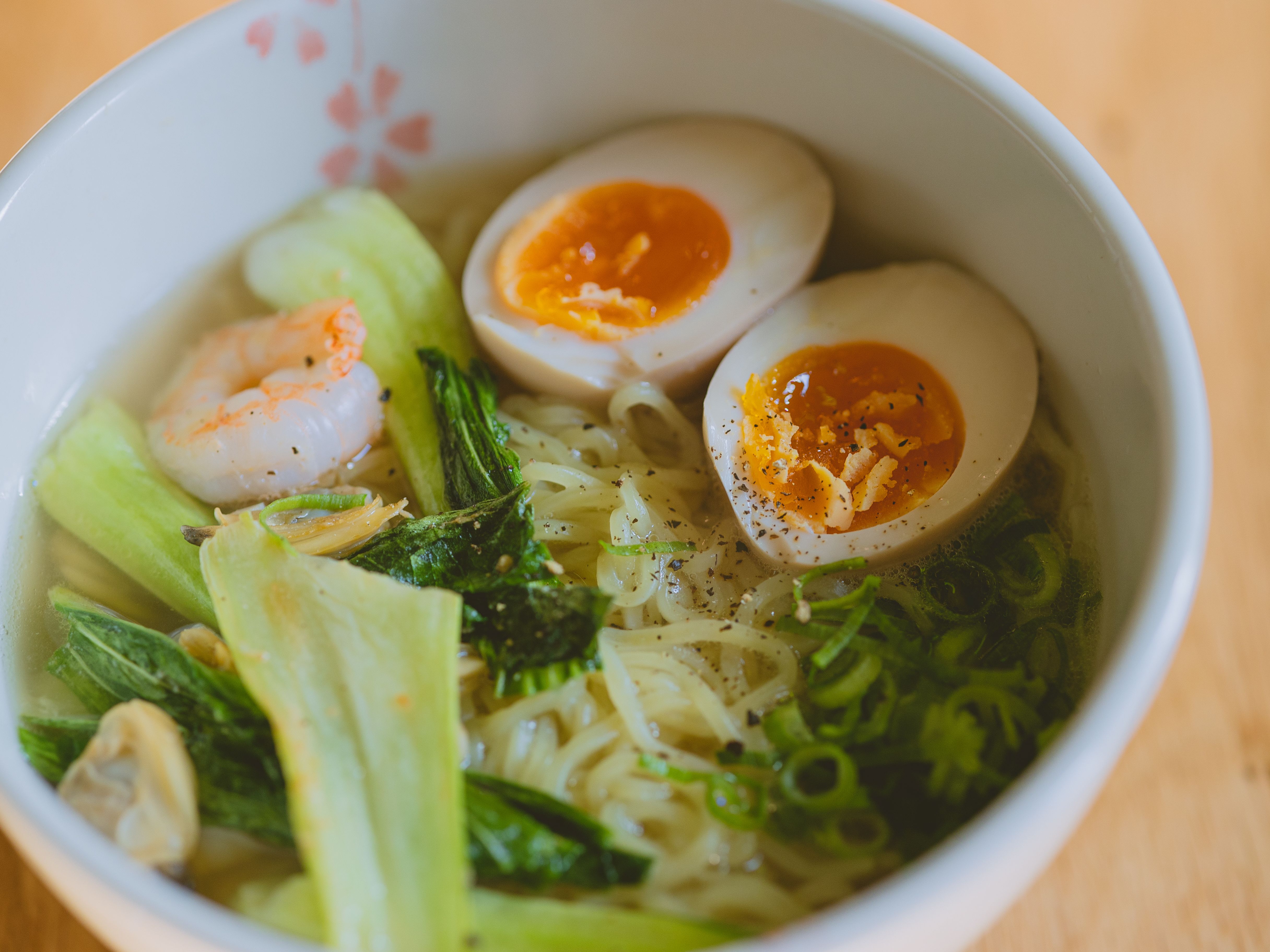
Student Ramen Upgrade with Egg & Greens
Turn a humble packet of instant noodles into a real meal with a jammy egg, fresh greens, and a savory garlic-ginger broth — the ultimate five-minute student dinner.
Explore Related Collections
Cooking Guides
Understanding Cooking Methods: Dry Heat, Moist Heat, and More
Every cooking method changes texture and flavor in a specific way. Knowing which to choose is the key to cooking anything well.
Read guideBuilding Balanced Meals: A Simple Framework
You do not need to count anything to eat well. A simple visual framework does the work for you.
Read guideEssential Kitchen Skills Every Home Cook Should Know
A short list of fundamental skills will do more for your cooking than any gadget. Here are the ones that matter most.
Read guide